


Cryotherapy marketing is the work of getting a cryo studio or recovery center found by the right people, earning enough trust that they book a first session, and turning that first session into a routine. It sits inside the broader world of wellness clinic marketing, but it carries a problem most wellness services never face: the service itself is unfamiliar. Most people in your market have never stepped into a cryo chamber, cannot describe what one does, and have at least one hesitation about trying it.
That unfamiliarity shapes everything. A massage or a facial is an easy yes. Cryotherapy asks a new client to do something unusual on the strength of what other people said about it, which means your marketing has to teach and reassure before it can sell. It also means the novelty cycle is real. A studio can fill its schedule with curious first-timers for a season and still be in trouble, because curiosity does not renew. The centers that last are the ones whose marketing is built around the second visit and the twentieth, not the first.
This guide walks through how that works: who you are marketing to, how to position the service, which claims are safe to make, how to structure a menu that rewards return visits, how to win local search and AI answers, and how to keep members once you have them. The table below is the short version.
| Client type | What they are searching for | What gets them to book |
|---|---|---|
| Athletes and active adults | Recovery after training, relief from soreness, something to add to an existing routine | Evidence that serious athletes use your studio, booking that fits around training, a coach or partner’s recommendation |
| Wellness and longevity members | A regular habit that fits a broader health routine | A membership that makes the habit easy, pairing with other recovery services, a calm and well-run space |
| Med spa clients adding localized cryo | A cryo facial or targeted session alongside a treatment they already book | A staff suggestion at the front desk and a natural add-on in the booking flow |
| Clients referred by a chiropractor, physical therapist or sports medicine practice | A specific suggestion from a provider they already trust | A simple referral path, confirmation that your studio knows their provider, no surprises on the first visit |
Each row in that table is a different person with a different reason for walking in, and the mistake most studios make is marketing to all of them with one message. Athletes and active adults are the easiest group to reach because they already understand recovery as a category. They talk to each other, they follow routines, and they respond to proof that people who train seriously use your space. Much of what works for them borrows from sports medicine marketing: speak to the training cycle, show the studio as part of a routine rather than a treat, and make it easy to book around practice and competition.
Wellness and longevity members are a slower sell and a better customer. They are not chasing a single result. They want a habit, and they will keep one that feels calm, consistent and well run. For this group the membership itself is the product, and the marketing job is to make the routine feel inevitable rather than indulgent. Med spa clients are different again. They are already in your building for something else, and the question is whether localized cryo or a cryo facial shows up as a natural next step in the conversation and in the booking flow. Referred clients, the last row, arrive with trust already built by someone else. What they need from you is reassurance that the referral landed somewhere competent.
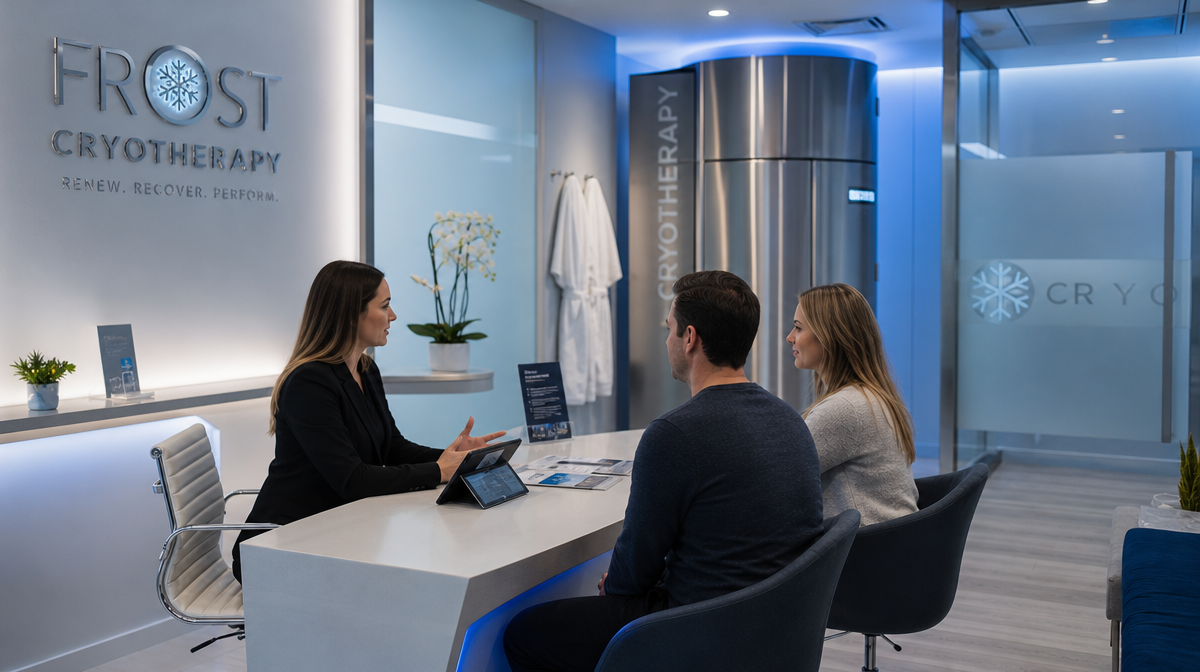
Before any of that marketing can work, the menu has to be clear about what cryotherapy is and is not in your studio. Whole-body sessions and localized sessions are different experiences with different buyers. A whole-body chamber is a recovery and wellness service that people build into a routine. Localized cryo is a targeted session, often paired with a facial, a massage or a visit to a chiropractor or physical therapist, and it tends to be booked as an add-on rather than a destination. Your service pages, your booking options and your photos should make that split obvious, because a confused visitor does not book.
There is one line worth drawing on purpose. Fat-freezing treatments also use cold, but they are aesthetic procedures with different buyers, different claims and a different sales conversation, and they belong under body contouring marketing rather than here. A recovery center that blurs the two ends up with pages that rank for neither and clients who arrive expecting something you do not offer. Keep cryotherapy positioned as recovery and wellness, and if you offer body contouring as well, give it its own pages and its own campaigns.
Positioning leads directly into the claims question, and this is where cryotherapy marketing goes wrong most often. The industry is full of language that sounds harmless because everyone uses it, and much of it describes medical outcomes. Saying a session treats a condition, relieves a diagnosis or replaces care a client would otherwise get from a clinician is a health claim, and health claims require real scientific support. The Federal Trade Commission’s guidance on health product claims is explicit that benefit and safety claims must be truthful and substantiated by competent and reliable evidence, and that testimonials from happy clients do not substitute for that evidence.
The safer and, in practice, more persuasive approach is to stay in the language of experience. Describe what a session is like, how clients talk about feeling afterward, how the studio fits into a training week or a wellness routine, and what the space and staff are like. That is the content prospective clients actually want anyway. Before-and-after framing, promises about specific results and anything that implies a medical benefit should come out of your ads, your website and your front-desk scripts. Reviews need the same care: you can invite clients to describe their experience, but you should not prompt them toward outcome claims, and you should not feature reviews that make claims you could not make yourself. If your studio collects any health information at intake, handle it in a HIPAA-conscious way and keep marketing tools away from it.

With positioning and claims settled, the menu does most of the retention work on its own. A studio that sells single sessions at full price to walk-ins is relying on each client to re-decide every time, and most will not. The structure that holds up has three layers. An introductory offer lowers the barrier for a hesitant first-timer without training them to expect a discount forever. A small starter bundle gives a new client several visits before they judge the value, which matters because the appeal of cryotherapy is cumulative and a single session rarely makes the case by itself. A membership turns the habit into a standing arrangement, with the pitch made in the studio at the end of a good session rather than in an email days later, when the feeling has faded.
Bundling across services strengthens every layer. Recovery lounges that pair cryo with compression, sauna or hydration face the same marketing question that IV therapy marketing has to answer: how do you sell a routine rather than a one-off? The answer is to package the routine. A recovery membership that includes a mix of services is easier to describe, easier to justify and harder to cancel than a cryo-only plan, and it gives your front desk a natural upsell conversation with every client type in the table above. Keep pricing off your marketing copy and on your booking page, where it belongs, so your ads and posts can stay focused on the experience.
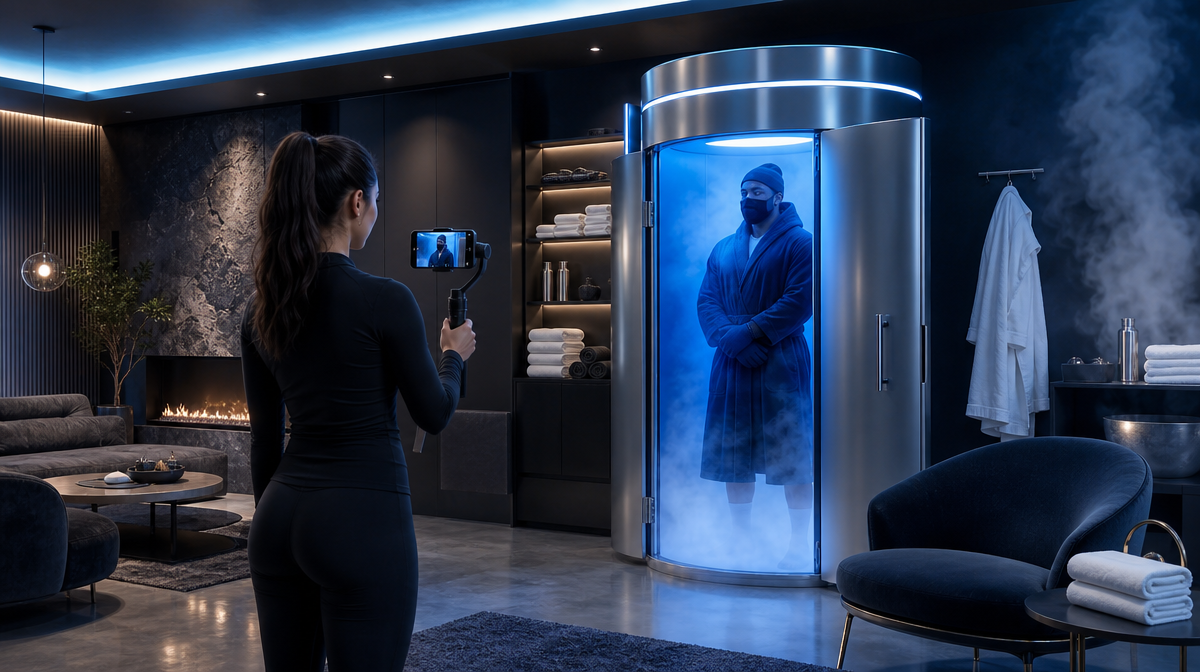
Most new clients will find you through local search, and for a cryotherapy center that usually starts with the Google Business Profile. Treat it as the front door. Google’s own guidelines for representing your business ask for an accurate real-world name, a precise address, and the fewest, most specific categories that describe what the business is rather than everything it offers, and following those rules matters more than any trick. Add real photos of the chamber, the recovery lounge and the front desk, because the single biggest hesitation a prospect has is not knowing what the place looks like. Keep hours current, answer questions in the profile, and respond to every review, including the difficult ones, with a short, calm reply that moves the conversation offline.
The website has to carry the same information in a form search engines and visitors can both read. Each service deserves its own page that explains what the session is, who it is for, what a first visit involves and how to book, with the city and the service named plainly in the page title and headings. Your name, address and phone number should match across every directory and listing exactly, because inconsistencies between listings suppress local visibility. If cryotherapy lives inside a med spa, the local playbook is the one laid out in med spa SEO, with cryo treated as one clearly described service among several rather than buried in a general treatments list. Reviews are part of local search as well as part of trust, so build the habit of asking for one at the end of a good visit, while the experience is fresh.
A growing share of people asking where to try cryotherapy are asking an AI assistant or reading an AI summary at the top of a search page, and those answers are assembled from the same signals that drive local search: clear service pages, consistent listings, real reviews and plain descriptions of what a visit involves. A studio whose website explains its services in direct language and whose listings agree with each other is far more likely to be the one an AI answer names than a studio with a vague homepage and a scattered footprint. Building that kind of AI-driven search visibility is not a separate project from local search. It is the same work done carefully, with the added discipline of answering the questions a prospect would ask out loud.
Referral partners are the most under-used channel in cryotherapy marketing and often the highest quality one. Chiropractors, physical therapists, sports medicine practices, gyms, running clubs and team coaches all talk to people who are already thinking about recovery. The relationship works when it is easy for the partner and reassuring for the client. Give partners a simple way to send someone to you, whether that is a dedicated booking link, a card at the front desk or a named contact at your studio, and make sure your team knows the partner by name when the referred client arrives. Keep any description of what cryo offers their clients modest and experiential, for the same reasons that apply to your own ads. A partner who overpromises on your behalf creates the same risk as an ad that does.
Retention is where all of this pays off, and it is mostly a matter of follow-through. A first visit should trigger a short, warm follow-up that invites a second booking, not a sales sequence. Members should hear from you between visits with content that reinforces the routine, such as recovery tips, schedule reminders and small reasons to come in this week. Lapsed members deserve a specific reactivation message rather than silence, because a member who drifted away is far easier to bring back than a stranger is to acquire. Measure the whole system by bookings, second visits, membership sign-ups and renewals rather than by clicks and impressions, and track which source each new client came from so you know which channels produce members and which only produce first-timers.

Running all of this well takes more coordination than most studio owners have time for, which is why Target Patients MD built a single system to handle it. A.L.I. 360 by Target Patients MD is a proprietary AI-powered patient-acquisition system for medical and dental practices. The name stands for Attract, Learn, and Influence. For a cryotherapy or recovery center, that means local search, service pages, reputation, referral support and client follow-up working together under one plan, with monthly reporting on keyword positions, traffic, calls, form submissions, Business Profile activity and AI Overview citations so you can see which parts of the system are producing members.
Cryotherapy marketing is not complicated, but it is unforgiving of shortcuts. Know which client you are talking to, position the service clearly, stay on the right side of the claims line, build a menu that rewards the routine, show up accurately in local search and AI answers, and follow through after the first visit. Studios that do those things steadily stop depending on curiosity and start building a membership base that renews on its own. If you would like help putting that system in place for your center, request a practice growth session and we will walk through where your studio stands today.
Frequently Asked Questions
- How do cryotherapy centers get more regular clients?
By designing the business around the second visit rather than the first. That means an introductory offer that leads naturally into a starter bundle and a membership, a front-desk conversation about membership at the end of a good session, follow-up messages that reinforce the routine, and partnerships with local providers and gyms that send people who already value recovery. - Can a cryotherapy center advertise health benefits?
Not without scientific substantiation, which most studios do not have. Claims that a session treats, relieves or prevents a medical condition are health claims subject to federal truth-in-advertising rules, and client testimonials do not count as evidence. Safe marketing describes the experience, the routine and the space rather than medical outcomes. - How is cryotherapy marketing different from body contouring or fat-freezing marketing?
They reach different buyers with different expectations. Cryotherapy is sold as recovery and wellness, usually as a repeat habit or membership. Fat-freezing is an aesthetic procedure with its own claims and sales process. Studios that offer both should keep them on separate pages and in separate campaigns so each one ranks for its own searches and attracts the right client. - Should a cryo center sell single sessions or memberships?
Both, in sequence. Single sessions and a small introductory bundle lower the barrier for a first-timer, but the business is built on memberships, because cryotherapy’s appeal is cumulative and a client who has to re-decide every visit usually stops. Make the membership easy to understand and present it in person at the end of a strong session. - How does a cryotherapy center show up in local search and AI answers?
With an accurate, complete Google Business Profile using the most specific categories, real photos, consistent name and address details across every listing, a separate page for each service written in plain language, and a steady flow of reviews. The same clarity that helps a studio rank locally is what AI assistants draw on when they recommend where to go.