


Most chiropractic practices are already on social media, and most of them can show you likes to prove it. What they usually cannot show you is a patient who booked because of a post. The gap between the two is not effort. Practices post regularly, hire someone to make graphics, and still end up with a feed of stock photos and inspirational quotes that could belong to any clinic in the country. Chiropractic social media marketing works when it does three things the generic version skips: it shows the real people in the practice, it teaches something a reader can use today, and it makes the next step obvious to someone whose neck has been stiff for a week.
Chiropractic has an advantage here that most specialties lack. Care is visual, physical and easy to explain in thirty seconds, and the questions patients have before a first visit are the same everywhere: what actually happens on the table, does it hurt, is my problem the kind you treat, and what will it cost. A practice that answers those questions on camera, in its own rooms, with its own clinicians, is doing the work that healthcare social media marketing is supposed to do, which is move a stranger from curious to comfortable before they ever call the front desk.
The platforms are not interchangeable, and a small practice cannot run all of them well. The table below sorts them by what each one is actually for in a chiropractic context, what tends to work there, and the mistake that gets practices into trouble on each.
| Platform | Best use for a chiropractic practice | Content that works | Watch out for |
|---|---|---|---|
| Local community and existing patients | Events, office updates, education posts, reviews | Comments that reveal someone is a patient | |
| Showing the practice and the people in it | Short videos, behind-the-scenes, staff introductions | Before-and-after or posture claims | |
| YouTube | Searchable explainers that keep working | Stretch and posture explainers, “what to expect” videos | Promising outcomes for specific conditions |
| Google Business Profile posts | Reaching people already searching nearby | Offers, hours, new services, short updates | Offers that conflict with state board rules |
Start by deciding who you want to see the content, because that decision picks the platforms for you. A practice that wants families and wellness patients lives on Facebook, where the local community already is and where a parent asks a neighborhood group for a recommendation. A practice chasing active adults and athletes belongs on Instagram, where short video and a visible, energetic clinic do the persuading. A practice that wants the desk worker with a stiff neck should be on YouTube, because that person searches for a stretch before they search for a chiropractor, and a good explainer is still being found a year after it was posted. A practice with a personal injury caseload has a fourth audience with its own rules, covered below. Pick the two platforms that match the patients you want and post there consistently; two platforms done every week beat five platforms done whenever someone remembers.

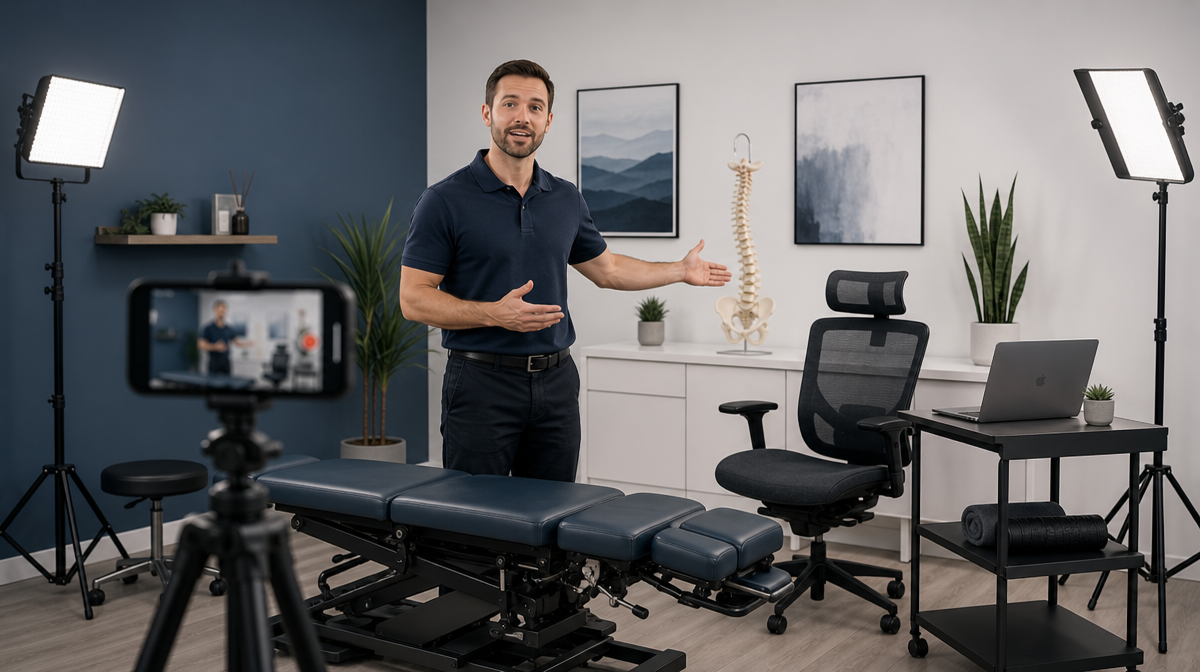
What to post is less mysterious than the blank calendar makes it feel. The content that earns trust is education: how to set up a desk so the afternoon headache stops, how to lift a toddler or a mulch bag without paying for it the next morning, three stretches to do between visits, what a first appointment actually involves from the front door to the adjustment. Each of those is a thirty-second video, and video is the format that does the heavy lifting in this specialty. A chiropractor explaining something on camera, in the treatment room, talking to one imagined viewer in their car, builds more trust than any graphic. The practice does not need a crew or a script, and the same principles that apply across healthcare video marketing apply here: open with the problem the viewer recognizes, keep it short, caption everything because most people watch with the sound off, and film several at once so the account stays active through a busy clinical month.
Behind-the-scenes content does a different job. Staff introductions, a walk from the parking lot to the front desk, a look at the equipment with a plain explanation of what it is for, a new team member’s first week: none of it is clinical, and all of it lowers the anxiety a first-time patient feels before walking in. People book with practices that feel familiar, and a feed that shows the faces a patient will meet is doing quiet conversion work.
The line on claims deserves its own attention, because chiropractic draws advertising complaints more often than most specialties and social media is where practices cross the line without noticing. Describe what care involves and who it is for. Do not say that adjustments cure a condition, do not promise to fix scoliosis or resolve migraines, do not imply results for conditions outside musculoskeletal care, and be careful with posture photos, which read as before-and-after claims even when they are meant as education. State chiropractic boards set advertising rules, the rules differ from state to state, and the board’s view of a post is the one that matters. If a post promises an outcome rather than explaining a process, rewrite it.
Patient stories are the most persuasive content a practice can publish and the riskiest. Three rules keep them safe. First, written authorization before any patient appears or is described, including the patient visible in the background of an office tour; a smile and a verbal yes in the hallway is not authorization. Guidance from HHS on marketing under the HIPAA Privacy Rule is the reference for what counts as marketing and what it requires. Second, testimonials should describe an experience, how the visit went, how the person was treated, what they understood afterward, rather than promise a result that the next viewer will expect for themselves. Third, disclose any relationship.
That third rule is where practices get caught by a regulator they were not thinking about. If a patient received a discounted visit, a gift or anything else in exchange for a post or a review, that has to be disclosed clearly within the post itself, and the same applies to a local influencer who visits the clinic. The FTC’s disclosure guidance for social media is written for exactly this situation and is short enough for every person who posts on the practice’s behalf to read. A testimonial that is honest, authorized and disclosed is an asset; one that is missing any of the three is a liability that lives on the internet permanently.
Comments, messages and reviews need the same discipline as posts, and this is where a well-meaning front desk does the most damage. Replying to a comment with “Great to see you last Tuesday, hope the lower back is feeling better” confirms that the commenter is a patient and discloses why they came in. The rule is simple: never confirm that anyone is a patient and never discuss care in public, even when the person has described their own treatment in detail. Thank them, say the practice is glad to hear it, and move any clinical question to a phone call or a private, secure channel. The same rule covers reviews on social platforms, which feed the same reputation that Google reviews do and should be answered with the same care.
Paid social is where a chiropractic practice can reach new patients quickly, and also where it can run into its state board. New-patient offers are common in this specialty, but some states restrict free or discounted exam offers, and the rules are stricter where insurance is being billed. Check the board’s advertising rules before running any offer, and have someone outside the marketing team read the ad the way a regulator would. Target by location, not by condition or interest; an audience built around back pain is an audience the platforms will restrict and a privacy problem the practice does not need. Then send the ad to a page built for that offer, with the offer, the clinic, the clinician and a booking path on one screen. Sending paid traffic to a homepage wastes most of it, which is why chiropractic website design and the social campaign have to be planned together rather than handed to two different people.

Personal injury patients are a different audience with a different set of rules, and a practice that treats them like any other social segment is asking for trouble. Many states restrict direct solicitation of accident victims, sometimes for a set period after a crash, and those restrictions reach social media as surely as they reach letters and phone calls. The safe version is education that anyone can find: what to do after a car accident, why some injuries show up days later, how documentation works and why a prompt evaluation matters. The unsafe version is any content or message that targets or contacts people because they were in an accident, including ads aimed at recent-accident audiences and comments on someone’s crash post inviting them in. Our guide to personal injury marketing for chiropractors covers the full picture, including how attorney relationships and intake fit together; on social media the discipline is simply to teach and to wait to be contacted.
Most of a chiropractic practice’s social audience is not new patients at all. It is current and former patients, and that is where social media earns its keep quietly. Maintenance care reminders phrased as education rather than nagging, a note that the clinic has added weekend hours, a community event the practice is sponsoring, a staff birthday: this content keeps the practice present in a patient’s week so that when the stiffness comes back, the practice is the first thought rather than a search. The channel works best paired with email, which reaches the patients who are not scrolling. The reactivation and reminder sequences described in our guide to chiropractic email marketing are the natural partner to a social feed, and a practice that runs both turns followers into returning patients instead of hoping the algorithm does it.

Measurement is where most practices stop short. Followers, likes and impressions are the numbers the platforms hand over, and none of them appears on a revenue report. The question that matters is whether someone who saw the content booked a visit. Two low-tech habits answer it. Use a tracked link for each platform in the profile and in paid posts, so the booking page knows where a visitor came from. And ask at intake how the patient first heard about the practice, not how they found it today, because the first touch is usually social and the last is usually a search. Saves and direct messages are worth watching too, since they signal intent in a way a like does not. Read this way, the account either produces booked visits or it does not, and the practice knows which posts to make more of.
One more reason the public footprint matters: patients increasingly ask an AI assistant for the best chiropractor near them, and the assistant answers from everything it can see about a practice, including its social profiles, reviews and the consistency between them and the website. A practice whose profiles say clearly who it treats, where it is and what a visit involves is legible to those systems; a practice with a dormant Instagram and conflicting hours across platforms is not. Treat AI-driven search visibility as part of the same job as the social calendar, and check each quarter whether the assistants name the practice when asked the questions a prospective patient would ask.
Running all of this on top of a full schedule is more than most practice owners can carry. A.L.I. 360 by Target Patients MD is a proprietary AI-powered patient-acquisition system for medical and dental practices. The name stands for Attract, Learn, and Influence. For a chiropractic practice, that means connecting social and search visibility so the content and the website say the same thing, learning which posts and campaigns actually produce booked visits rather than reactions, and following up automatically with the people who message or inquire so a question asked on a Saturday night still turns into a Monday appointment.
Chiropractic social media marketing, done well, is quieter than the viral version and far more useful: real clinicians explaining real things, patient stories that are authorized and honest, offers that a state board would not object to, and a feed that keeps existing patients close. A practice that wants a second look at what its social presence is producing can request a practice growth session.
- What should a chiropractor post on social media?
Education first: short videos on posture, desk setup, lifting, stretches between visits and what a first appointment involves. Add behind-the-scenes content that introduces the staff and the space, authorized patient stories that describe an experience rather than promise a result, and practical updates such as hours, new services and community events. - Which social media platform is best for a chiropractic practice?
It depends on who the practice wants to reach. Facebook fits families, existing patients and local community referrals; Instagram suits active adults and shows the practice visually; YouTube reaches people searching for stretches and explainers and keeps working for years; Google Business Profile posts reach people already searching nearby. Two platforms done consistently beat five done occasionally. - Can chiropractors post patient testimonials on social media?
Yes, with written authorization from the patient before anything is posted, including video and images where a patient is visible. Testimonials should describe the patient’s experience rather than promise results, and any discount, gift or other benefit the patient received in exchange has to be disclosed clearly in the post itself. - Can a chiropractic practice advertise a free or discounted first visit on social media?
Sometimes. Rules vary by state, and some state boards restrict free or discounted exam offers, especially where insurance is billed. Check the board’s advertising rules before running an offer, keep the targeting to location rather than condition, and send the ad to a dedicated page that explains the offer and lets the visitor book. - How do you know if chiropractic social media marketing is working?
By booked visits, not followers or likes. Use a tracked link for each platform, ask new patients at intake how they first heard about the practice, and watch saves and direct messages as signs of intent. If the account cannot be connected to appointments on the schedule, the content needs to change, not the posting frequency.