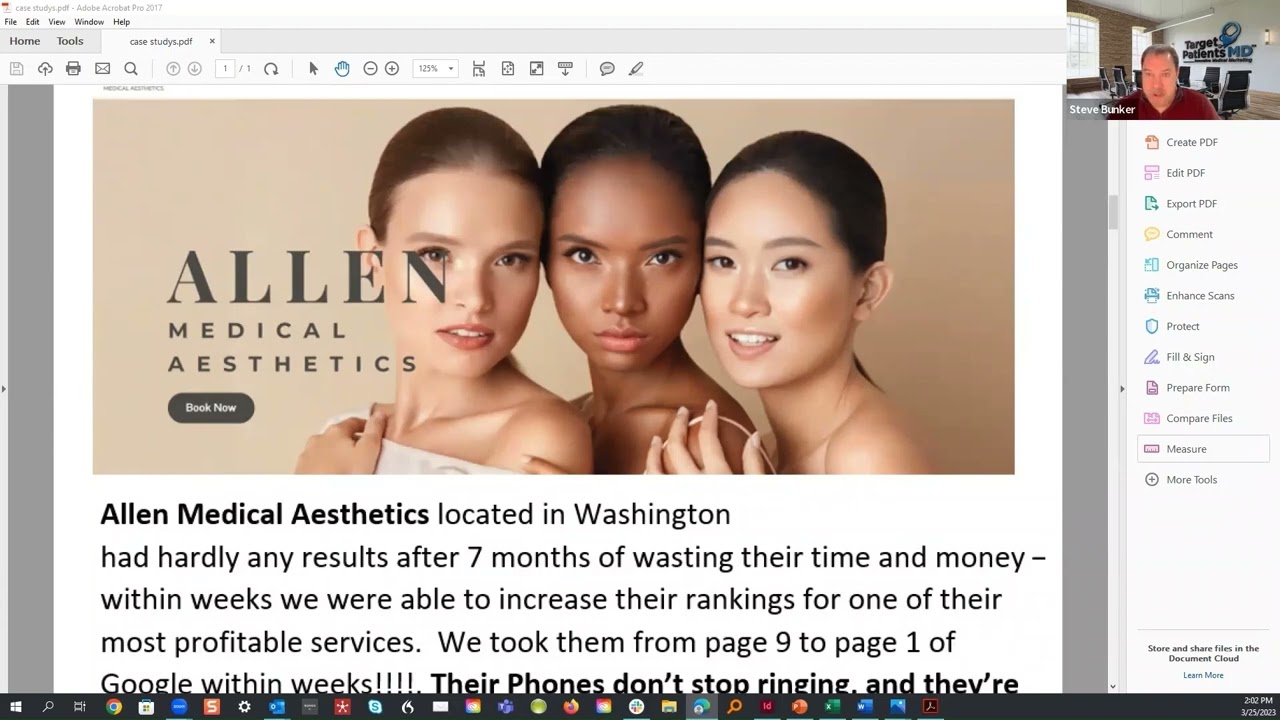



Healthcare marketing is the process of using digital and traditional channels to attract new patients, retain existing ones, and build the kind of online presence that makes your practice the obvious choice when someone in your neighborhood needs care. It covers everything from how you rank on Google Maps to what a prospective patient reads when they look up your reviews at 11 p.m. before deciding whether to book.
In most markets, a solid website and a few Google Ads will get you somewhere. In New York City, that baseline barely gets you noticed. Healthcare marketing NYC is a different discipline entirely — shaped by a set of market conditions that don’t exist anywhere else in the country.
- Density of competition: Thousands of licensed physicians, dentists, and specialists compete across five boroughs, often within blocks of each other. Every specialty is oversaturated in at least one neighborhood.
- Borough-specific search behavior: NYC patients search by neighborhood, not by city. “Dermatologist in Astoria” and “dermatologist in Flushing” are two completely different search markets, even though both are in Queens.
- Diverse patient populations: New York’s multilingual, multicultural patient base means messaging that works in one ZIP code can miss entirely in the next.
- High digital expectations: NYC patients are among the most research-driven healthcare consumers in the country — comparing providers, reading reviews, and vetting credentials before making first contact.
That combination of factors is why a generic marketing approach consistently underperforms here. The strategies that grow practices in New York are built around how New Yorkers actually search, compare, and decide.
Knowing the NYC market is complex is one thing. Finding an agency actually built to operate in it is another. Most general marketing agencies — even good ones — are simply not equipped for healthcare. They don’t understand how patients make medical decisions, they haven’t built HIPAA-compliant infrastructure, and they’ve never navigated the ad platform restrictions that come with promoting clinical services.
- HIPAA compliance: Generic agencies routinely build contact forms, landing pages, and retargeting campaigns that inadvertently expose protected health information — a pattern that led to $100M+ in penalties from 2023–2025. The consequences range from patient trust violations to federal penalties up to $2.19 million per violation — neither of which you want to explain to your practice attorney.
- Medical advertising restrictions: Google and Meta apply strict policies to healthcare claims. Ads referencing specific conditions, before-and-after results, or certain treatment language get flagged, delayed, or rejected entirely. Specialists know how to stay compliant without gutting your messaging.
- NYC market complexity: Borough-level and ZIP code-level targeting requires local expertise that a national generalist agency simply doesn’t have. Bidding on “dentist in Brooklyn” without understanding the competitive breakdown by neighborhood is how practices burn through budget with nothing to show for it.
Add in NYC’s notoriously high cost-per-click environment — where healthcare ad costs routinely run 200–400% above national averages — and the margin for error shrinks fast. Every misallocated dollar in a specialized healthcare marketing NYC campaign costs more here than it would anywhere else. That’s not a reason to spend less. It’s a reason to work with someone who already knows what works.
A comprehensive healthcare marketing NYC program isn’t a single tactic — it’s a coordinated system of services working together to fill your schedule. Here’s what that looks like in practice:
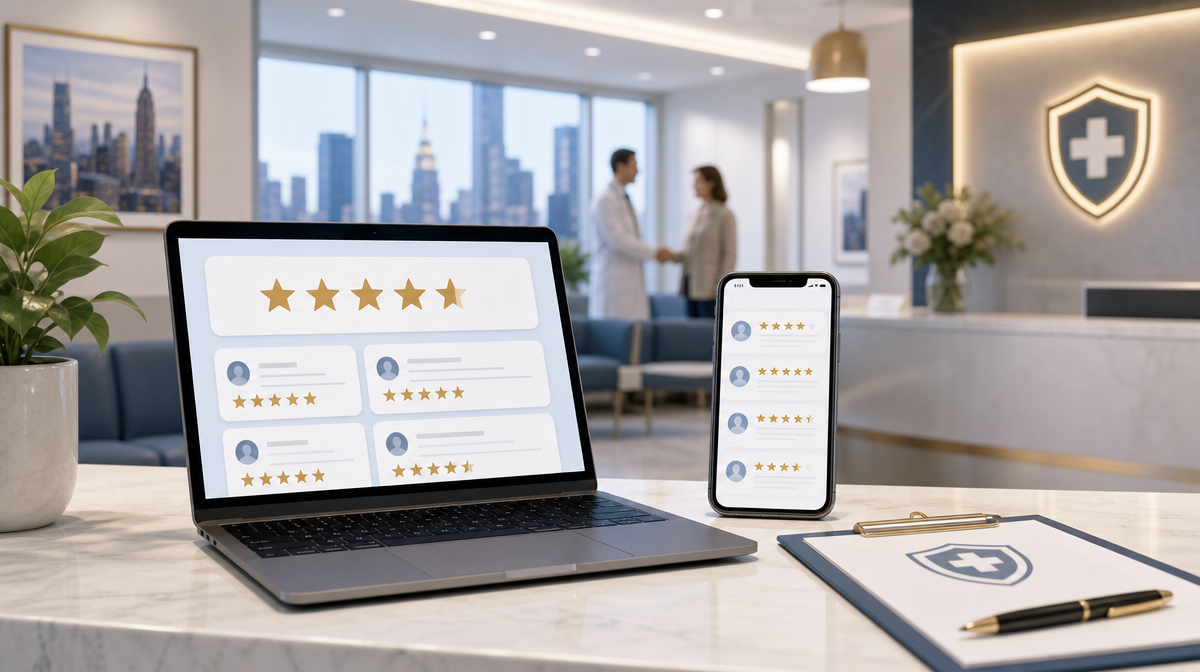
- Local SEO for New York boroughs and ZIP codes: Targets searches like “dentist near me” or “dermatologist in Brooklyn” through Google Business Profile optimization, citation building, and neighborhood-specific landing pages that match how NYC patients actually search.
- HIPAA-compliant Google Ads and landing pages: Paid campaigns built with secure form submissions, no retargeting based on health conditions, and compliant data handling — protecting both your patients and your practice legally.
- Social media advertising and retargeting: Facebook and Instagram campaigns that drive awareness for elective procedures like med spa treatments and cosmetic surgery, with privacy-compliant retargeting to re-engage interested visitors.
- Custom medical website design: Mobile-first, fast-loading sites built around conversion — not just aesthetics — with accessible design and secure patient intake forms.
- Reputation and review management: Monitoring and generating reviews across Google, Healthgrades, Zocdoc, and Yelp, where NYC patients heavily research providers before ever picking up the phone.
- Email and text patient outreach: Appointment reminders, recall campaigns, and promotional messaging delivered through HIPAA-compliant communication platforms to reduce no-shows and keep patients returning.
| Service | What It Does | Best For |
|---|---|---|
| Local SEO | Improves visibility in “near me” searches | All NYC practices |
| Google Ads | Drives immediate traffic for high-intent searches | Elective procedures, new practices |
| Social Media Ads | Builds awareness and targets demographics | Med spas, plastic surgery, dental |
| Reputation Management | Generates and monitors patient reviews | Practices with few or negative reviews |
| Email/Text Outreach | Nurtures existing patients and reduces no-shows | Retention-focused practices |
Manual campaign management made sense when NYC practices had three competitors in their ZIP code. Today, when a patient in Midtown searches “internist accepting new patients,” they’re choosing from a Google Maps pack that refreshes its rankings based on signals your team doesn’t have time to monitor in real time. That’s where AI changes the math.
AI-powered patient acquisition works by processing performance data continuously — across your Google Ads, local SEO signals, and landing page behavior — and making adjustments faster than any human team can. Instead of reviewing last month’s campaign data and guessing what to fix, the system responds to what’s happening right now.
Here’s where AI delivers the most meaningful impact for NYC practices specifically:
- Real-time bid and budget optimization: AI adjusts ad spend automatically based on which patient segments are converting, reducing cost per lead without requiring manual oversight on a market where every click is expensive.
- 24/7 chatbot engagement: AI-powered chat tools capture patient inquiries and pre-qualify leads after hours — critical in a city where prospective patients research providers late at night and expect immediate responses.
- Predictive lead scoring: Machine learning identifies which inquiries are most likely to book, so follow-up resources get directed where they’ll actually convert.
- Algorithm-adaptive SEO: AI-driven content and technical optimization responds to Google’s ranking changes faster than human teams can, maintaining visibility in a search landscape that shifts constantly.
Target Patients MD’s proprietary A.L.I. 360 technology applies this AI layer across every channel simultaneously — which is how practices see up to a 377% lift in patient acquisition compared to conventional healthcare marketing NYC approaches.
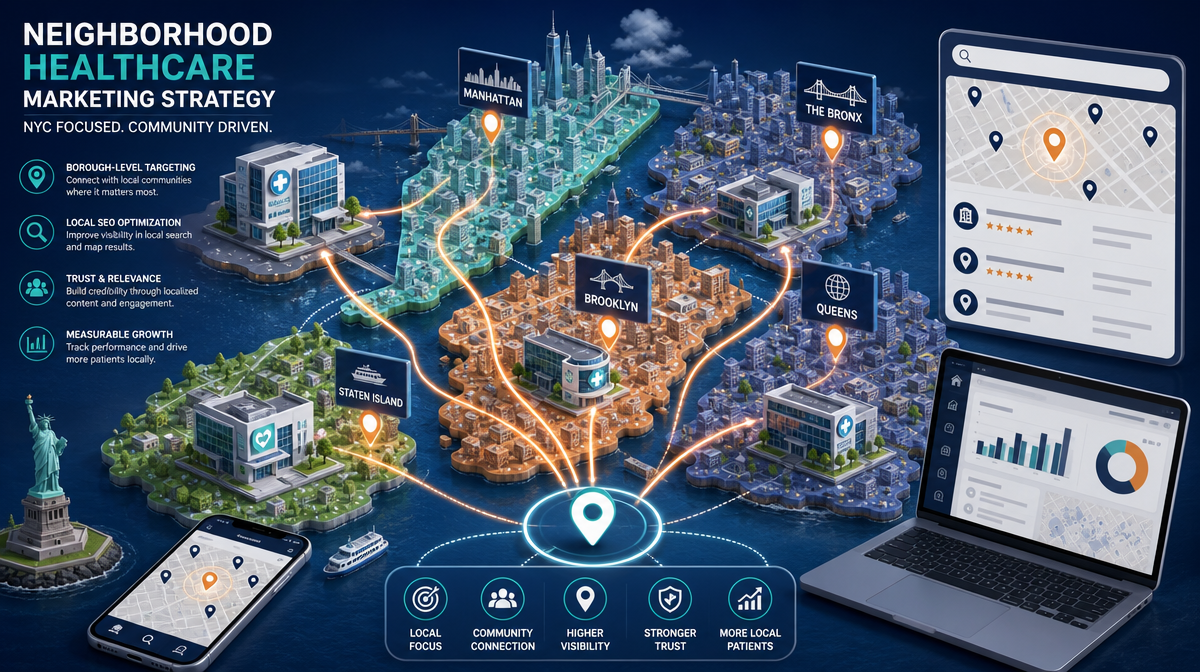
New York City doesn’t function as a single local search market — it functions as dozens of them. A dermatology practice in Park Slope isn’t competing with one in Riverdale. They’re operating in completely different search environments, with different competitors, different patient demographics, and different keyword landscapes. Winning local SEO in New York means building a presence that’s visible at the neighborhood level, not just the city level.

Each borough — Manhattan, Brooklyn, Queens, the Bronx, and Staten Island — has its own competitive dynamics. A dental practice in Astoria faces different top-ranking competitors than one in Forest Hills, even though both are in Queens. That’s why effective local SEO for NYC practices goes borough by borough and ZIP code by ZIP code, not city-wide.
The core components of a neighborhood-level local SEO strategy include:
- Neighborhood-specific landing pages: Dedicated pages targeting searches like “Upper East Side dermatologist” or “Astoria dentist” — written to match how patients in those specific areas search, not just how Google categorizes the city.
- Google Business Profile optimization: Accurate NAP (name, address, phone), properly selected service categories, updated photos, and consistent posting — all of which influence your visibility in the Maps local pack.
- Citation consistency: Your practice information must match exactly across every directory — Healthgrades, Zocdoc, Yelp, and beyond. Inconsistencies quietly suppress your local rankings without any obvious warning sign.
NYC patients search by neighborhood instinct. If your healthcare marketing NYC strategy isn’t built around that behavior, you’re invisible to the patients closest to your door.
Running Google Ads in NYC is expensive under the best circumstances. Running them wrong — with HIPAA violations baked into the campaign structure — is expensive and legally risky. That combination is exactly why HIPAA-compliant Google Ads require a different build than standard paid search campaigns.
Here’s what separates a compliant healthcare campaign from one that creates exposure:
- No remarketing lists built on health data: You cannot retarget users based on the medical conditions or symptoms they searched for. Building audience lists from health-related page visits is a HIPAA violation — even if Google technically allows the technical setup.
- Secure landing pages: Every page a patient lands on after clicking your ad must use HTTPS encryption and collect form submissions through a HIPAA-compliant infrastructure. Standard contact forms that route to a generic email inbox don’t qualify.
- No PHI in URLs: If a patient’s name, appointment type, or condition appears in a URL string — even briefly — that’s protected health information exposed in a trackable location. Campaign URLs must be structured to prevent this.
- Negative keyword lists: In a high-cost-per-click market like New York, unqualified clicks drain budget fast. Aggressive negative keyword filtering removes irrelevant searches before they eat into your spend.
NYC’s cost-per-click reality means there’s no tolerance for wasted impressions. Every dollar spent on a non-converting or non-compliant click is a dollar that didn’t bring a patient through your door — and in this market, those dollars add up faster than anywhere else in the country.
In a city where patients have no shortage of options, your review profile isn’t just a nice-to-have — it’s often the deciding factor. Research consistently shows that 53% of patients won’t consider a provider rated below 4 stars, and in NYC, where a 4.6-rated competitor is probably two blocks away, a thin or outdated review profile costs you bookings every single day.
The review generation process for NYC providers needs to be systematic, not occasional. Relying on happy patients to leave reviews on their own initiative produces a trickle. An automated system produces a stream.
- Automated review requests: Post-visit emails or texts sent within 24–48 hours of an appointment, when the experience is fresh and patients are most likely to respond.
- Multi-platform monitoring: NYC patients check Google, Healthgrades, Zocdoc, Vitals, RateMDs, and Yelp before booking. Your reputation management strategy has to cover all of them — not just Google.
- Response strategy: Responding to reviews — positive and negative — signals to prospective patients that your practice is attentive and professionally run. RepuGen’s 2025 patient survey found that nearly 60% of patients favor providers who respond to both. A thoughtful response to a critical review often matters more than the review itself.
One often-overlooked piece: embedding a review widget directly on your website surfaces your star ratings to new visitors before they ever leave to check a third-party directory. In a healthcare marketing NYC context, that small trust signal can be the difference between a booking and a bounce.
Not every specialty markets the same way — and a cookie-cutter approach that works for a primary care practice will fall flat for a med spa running seasonal Botox promotions. Effective healthcare marketing NYC is built around how patients in each specialty actually make decisions, which varies significantly depending on whether the procedure is elective, insurance-based, or requires a longer consideration cycle.
- Med spas: Botox, fillers, CoolSculpting, and laser treatments are impulse-adjacent — patients respond to seasonal promotions, before-and-after visuals, and urgency-driven social ads. Paid search and Instagram campaigns drive the majority of bookings.
- Dental practices: General dentistry runs on local SEO and neighborhood visibility, while high-value services like implants and cosmetic dentistry benefit heavily from Google Ads targeting patients actively comparing providers and financing options.
- Plastic surgery: The decision cycle here is long — sometimes months. Reputation, before-and-after galleries, and video testimonials carry more weight than a single ad click. Nurturing campaigns keep your practice top of mind during that research window.
- Ophthalmology and LASIK: “LASIK NYC” is one of the most competitive keyword spaces in the city. Success here requires both aggressive PPC and authoritative SEO built specifically around procedure-level searches.
- Bariatrics and medical weight loss: Demand for GLP-1 programs like Ozempic and Wegovy is surging. Longer sales cycles mean CRM and lead nurturing are as important as the initial ad click.
- Primary care and mental health: Insurance-based acquisition and telehealth visibility make local SEO the primary driver of new patients for these practices.
Choosing a healthcare marketing NYC partner is a different evaluation than hiring a general vendor. The stakes are higher, the compliance requirements are real, and the wrong fit costs you more than a retainer — it costs you patients you never knew you lost. Here’s what a qualified partner should actually deliver:
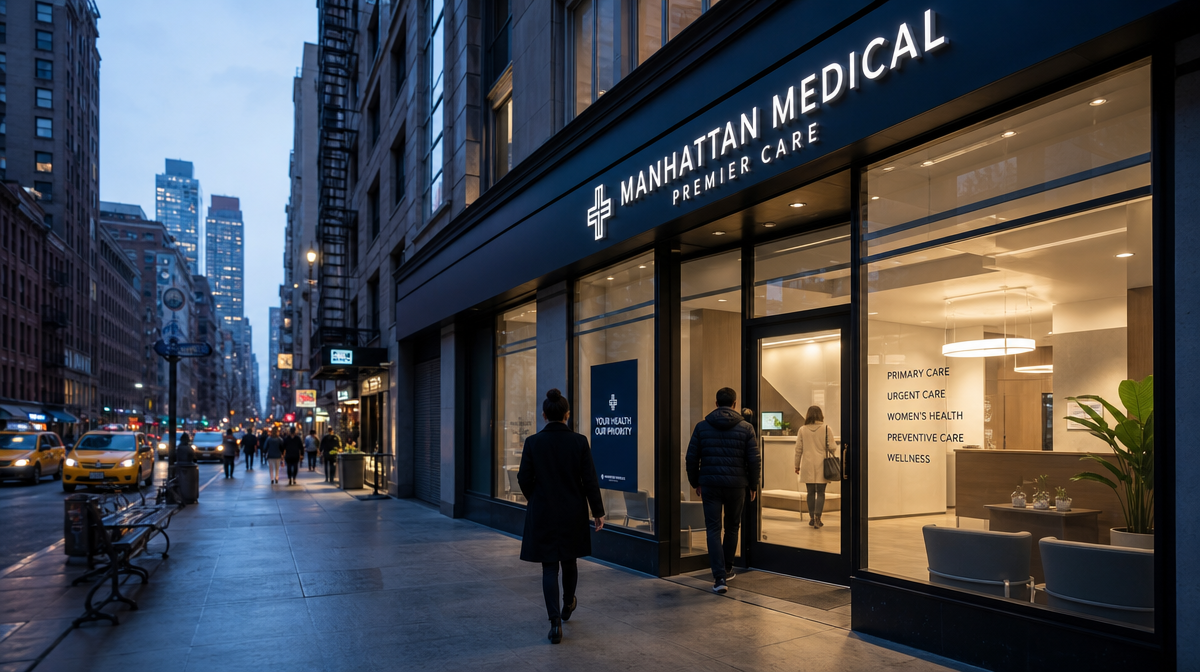
- Deep NYC market knowledge: Your partner should understand borough-level competition, neighborhood demographics, and how patient behavior shifts between a practice in Tribeca and one in Jackson Heights. Generic market knowledge doesn’t cut it here.
- Data-driven strategy and ROI dashboards: Expect reporting that shows leads, cost per lead, and booked appointments — not just clicks and impressions. If an agency can’t tie their work directly to new patients, that’s a gap worth pressing on.
- Dedicated account team: You should have a named strategist with direct access, not a rotating support queue where someone new reads your brief every month. Continuity drives better results.
- Transparent monthly reporting: Regular reporting calls and clear dashboards that show what’s working, what needs adjustment, and where your budget is going — explained in plain language, not marketing jargon.
- Full-service in-house execution: Look for a partner managing SEO, PPC, social, web, and reputation under one roof. When those functions are split across multiple vendors with no shared data, performance gaps fall through the cracks and accountability disappears.
The practices that grow fastest in New York are the ones that treat their marketing partner as an extension of their operations team — not a vendor they check in with quarterly.
Most agencies hand you a strategy deck and wish you luck. Target Patients MD operates differently — we handle the execution from day one, and we measure success in booked appointments, not deliverables.
Here’s the process we follow for every NYC practice we take on:
- Audit your NYC market and competitors: Before a single campaign launches, we analyze where your practice stands right now — current rankings, local competitor visibility, patient acquisition gaps by neighborhood, and technical issues suppressing your search performance. You get a clear baseline, not a guess.
- Launch HIPAA-compliant campaigns within days: We don’t spend months in planning mode. Most clients have active campaigns running within the first week, which means new patient inquiries start arriving before the end of month one — not quarter two.
- Optimize continuously with A.L.I. 360 AI technology: Our proprietary platform monitors SEO signals, ad performance, and lead conversion in real time, making adjustments automatically so performance compounds rather than plateaus. This is what separates a system that scales from one that stagnates.
- Track new patients and ROI every month: Every client receives a monthly report showing exactly how many new patient inquiries came from marketing, at what cost, and which channels drove them. No vanity metrics, no vague summaries — just the numbers that matter to your practice.
Over 735 medical practitioners across the U.S. and Canada have run through this process. In a market as demanding as New York, that depth of experience means we’ve already solved the problems your healthcare marketing NYC campaign is about to encounter.
- How much does healthcare marketing cost for NYC practices? Costs vary based on your specialty, competitive landscape, and the services you need — most NYC practices invest in a combination of SEO, PPC, and reputation management. Target Patients MD offers customized programs with transparent pricing and no hidden fees.
- How quickly will my NYC practice see new patients from marketing? Paid campaigns like Google Ads can generate patient inquiries within days of launch, while SEO typically takes several months to produce significant ranking movement. Most Target Patients MD clients see new patient inquiries within the first week.
- Does Target Patients MD offer a results guarantee? Yes — the model is built around patient growth and measurable campaign performance, so your investment stays tied to real results, not activity metrics.
- Are healthcare marketing campaigns HIPAA-compliant? All campaigns from Target Patients MD are built with HIPAA compliance at every layer, including secure forms, compliant retargeting practices, and proper data handling across all platforms.
- Does Target Patients MD require long-term contracts? No — flexible month-to-month agreements are offered because results should earn continued partnership. You’re never locked into a long-term commitment.
- Which NYC neighborhoods and boroughs does Target Patients MD serve? Target Patients MD serves medical practices across all five boroughs — Manhattan, Brooklyn, Queens, the Bronx, and Staten Island — as well as surrounding areas like Long Island and Westchester, with local SEO strategies targeting specific neighborhoods and ZIP codes within each.