

Most medical practice videos are made for the practice. A tour of the lobby, a montage of the team, a reel set to music. Patients scroll past all of it, because none of it answers the question they had when they started looking. Healthcare video marketing works when each video is made for one patient at one point in a decision: the person who has just read about a treatment and wants to hear a provider explain it plainly, the person comparing two practices and wondering who they will actually see, the person who has decided to book and is nervous about the first visit. Match the video to that moment and it moves someone from researching to scheduling.
Video is also the format that now carries most of a practice’s reach on social platforms, which is why so much healthcare social media marketing advice starts with Reels and clips. The strategy should start somewhere else: on the practice’s own website, where a video sits next to the page that explains the service and the button that books the appointment. Social clips are cut from that work, not the other way around.
| Where the patient is | The video that helps | Where it should live |
|---|---|---|
| Just learning about a condition or treatment | A provider answering one common question in plain language, two to three minutes | The matching service or condition page on the practice’s site, plus YouTube |
| Comparing practices | “Meet the provider,” covering approach, training and who they treat | Provider bio page and Google Business Profile |
| Nervous about the first visit | “What to expect at your first appointment,” filmed in the real office | New-patient page and the booking confirmation message |
| Considering an elective or cash-pay procedure | Procedure explainer covering candidacy, recovery and how consults work, with no outcome promises | The procedure page, with short cuts on Instagram and Facebook |
| Ready to book but hesitant | A consented patient story about the experience, not the result | Testimonials page and the procedure page, near the booking button |
The table is the whole plan in miniature. Every row names a person, a question and a place, and a practice that fills the five rows has covered the decisions that actually lead to appointments. The rest of this guide is about making those videos well, getting them seen, protecting the patients who appear in them and measuring what they produce.

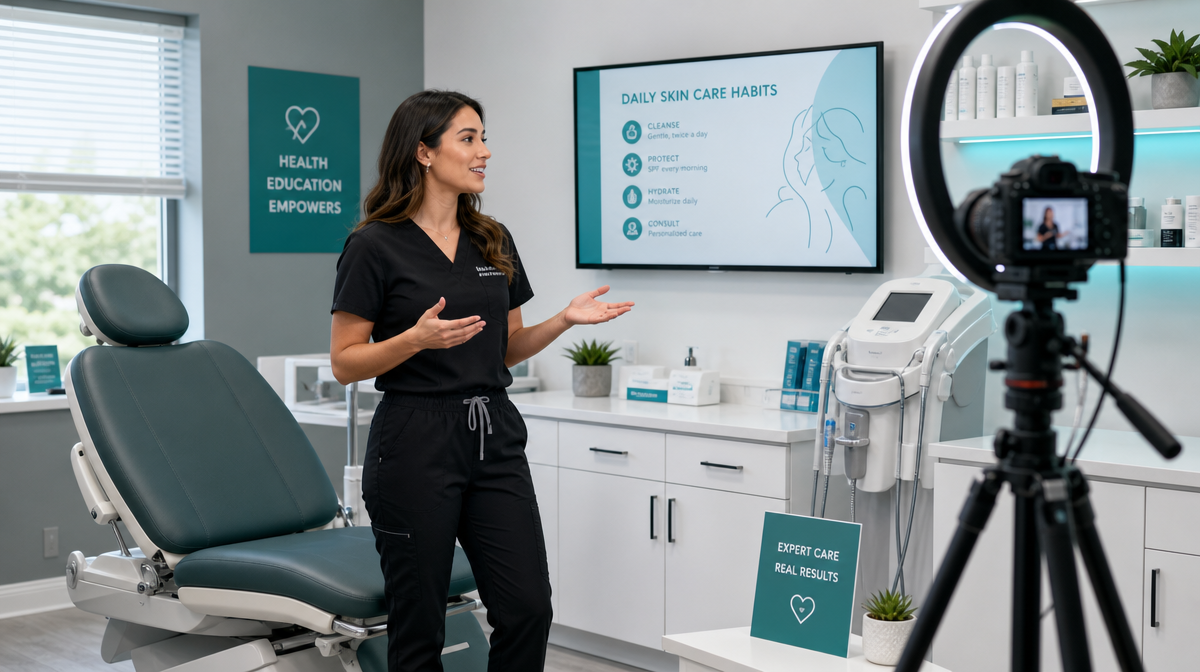
The first videos to make are the ones patients ask for without knowing it. Start with provider question-and-answer clips: one provider, one question that the front desk hears every week, answered in two or three minutes the way it would be answered in the exam room. Then a first-visit walkthrough, filmed in the actual office, that shows the parking, the check-in desk, the room and the person who will do the intake. Then procedure explainers for the services that bring in the most revenue or cause the most hesitation, each covering who tends to be a candidate, what the visit involves, what recovery looks like and how a consultation works. These are patient education videos as much as marketing, and that is why they work. Record them in batches, half a day at a time, so a provider can get comfortable and the practice ends up with a library rather than a single video.
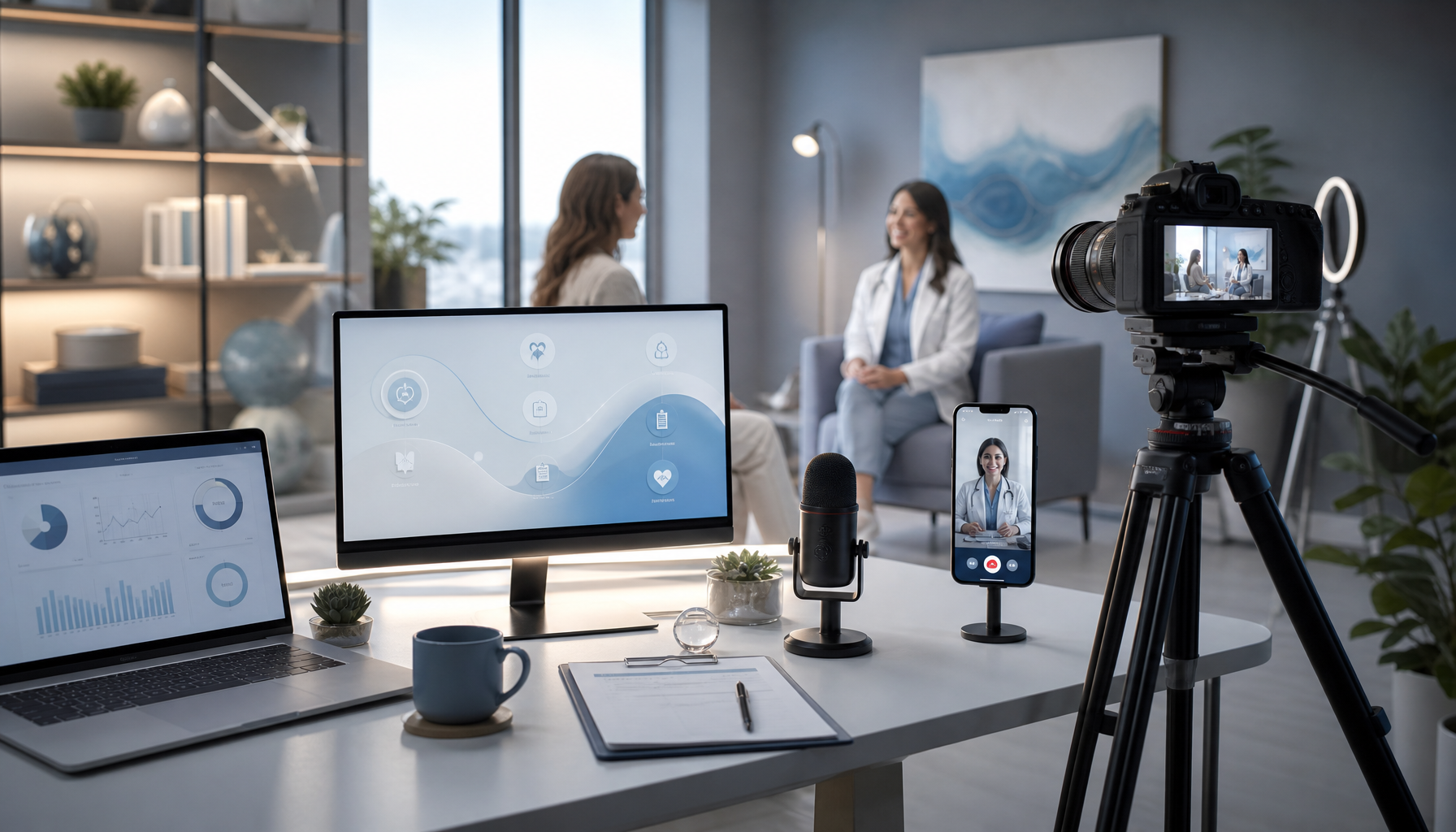
None of this needs a studio. A recent phone, a lapel microphone and a window or a soft light produce video that patients trust more than a polished commercial, because it looks like the place they are about to visit. A clear voice over an ordinary room beats a beautiful shot with echo. For aesthetic practices the same rule applies in a specific way. Transformation reels get attention and rarely book anyone, while a short explainer about what happens before a first injectable appointment does. The botox marketing that holds up over time answers the questions a cautious first-time patient has, and video is the most natural way to answer them.
A video that lives only on a social feed disappears within days. A video that lives on the practice’s website keeps working for years, but only if search engines can find and understand it. Each important video should have its own page on the site, or sit prominently on the service page it supports, with a title and description written for that video alone, a transcript on the page and a clear thumbnail. Embed the video in the page rather than linking out to it, and add video structured data so search engines know what the file is, how long it runs and what it covers. Google’s own guidance on video SEO best practices comes down to the same points: a dedicated watch page, metadata that describes the video, and video and thumbnail files at stable addresses the crawler can reach.
YouTube is the second home for the same videos, and the titles there should read like the questions patients type: whether a treatment hurts, how long recovery takes, what a first visit involves. A provider answering that exact question, titled that exact way, shows up for people who would never have searched for the practice by name. Google Business Profile accepts short video uploads as well, and a thirty-second office walkthrough or provider greeting there gives the listing something almost no competing listing has. The three places together, the practice site, YouTube and the Business Profile, cover the moments when a patient is actively looking.

Short-form social is where the long videos get a second life. A three-minute provider answer becomes three clips of forty seconds each, one per point, posted to Instagram, Facebook and TikTok over a few weeks. Captions go on every clip, because most people watch with the sound off and a silent video of a provider talking communicates nothing. The caption text should lead with the question, not with the practice name or a pitch; a clip that opens with the thing a viewer is already wondering earns the next few seconds of attention. Physical therapy practices tend to do this well because their work is visible. Short exercise demonstrations and recovery tips show a therapist’s approach in a way no bio can, which is why they anchor so much effective physical therapy marketing; a patient who has watched a therapist explain a stretch already knows what a session with that person will feel like.
Consistency matters more on social than polish does. A practice that posts a modest clip every week stays in front of the people who follow it; one produced video a quarter is forgotten between posts.
Everything above assumes the practice has handled consent and privacy before anyone presses record, and that part deserves its own routine. No patient appears on camera, and no identifiable patient detail appears in a video, without written authorization that spells out where the video will be used and for how long. The HHS answer to the question of when patient authorization is required for marketing is direct: with narrow exceptions, a practice needs the patient’s authorization before using protected health information in marketing. A video of a patient is that information. A verbal yes in the hallway is not authorization, and a signed form from two years ago that mentioned the website does not cover a clip on a social platform the practice joined last month.
The same care extends to what is in the frame. Before filming in a clinical area, someone checks the background for charts, whiteboards, computer screens, printed schedules and sign-in sheets, and either removes them or moves the shot. Staff and patients who walk through the background are not consented just because they were not the subject. Once a video is published, the comment threads need the same discipline the front desk already uses: replies stay general, nobody is thanked for being a patient, and a question about someone’s own care gets moved to the phone. A HIPAA-conscious approach to video is mostly a set of habits, and once the habits are in place they add a few minutes to each shoot rather than standing in the way of it.
Patient stories are the videos practices want most and handle worst. The ones that work focus on the experience: how the patient was treated, what the first visit was like, how questions were answered, what recovery actually felt like week by week. The ones that cause trouble focus on the result, implying that what one patient got is what the next patient will get. Keep outcome claims out of the script and out of the title, avoid before-and-after framing that suggests a typical result, and let the patient describe the care rather than grade the outcome. This is especially important for elective surgery, where a consented story about the consultation, the planning and the recovery process does far more for a hesitant viewer than a reveal does. A practice building its mommy makeover marketing around that kind of story, the experience of being seen, planned for and supported through recovery, gives prospective patients the reassurance they are looking for without promising anything the practice cannot promise.
Regulated and newer treatments need the same restraint in video that they need in writing, and video makes restraint harder because a provider speaking off the cuff can say in a sentence what a copywriter would have flagged. For regenerative and cash-pay services, the script describes what the treatment is, who may be a candidate, what the visit involves and what the evidence does and does not say, and it routes the viewer to a consultation rather than to a conclusion. Cure language, guaranteed-result language and claims that go beyond what the practice can support stay out, and someone reviews the recording before it is posted the same way they would review a web page. That review step is the difference between video that supports a practice’s exosome therapy marketing and video that creates a problem with an ad platform or a regulator.
Measurement is where most medical video marketing programs fall apart, because platforms make views easy to see and appointments hard to see. Views are not the goal. The numbers that matter are the ones that connect a video to a booked patient: how long visitors watch on the practice’s own pages, how many of them click from a video page to the booking page, how many calls and form submissions come through the Google Business Profile after a video is added, and which videos new patients mention at intake. The last one is the simplest and most overlooked. Ask every new patient how they found the practice, make “a video” one of the answers on the intake form or the front-desk script, and note which video when they can remember. Over a few months that question shows which videos produce patients and which produce views, and the next batch of recording follows the answer.

There is one more place video is starting to work, and it is not a video platform. AI assistants increasingly answer patient questions by drawing on pages that explain a treatment clearly, and a transcript of a provider answering a common question, published on the practice’s own site next to the video, is exactly that kind of page. Practices that put transcripts and plain-language summaries alongside their videos are building the AI-driven search visibility that gets a practice named when a patient asks an assistant who treats a condition nearby. The video earns the trust; the transcript earns the mention.
A.L.I. 360 by Target Patients MD is a proprietary AI-powered patient-acquisition system for medical and dental practices. The name stands for Attract, Learn, and Influence. In a video program, it connects the pieces that usually sit apart: which videos bring visitors to which pages, which of those visitors book, and what the practice should record next based on what is actually producing patients rather than on what is getting views.
Video marketing for doctors does not need a big library to start. It needs five videos that each answer one patient’s question at one point in the decision, published where that patient is looking, with consent handled before the camera comes out and a way to learn which ones turn into appointments. If you would like help deciding which videos to make first for your specialty and where they should live, request a practice growth session and we will map it with you.
- What is healthcare video marketing?
It is the use of video to help prospective patients understand a practice, its providers and its treatments well enough to book an appointment. The videos that work are matched to a specific decision point, such as learning about a treatment, comparing practices or preparing for a first visit, and are placed where that patient is looking, usually on the practice’s own site first and on YouTube and social platforms second. - What videos should a medical practice make first?
Start with provider question-and-answer clips that address the questions the front desk hears most, then a first-visit walkthrough filmed in the real office, then explainers for the procedures that bring in the most revenue or cause the most hesitation. These three types cover the decisions that lead to appointments and can be recorded in a single batch with a phone and a lapel microphone. - Do patients need to sign a release before appearing in a practice video?
Yes. A patient’s appearance in a marketing video is protected health information, and with narrow exceptions the practice needs the patient’s written authorization before using it. The authorization should name where the video will appear and for how long, and a new use, such as a platform the practice joins later, needs its own authorization. - Should practice videos go on YouTube or on the practice’s own website?
Both, in that order of priority. The website version sits next to the service page and the booking button, with its own title, description and transcript so search engines can index it. The YouTube version reaches people who search the question directly and never looked for the practice by name. Short clips for social platforms are then cut from the same recording. - How do you measure whether healthcare video marketing is working?
Measure booked appointments rather than views. Track watch time on the practice’s own pages, clicks from video pages to the booking page, calls and form submissions from the Google Business Profile after a video is added, and which videos new patients mention at intake. Those numbers show which videos produce patients and tell the practice what to record next.