


If you’ve ever Googled “how do I get more mommy makeover patients,” you already understand the problem: most marketing advice out there is written for general businesses, not for surgical practices competing for a specific, high-consideration patient who takes months to decide and thousands of dollars to acquire.
Mommy makeover marketing is the set of specialized digital strategies plastic surgery practices use to attract, educate, and convert prospective patients who are considering a post-pregnancy body restoration. It’s distinct from general cosmetic surgery advertising because the buyer journey is longer, the emotional stakes are higher, and the service itself is a bundled package rather than a single procedure.
That package typically combines three or more of the following procedures, customized to each patient’s anatomy and goals:
- Tummy tuck (abdominoplasty) — tightening loose abdominal skin and separated muscles
- Breast lift and/or augmentation — restoring volume and position lost through pregnancy and breastfeeding
- Liposuction — removing stubborn fat deposits that resist diet and exercise
Because you’re marketing a multi-procedure, high-ticket service to emotionally motivated patients who are also price-sensitive and deeply skeptical, your plastic surgery marketing approach has to work harder than a standard PPC campaign. It requires the right channels, the right message, and the right conversion infrastructure — all working together to move someone from a late-night Instagram scroll to a booked consultation at your practice.
The timing for investing in mommy makeover marketing has never been stronger — and the data backs it up. The American Society of Plastic Surgeons consistently ranks body contouring procedures among the fastest-growing categories in elective surgery, with combination procedures seeing particularly sharp upticks as patients seek efficient, single-recovery solutions.
Four converging forces are driving that growth right now:
- Social media’s body confidence effect: Platforms like Instagram and TikTok have normalized cosmetic surgery conversations in ways that would have been unthinkable a decade ago. A review of nearly 14,000 participants confirmed social media significantly influences cosmetic surgery decisions, and transformation content generates millions of views monthly, shortening the time between a woman first considering the procedure and actively searching for a surgeon.
- Millennial mothers hitting peak decision age: The largest generational cohort in U.S. history is now squarely in the 30–45 range — the demographic window when most mommy makeover patients convert. These women are digitally fluent, research-driven, and financially positioned to act on elective procedures.
- Declining stigma around elective cosmetic surgery: Cultural attitudes have shifted significantly. Patients who might have hesitated to discuss the procedure openly are now sharing their experiences publicly, which creates organic social proof that accelerates demand across entire markets.
- The GLP-1 weight-loss wave: A growing share of mommy makeover candidates are women who’ve lost significant weight on GLP-1 medications and now want to address loose skin and lost volume — a fast-emerging demand pattern most practices haven’t built messaging around yet.
For your practice, this means there is an expanding pool of qualified prospects actively searching for a surgeon right now — a UC Davis study found cosmetic procedure search demand increased more than 22% nationwide.
Before you spend a dollar on mommy makeover advertising, you need a clear picture of exactly who you’re trying to reach — because this patient behaves differently from virtually every other cosmetic surgery prospect you market to.
The core demographic is a mother between 30 and 45 who has completed her family — ASPS data shows the 30–39 age group alone accounts for 27% of tummy tucks. She is not casually browsing. She has typically been thinking about this procedure for six months to two years, quietly researching surgeons, reading forums, saving before-and-after photos, and calculating whether she can afford the downtime. By the time she fills out a contact form on your website, she has already disqualified several practices.
| Profile Dimension | What It Means for Your Marketing |
|---|---|
| Demographics — Mother, age 30–45, done having children | Target by age range and parenting status across paid channels |
| Motivation — Reclaiming her pre-baby body and sense of self | Lead with emotional resonance, not clinical procedure lists |
| Research behavior — Long consideration cycle, comparison-heavy | Invest in nurture sequences; one touchpoint rarely converts |
She is also price-sensitive in a specific way: the total cost feels daunting, but she is genuinely open to financing if someone explains it clearly and removes the friction. Practices that surface financing options early in the funnel consistently see higher consultation conversion rates than those that bury payment details in a PDF after the first call.
Not all marketing channels deliver the same quality of mommy makeover leads — and spreading your budget across every platform equally is one of the fastest ways to burn cash without filling your consult calendar. The four channels below consistently outperform everything else for this specific procedure.
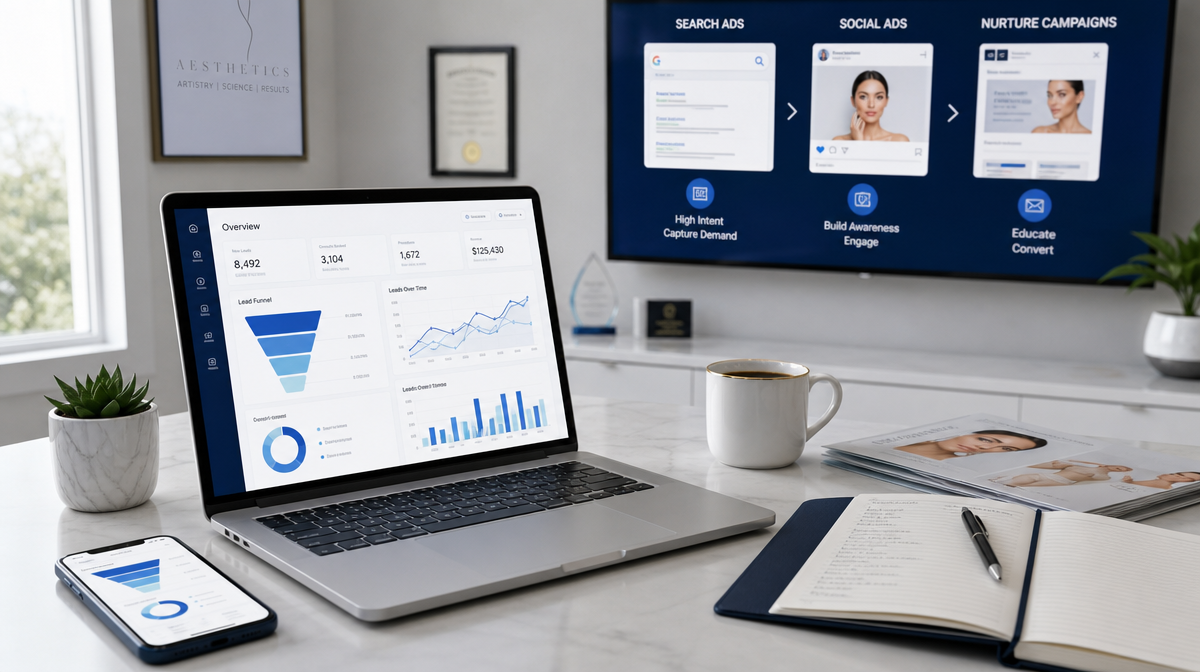
- Google Search Ads: Queries like “mommy makeover near me” and “mommy makeover cost [city]” carry commercial intent that is nearly unmatched in cosmetic surgery. Bidding on procedure-specific and cost-modifier keywords puts your practice directly in front of women who are already in decision mode — the same high-intent approach that works for single-procedure campaigns like rhinoplasty or tummy tuck marketing. Tight ad group structure — one theme per ad group, copy that mirrors the search query, and a dedicated landing page for each keyword cluster — is what separates a $40 cost-per-click that converts from one that just drains your account.
- Meta Ads (Facebook and Instagram): Where Google captures demand, Meta creates it. Before-and-after creative — within platform policy guidelines — stops the scroll for women who haven’t started searching yet. Layering age and parental status targeting narrows delivery to your ideal demographic, while retargeting campaigns re-engage website visitors who browsed your gallery but didn’t book.
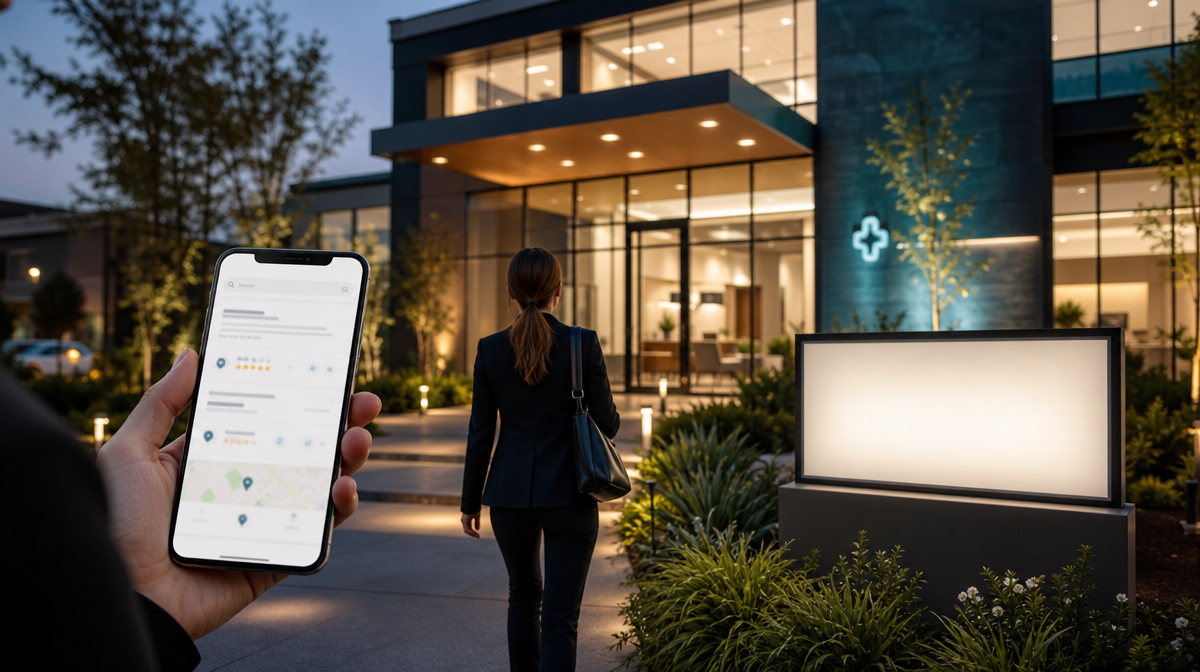
- Local SEO: Optimizing your Google Business Profile with procedure-specific services, accumulating reviews that mention mommy makeover by name, and building city-targeted landing pages positions your practice to appear in the local pack when nearby prospects search organically.
- Email and SMS nurture: Because the average consideration timeline stretches months, leads who don’t convert immediately need systematic follow-up — financing education sequences, appointment reminders, and personalized touchpoints that keep your practice top of mind until she’s ready to book.
Your website is doing more selling than you realize — and probably more losing, too. For a mommy makeover patient who has spent months quietly researching, your site is the final audition before she picks up the phone. If your website design doesn’t pass her test in the first 30 seconds, she closes the tab and calls someone else.
Three elements separate a practice website that books consultations from one that just generates traffic:
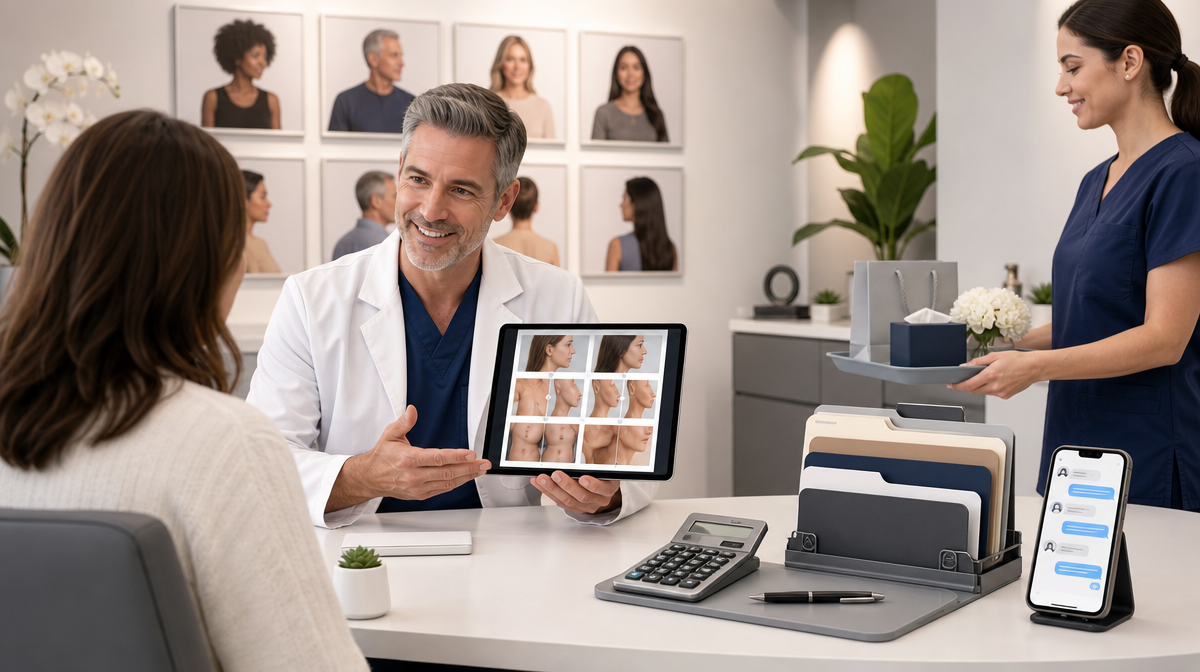
- Before-and-after galleries with diversity: Real patient photos — showing a range of body types, ages, and procedure combinations — reduce the single biggest objection in elective surgery: “Will this actually work for someone who looks like me?” Consent-compliant, high-resolution imagery builds the kind of procedural confidence no copywriter can manufacture.
- Financing front and center: Burying CareCredit and Alphaeon options in a FAQ page is a conversion killer. Prospects who see financing presented prominently on procedure pages are significantly more likely to request a consultation, because the perceived barrier of total cost drops the moment monthly payment math becomes visible.
- Mobile-first pages with a single CTA: More than 70% of cosmetic surgery research happens on a smartphone. A page that loads slowly, requires pinching and zooming, or presents three competing calls to action — “call us,” “fill out a form,” “download a guide” — splits attention and loses bookings. One page, one goal, one prominent click-to-call button.
Think of your website not as a digital brochure but as your highest-volume patient coordinator — one that works around the clock and either closes or loses the consult before your staff ever answers the phone.
Search is no longer just ten blue links. When a prospective patient asks ChatGPT “what’s the best mommy makeover surgeon near me” or gets an AI Overview at the top of her Google results, the practices cited there didn’t earn that placement through traditional SEO alone — they earned it through Generative Engine Optimization (GEO).
GEO is the discipline of structuring your content so it gets pulled into AI-generated answers across platforms like Google’s AI Overviews, Perplexity, and ChatGPT. For your practice, that means writing procedure pages that directly answer the questions these models are trained to surface — cost ranges, candidacy criteria, recovery expectations, and surgeon selection factors — using clear, citable language that an AI can quote with confidence.
Beyond content structure, AI is reshaping how campaigns run day-to-day. Practices using AI-driven patient acquisition systems can dynamically adjust bidding, rotate ad creative based on real-time engagement signals, and trigger personalized follow-up sequences without manual intervention. This is where tools like Target Patients MD’s A.L.I. 360 technology operate — automating the decisions that most practices either make too slowly or skip entirely.
The compounding advantage is significant: practices that optimize for both traditional search and AI-generated results capture patients at two distinct touchpoints in the same research session. As a growing share of mommy makeover searches begin with a conversational AI query rather than a keyword, being absent from those results means handing warm prospects directly to competitors who got there first.
A mommy makeover costs $10,000 to $20,000 or more. At that price point, your prospective patient is not taking chances on an unknown surgeon — she is reading every review she can find before she ever contacts your practice. Proactive reputation management is not a nice-to-have for high-ticket elective procedures — reviews are the primary trust mechanism that either opens or closes the door to a consultation.
The challenge specific to this procedure is that satisfied patients are often private about the experience. Unlike a dental cleaning, mommy makeover patients rarely volunteer a public review without a deliberate, well-timed ask. The most effective approach is a structured post-operative outreach sequence — a personal message from the surgeon’s office at the 6-week mark, when patients are seeing results and emotional satisfaction peaks.
Beyond volume, quality and specificity matter enormously. A review that mentions the procedure by name, describes the consultation experience, and references recovery support carries far more weight with prospective patients than a generic five-star rating. When you respond to reviews — both positive and critical — you signal to prospects that your practice is attentive and professional.
Video testimonials take this a level further. A 60-second patient video, shared with proper consent on your website and social profiles, does something no written review can: it lets a prospective patient see and hear from someone who made the same decision she is now weighing. That emotional connection shortens hesitation in ways that no paid ad creative can replicate.
Running mommy makeover advertising without understanding the compliance landscape is how practices end up with suspended ad accounts, FTC warning letters, or patient complaints that damage their reputation permanently. The regulatory stakes for this specific procedure category are higher than most surgeons realize.
The FTC requires that any before-and-after content used in advertising reflect typical results — not exceptional outcomes. If the imagery you’re running in paid ads or on your website represents your best-case patient rather than a representative one, you need a clear disclosure. “Results may vary” in six-point font at the bottom of a landing page does not satisfy that standard.
Beyond federal guidelines, both Google and Meta have platform-specific restrictions on cosmetic surgery content that go further than FTC rules. Here are the core compliance requirements your mommy makeover marketing must address:
- Before-and-after photos require explicit patient consent documentation and cannot be used in Meta Ads at all — organic posts and website galleries only
- Outcome language must stay grounded in physical results; psychological benefit claims like “feel like yourself again” can trigger platform flags and FTC scrutiny
- Pricing representations must reflect actual costs — advertising a package price that excludes anesthesia or facility fees creates both legal and reputational exposure
- Prohibited medical claims include any language implying the procedure treats a medical condition unless that indication is clinically established
The American Society of Plastic Surgeons publishes advertising ethics guidelines that align closely with FTC standards and serve as a practical compliance benchmark for any practice running active mommy makeover campaigns.

Most plastic surgery practices running their own mommy makeover marketing are doing it in silos — a Google Ads account managed by one vendor, a social media agency handling Meta, and an in-house coordinator trying to stitch the pieces together into something resembling a patient pipeline. The result is disconnected data, overlapping spend, and a consult calendar that never quite fills the way the numbers suggest it should.
Target Patients MD was built specifically around this problem. Working exclusively with medical practices — including plastic surgeons competing in some of the most saturated cosmetic markets in the country — the team combines a proven plastic surgery marketing playbook specialization with the A.L.I. 360 technology platform to run every acquisition channel as a unified system rather than a collection of separate campaigns.
What that means in practice:
- Paid search, Meta, local SEO, and AI-optimized content running from a single strategy with shared performance data
- Automated lead nurturing sequences that follow up with prospects across the full consideration cycle — not just the first 48 hours
- Compliance-aware creative built for cosmetic surgery ad policies from the start, not retrofitted after a campaign gets flagged
- A results guarantee — built around patient growth and measurable campaign performance
If your practice is ready to stop guessing which channel is actually producing consultations, learn more about Target Patients MD and what a fully integrated approach looks like for your specific market.
Mommy makeover marketing raises a lot of practical questions — especially for surgeons who are new to running paid campaigns or scaling a service line they haven’t heavily promoted before. Here are the answers to what practice owners ask most.
- What is the average cost of a mommy makeover procedure? Procedure pricing varies considerably — most patients encounter quotes ranging from roughly $10,000 to $25,000 depending on which procedures are included, the surgeon’s credentials and market positioning, and geographic cost-of-living factors. A practice in Miami or Los Angeles will typically command different pricing than one in a mid-sized Midwest market.
- Which marketing company specializes in plastic surgery practices? Healthcare-focused agencies like Target Patients MD are better equipped for this niche than generalist firms because they understand cosmetic surgery ad policies, HIPAA-adjacent content standards, and the specific patient psychology that drives consultation bookings — knowledge that general digital agencies rarely bring to the table.
- How much should a plastic surgery practice spend on mommy makeover advertising? Budget depends on your local competitive landscape and growth targets. Practices prioritizing fast consult volume typically allocate more heavily toward paid search, while those building long-term organic visibility invest in SEO — most growth-oriented practices do both simultaneously.
- How long does mommy makeover marketing take to produce consultation bookings? Paid search campaigns can generate qualified consultation requests within days of launching. SEO and content-driven strategies typically require three to six months before producing consistent organic lead volume.