


Medical weight loss marketing is the practice of promoting physician-supervised weight management programs — including GLP-1 medication protocols, behavioral counseling, and structured dietary interventions — to patients actively searching for clinical solutions to obesity and excess weight. It sits at the intersection of healthcare marketing and direct-to-consumer advertising, which means the rules, the stakes, and the patient expectations are all higher than your average service business.
A few years ago, this space looked very different. Clinics competed on meal plans, appetite suppressants, and body composition testing. Then GLP-1 receptor agonists changed everything. The explosion of Semaglutide (Ozempic, Wegovy) and Tirzepatide (Mounjaro, Zepbound) created a wave of patient demand unlike anything the weight loss industry had seen before — and it happened almost overnight.
Here is what that shift means for your marketing strategy today:
- Medical weight loss marketing: A channel-specific approach to attracting, converting, and retaining patients for clinically supervised weight loss programs, including GLP-1 prescribing, metabolic testing, and ongoing medical management.
- GLP-1 medications: Injectable drugs like Ozempic, Wegovy, Mounjaro, and Zepbound — nearly 8% of all prescriptions filled in early 2026 — that have become the primary reason patients are now searching for medical providers rather than commercial diet programs.
- Why this matters now: Patient search behavior has shifted dramatically. Queries like “Semaglutide near me” and “GLP-1 doctor [city]” are surging, and clinics that have not updated their messaging and SEO to match are invisible to a huge portion of ready-to-book patients.
Not every weight loss patient is the same — and marketing to them as if they are is the fastest way to waste budget. The clinics that convert efficiently segment their audience by treatment intent and tailor the message, channel, and objection-handling to each group:
| Patient Segment | Primary Motivation | Best Channel | Key Objection |
|---|---|---|---|
| GLP-1 seekers | Fast, medication-driven results | Google Search Ads, local SEO | Cost and insurance coverage |
| Bariatric candidates | Significant, lasting weight loss | Comparison content, consultations | Surgery risk and recovery |
| Lifestyle-program patients | Supervised, non-surgical support | Meta Ads, educational content | Whether it will actually work |
When a patient decides they want medical help losing weight, they do not browse national directories or scroll through telehealth comparison sites. They open Google and type something like “weight loss clinic near me” or “Semaglutide doctor in [city].” That single search moment is where your clinic either wins the patient or loses them to a competitor down the street.
The numbers reinforce this. The majority of healthcare searches have local intent, and patients gravitate to the top three positions of Google’s local map pack — which capture more local-search clicks than organic and paid results combined. If your clinic is not visible in that pack, you are functionally invisible to a massive share of ready-to-book patients, regardless of how good your clinical outcomes are.
Local visibility is not just a vanity metric. It is a direct patient volume lever. Consider what drives the decision:
- Proximity and convenience: Patients want a provider they can physically get to, especially for ongoing GLP-1 injections and follow-up appointments.
- Trust signals in search results: Star ratings, review counts, and verified business profiles all appear before a patient ever reaches your website.
- First-mover advantage: Whichever clinic appears first gets the majority of clicks — the second and third results split what remains.
This is why every effective medical weight loss marketing strategy has to start with local search. Clinics that pair weight loss with other cash-pay services can apply the same local-first approach across their whole menu, as covered in our guide to wellness clinic marketing. The following sections break down exactly how top clinics build and maintain that dominance.
Most weight loss clinics offer similar services — GLP-1 prescriptions, supervised programs, metabolic support. What separates the clinics that consistently fill their schedules from the ones struggling to compete is not the treatment menu. It is the brand. Your brand is the sum of what patients believe about you before they ever book a consultation, and in a crowded market, that perception is built or broken in seconds.
Brand identity in a clinical setting goes well beyond a logo and a color palette. It is the specific promise you make to patients — the transformation you stand behind — and how consistently that promise shows up across every touchpoint, from your Google Business Profile headline to the words on your intake form. Clinics that win on brand tend to have one thing in common: they lead with a clear, differentiated patient promise rather than a generic list of services.
Part of that positioning is drawing a hard line between what you offer and what patients have already tried and abandoned. The language you use should make the “medical” distinction unmistakable:
| Generic Weight Loss Messaging | Medical Weight Loss Positioning |
|---|---|
| “Lose weight fast” | “Clinically supervised weight management” |
| “Diet and exercise plans” | “Physician-guided GLP-1 protocols” |
| “Quick results guaranteed” | “Evidence-based, monitored outcomes” |
| “Affordable programs” | “Medical care with transparent financing” |
Here is what a conversion-focused weight loss clinic brand actually requires:
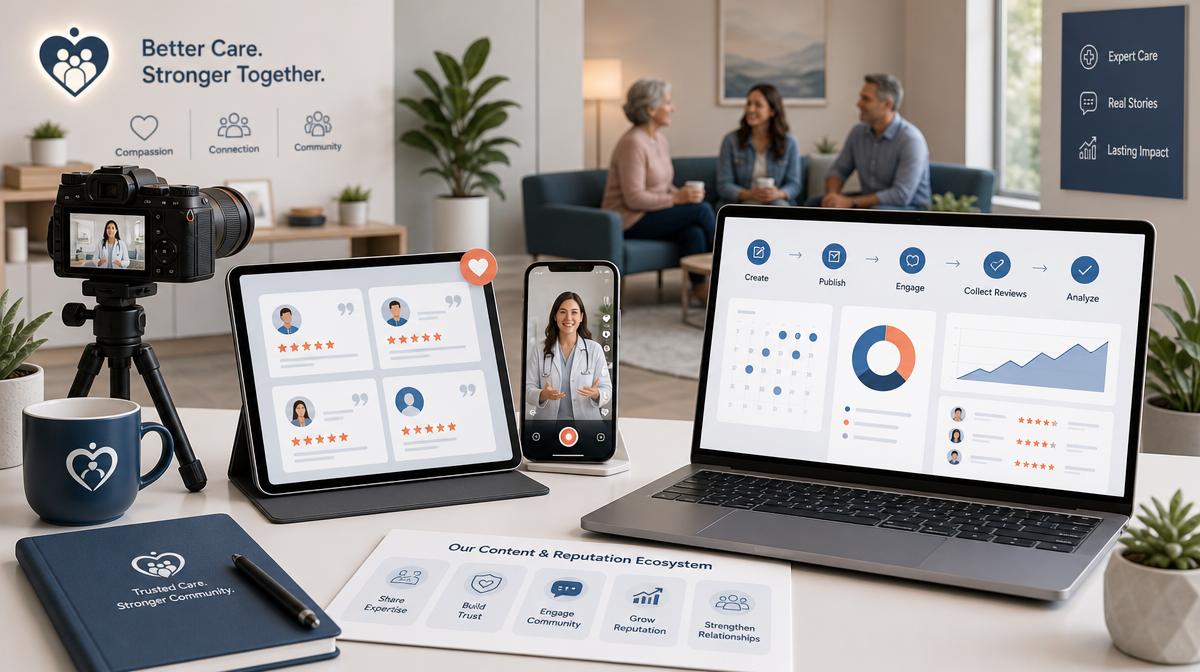
- A defined patient promise: Specific outcomes or experiences you commit to delivering, not vague claims like “personalized care.”
- Consistent voice and messaging: The same tone — empathetic, medically credible, results-focused — across your website, ads, and social profiles.
- Visual credibility: Professional photography, provider headshots, and a clean design that signals clinical authority rather than a generic wellness blog.
- A named differentiator: Something concrete that separates you from the telehealth GLP-1 brands and the clinic two miles away — whether that is same-week appointments, in-person monitoring, or a specific clinical protocol.
Strong branding does not just attract patients. It reduces the friction between interest and booking by making the decision feel obvious.
Your brand and messaging set the stage, but your website is where patient decisions actually get made. Think of it as your highest-volume sales rep — one that works around the clock and either converts visitors into booked consultations or quietly sends them to your competitor. Most weight loss clinic websites do the latter, because they were built to look good rather than to perform.
A high-converting medical weight loss website needs four things working together:
- Mobile-first, HIPAA-compliant design: More than 70% of healthcare searches happen on a phone. If your site loads slowly or buries the contact form three scrolls deep, you are losing patients before they read a single word. HIPAA compliance also extends to web forms — any field that collects patient health information must meet privacy and data security standards, not just look like a standard contact form.
- GLP-1 and program-specific service pages: A generic “weight loss services” page will not rank for “Semaglutide near me” or “Tirzepatide doctor in [city].” Each treatment needs its own dedicated page, optimized for the specific keyword and built to convert that specific patient intent.
- Instant quote and financing tools: Cost is the number one reason patients abandon the booking process. Quote calculators and financing options like CareCredit address that objection immediately, before the patient closes the tab.
- Trust signals and patient proof: Verified testimonials, before-and-after results, provider credentials, and board certifications reduce the hesitation that comes with any high-consideration medical decision.
In medical weight loss marketing, your website is not a brochure — it is a conversion system. Every element should move a visitor one step closer to booking.
Local SEO is the engine behind every medical weight loss marketing strategy that consistently fills a schedule. It is the set of tactics that determines whether your clinic appears in Google’s map pack when a nearby patient searches “GLP-1 doctor near me” — and it is almost entirely within your control.
Here are the five levers that top clinics pull to dominate local weight loss searches:
- Google Business Profile optimization: Your GBP is the single most influential factor for local pack rankings. Fill out every field — primary and secondary categories, services, hours, and photos. Post weekly updates and respond to every review. Clinics that treat their GBP as a living profile consistently outrank those that set it up once and forget it.
- Local citations and directory building: A citation is any online mention of your clinic’s name, address, and phone number (NAP). Consistent NAP data across Healthgrades, Vitals, Yelp, WebMD, and 70-plus healthcare directories signals legitimacy to Google and strengthens your local authority.
- GLP-1 and weight loss keyword targeting: Long-tail keywords like “Semaglutide near me,” “Tirzepatide doctor in [city],” and “medical weight loss [neighborhood]” capture patients at the exact moment they are ready to book. Generic “weight loss” terms attract browsers; specific GLP-1 terms attract buyers.
- Location and neighborhood landing pages: Multi-location clinics and even single-location practices can create dedicated city or neighborhood pages to capture hyperlocal searches that broader service pages miss entirely.
- Local link building and digital PR: Earning links from local news outlets, health blogs, and community organizations signals authority to Google in a way that on-page optimization alone cannot replicate.
Local SEO builds the foundation, but it takes time to compound. Paid advertising is how top clinics generate patient volume right now, while organic rankings are still climbing. The key is knowing which paid channels to use and what each one is actually good for.
- Google Search Ads: These target patients actively searching for terms like “weight loss clinic near me” or “Semaglutide doctor [city]” — the highest-intent traffic available. You pay when someone clicks, and you can set geographic boundaries so your budget only reaches patients in your service area. Google’s Local Services Ads take this a step further by operating on a pay-per-lead model and displaying a “Google Screened” badge that boosts credibility instantly.
- Meta Ads (Facebook and Instagram): These work differently. You are reaching patients earlier in their journey — people who have not searched yet but match the demographic and behavioral profile of a GLP-1 candidate. Interest-based targeting, lookalike audiences, and before-and-after creative make Meta a strong brand-building and lead-generation channel when managed correctly.
- Retargeting: Most website visitors leave without booking. Retargeting shows your ads to those warm visitors across Google, Meta, and display networks — keeping your clinic visible until they are ready to convert. Conversion rates on retargeted audiences consistently outperform cold traffic.
- GLP-1 ad policy compliance: Both Google and Meta restrict pharmaceutical and weight loss claims. Ad copy cannot make before-and-after guarantees or reference specific drug names in certain contexts. Working within these guardrails while still communicating your value proposition requires experience — a misstep can get your account flagged or suspended.
Paid ads put you in front of patients who are ready to book today. Content marketing does something different — it builds the trust that makes patients choose you when they are ready. Weight loss is a high-consideration decision. Patients research for weeks before picking up the phone, reading everything they can find about GLP-1 side effects, program costs, and what to expect at their first appointment. The clinics that publish that information own the relationship before the first call ever happens.
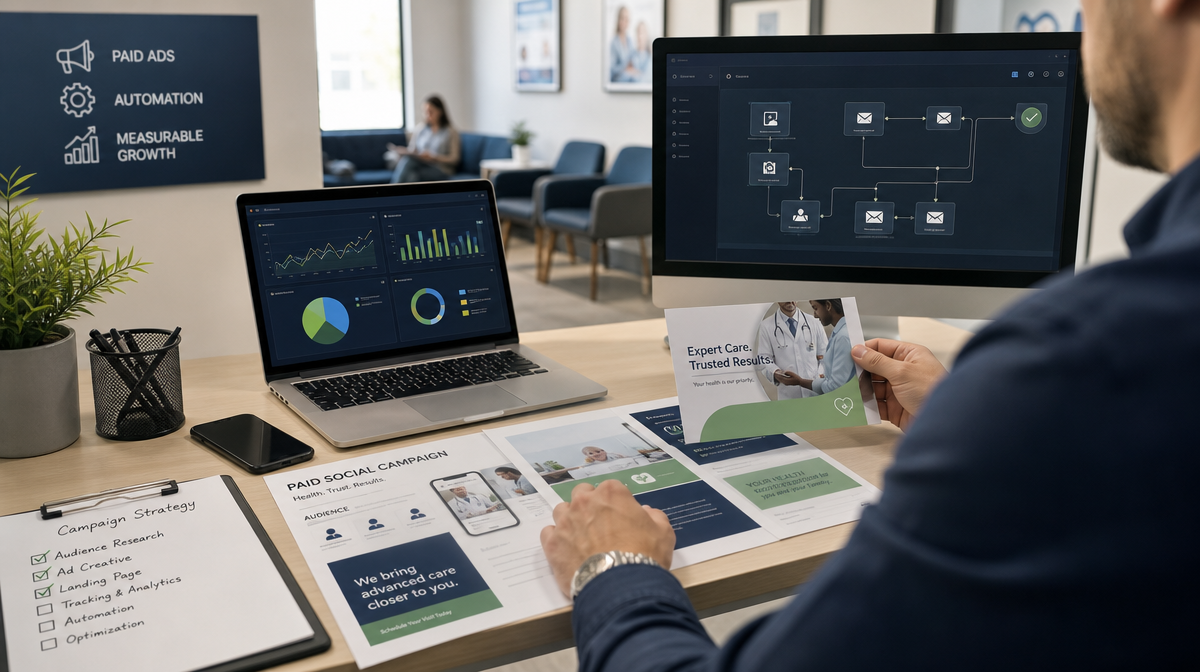
The three content formats that consistently drive patient acquisition for weight loss clinics are:
- Blog content matched to patient search intent: Articles like “Is Semaglutide safe long-term?” and “What happens at a medical weight loss consultation?” answer the exact questions patients are typing into Google. Each post is an opportunity to rank organically and pull in readers who are actively vetting their options.
- YouTube and video content: YouTube is the second-largest search engine in the world, and a two-minute explainer on how Tirzepatide works builds more trust than any ad creative. Providers who appear on camera build a personal connection that telehealth competitors simply cannot replicate at scale.
- Comparison and decision-stage content: Pages covering “Semaglutide vs. Tirzepatide” or “Medical weight loss vs. bariatric surgery” capture patients at the bottom of the funnel — the same bottom-funnel intent a focused bariatric surgery marketing strategy is built to convert — people who have already decided to act and are now deciding where to go. This is where strong medical weight loss marketing converts researchers into booked consultations.
Content takes time to compound, but the traffic it generates costs nothing per click and keeps working long after the article is published.
Organic social media is not your fastest path to booked consultations — paid ads handle that job. What social does better than any other channel is build the kind of community trust that makes patients feel like they already know your clinic before they ever call. That distinction matters enormously in weight loss, where patients are often vulnerable, skeptical, and comparing you against a dozen other options.
The three content types that consistently perform for weight loss clinic marketing on social are:
- Before-and-after patient stories: This is routinely the highest-engagement content category in the space. Real patient transformations — shared with written HIPAA consent — create social proof that no ad creative can replicate. The consent process is non-negotiable: document it, keep it on file, and never assume verbal permission is sufficient.
- Educational Reels and short-form video: TikTok, Instagram Reels, and YouTube Shorts put your providers on camera answering the questions patients are already Googling — “How fast does Semaglutide work?” or “What does a GLP-1 injection feel like?” This format builds provider personality and reaches new audiences who have not yet searched for your clinic.
- Private Facebook Groups for patient communities: A moderated group where current and prospective patients can ask questions, share progress, and receive support from your team creates a retention and referral engine that runs largely on its own. Leads who join a community before booking convert at significantly higher rates than those who only interact with your ads.
Consistency matters more than production quality here. A genuine 60-second provider video posted weekly outperforms a polished campaign posted once a month.
Most weight loss leads do not book on the first touchpoint. They fill out a form, get distracted, and move on — unless you have a follow-up system that keeps the conversation alive. Lead nurturing is the process of staying in front of those prospects with the right message at the right time until they are ready to commit. Without it, you are paying to generate leads that quietly disappear.
Top clinics run a four-step sequence that moves leads from inquiry to booked appointment:
- Step 1. Instant lead response: Speed-to-lead is one of the most underrated variables in medical weight loss marketing. Responding within five minutes of an inquiry — via SMS or phone — dramatically increases the likelihood of booking. Wait an hour and most leads have already moved on to a competitor.
- Step 2. Educational drip campaigns: Automated email sequences that explain GLP-1 options, set realistic expectations, and share patient success stories keep your clinic top-of-mind during the research phase without requiring your staff to manually follow up on every lead.
- Step 3. Booking and reminder automations: Embed scheduling links directly into your follow-up messages and layer in SMS reminders before appointments. This removes friction from the booking process and cuts no-show rates significantly.
- Step 4. Re-engagement and reactivation: Not every lead converts in the first 30 days. Automated campaigns targeting cold leads and past patients who did not complete treatment recover a meaningful percentage of revenue that most clinics simply write off.
The entire sequence runs on automation — meaning your front desk handles warm, ready-to-book patients rather than chasing cold inquiries manually.
Reviews are not a soft trust signal — they are a hard ranking factor. Google’s local algorithm weighs review quantity, recency, and response rate when deciding which clinics appear in the map pack. For weight loss patients specifically, reviews carry even more weight than in most healthcare categories because the decision is personal, emotionally charged, and often expensive. 84% of patients check online reviews before booking a single consultation.
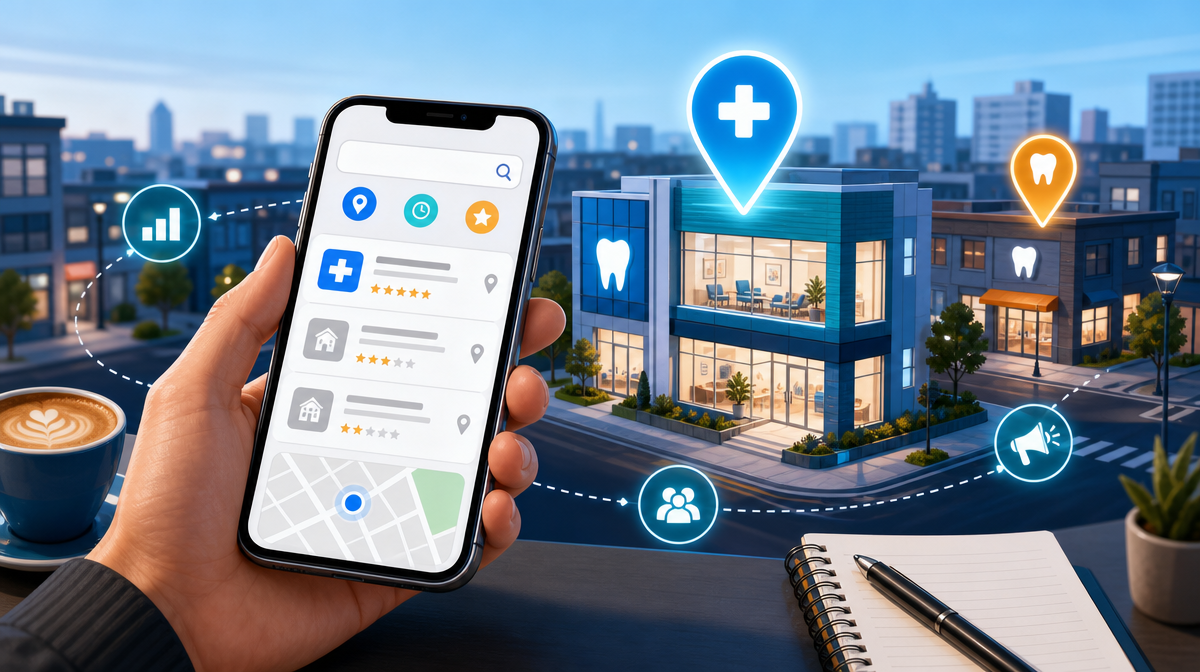
The clinics that consistently win on reputation do three things systematically:
- Automated review request campaigns: The highest-converting review requests go out within 24 to 48 hours of a positive appointment experience — when the patient’s satisfaction is fresh. Automated SMS and email sequences handle this at scale, removing the awkwardness of asking manually and ensuring no happy patient slips through without being prompted.
- HIPAA-compliant responses to negative reviews: Never confirm or deny that someone is a patient in a public response. Acknowledge the concern professionally, invite the reviewer to contact your office directly, and keep your reply brief. A thoughtful response to a one-star review often does more for prospective patients than the negative review itself does against you.
- Review syndication across your website and profiles: Embedding review widgets on your Semaglutide and Tirzepatide service pages puts social proof exactly where patients are making their decisions. Displaying your aggregate rating on landing pages and in ad extensions reinforces credibility at every touchpoint in your medical weight loss marketing funnel.
A clinic with 200 four-star reviews will consistently outperform a clinically superior competitor with 15 reviews. Volume and recency matter — build systems that generate both continuously.
You can run every channel in this guide perfectly — great SEO, dialed-in ads, solid email sequences — and still lose patients because nobody tracked the lead after it came in. That is where a CRM, or Customer Relationship Management system, becomes the difference between a marketing program that generates revenue and one that generates activity with nothing to show for it.
A weight loss-specific CRM does one job: it makes sure every inquiry that enters your funnel gets followed up with, tracked, and moved toward a booked appointment. Generic CRMs built for e-commerce or B2B sales do not account for the nuances of medical intake, HIPAA data handling, or the multi-touch follow-up patterns that weight loss patients require. The right system is purpose-built for your workflow.
Here are the core features top clinics rely on:
- Lead capture and tracking: Every form submission, phone call, and ad click is logged in one place, so no inquiry falls through the cracks between marketing and front desk.
- Automated SMS and email follow-up: Triggered sequences launch the moment a lead enters the system — no manual intervention required from your staff.
- Call recording and lead scoring: Recorded calls let you evaluate lead quality and coach front desk performance. Lead scoring surfaces the hottest prospects so your team prioritizes their time correctly.
- One-click intake forms: Reducing friction between booking and pre-visit paperwork improves show rates and shortens the path from inquiry to first appointment.
Without this infrastructure, even the most sophisticated medical weight loss marketing strategy is pouring water into a leaky bucket.
The CRM and automation infrastructure covered above handles the leads you already know about. What AI and generative search are changing is how patients find you in the first place — and the rules are shifting fast enough that clinics still running a 2022 SEO strategy are already losing ground.
Google’s AI-powered search experience now surfaces direct answers, clinic recommendations, and treatment summaries at the top of results — often before a patient ever clicks a link. That means ranking on page one is no longer enough if your content is not structured in a way that AI systems can read, extract, and cite confidently.
- Generative Engine Optimization (GEO): A newer discipline within medical weight loss marketing focused on making your content citable by AI search tools like Google’s AI Overviews and ChatGPT. This means clear, authoritative answers, structured data markup, and content that directly addresses patient questions — not just content that targets keywords.
- AI chatbots: Deployed on your website, AI chat tools engage prospective patients at 2 a.m. when your front desk is closed — answering GLP-1 questions, qualifying leads, and routing ready-to-book visitors directly to your scheduling link without human intervention.
- Predictive analytics: AI-driven ad platforms now optimize budget allocation in real time, shifting spend toward the audiences, times, and keywords that are most likely to convert — reducing wasted ad spend and improving cost per acquisition without requiring manual campaign adjustments.
Clinics that adapt their content and technology stack to AI-driven search now will have a compounding advantage over competitors who wait.
Knowing which channels to run is only half the equation. The other half is knowing whether they are actually working — and that requires tracking the right numbers instead of vanity metrics like impressions or follower counts.
Three metrics form the core of any honest medical weight loss marketing performance review:
- Cost per lead (CPL): What you spend in ad dollars or marketing fees to generate a single inquiry. This varies significantly by channel and market competitiveness, so benchmark it against your own historical data rather than industry averages.
- Cost per acquisition (CPA): What it costs to convert a lead into a booked, paying patient. This is the number that actually connects marketing spend to revenue — CPL without CPA tells you nothing about profitability.
- Return on investment (ROI): The revenue generated per dollar of marketing spend, calculated over the full patient lifetime value — not just the first visit. Partnering with a weight loss clinic marketing agency that understands recurring GLP-1 revenue makes a higher CPA acceptable compared to a one-time service, since ongoing protocols compound patient lifetime value.
Use this channel comparison to set realistic expectations across your marketing mix:
| Channel | Typical Lead Quality | Speed to Results | Best For |
|---|---|---|---|
| Google Ads | High intent | Immediate | Quick patient volume |
| Local SEO | High intent | Gradual | Long-term growth |
| Meta Ads | Awareness/consideration | Immediate | Brand building, retargeting |
| Email/SMS | Warm leads | Ongoing | Lead nurturing, retention |
Review these metrics monthly, not quarterly. Weight loss patient demand shifts with seasonality, GLP-1 news cycles, and competitor activity — your budget allocation should shift with it.
Every tactic in this guide — local SEO, paid ads, reputation systems, AI-driven content — only delivers consistent results when it is built, integrated, and managed by a team that understands medical weight loss specifically. Generic digital agencies learn your industry on your dime. Target Patients MD is built exclusively for medical practices, with deep GLP-1 expertise and a track record across 735-plus practitioners.
Here is what makes the partnership different from anything else in the medical weight loss marketing space:
- A.L.I. 360 technology: A proprietary platform that combines GEO-optimized content, predictive ad optimization, and automated lead management into a single system — purpose-built for patient acquisition, not generic lead generation.
- Flexible, results-driven engagement: Target Patients MD earns your business every month through performance and measurable patient growth, not a signed agreement.
- Outcome-focused performance: Campaigns are measured by qualified patient inquiries and booked consultations — the metrics that map to revenue — rather than the impressions and click counts generalist agencies report.
- GLP-1 ad compliance expertise: Navigating Meta and Google policy restrictions on pharmaceutical and weight loss claims requires specialists — not trial and error with your ad account on the line.
Most clinics are sitting on untapped local demand that their current marketing simply cannot capture. A free consultation with Target Patients MD starts with an honest audit of exactly where those patients are going instead of to you.
- How much does medical weight loss marketing cost? There is no single answer because costs depend on your market’s competitiveness, the channels you run, and your patient volume goals. Most clinics invest in a combination of paid ads for immediate lead flow and SEO for long-term compounding growth. The smarter question is not what marketing costs — it is what a new GLP-1 patient is worth over their lifetime of treatment, and whether your current spend is proportional to that value.
- How long does it take to see results from medical weight loss marketing? Paid search campaigns can generate qualified inquiries within days of launch. Local SEO and content marketing typically require several months before you see meaningful ranking improvements and organic traffic. Most practices running a blended strategy see measurable patient volume increases within the first 60 to 90 days.
- Can I run Google and Facebook ads for GLP-1 medications? Yes, but both platforms enforce strict policies on pharmaceutical claims and weight loss advertising. Ad copy, landing pages, and targeting must comply with current guidelines to avoid disapprovals or account suspension. Experienced healthcare marketers know how to communicate your program’s value within those guardrails without sacrificing conversion performance.
- What is the best marketing channel for a new medical weight loss clinic? New clinics typically see the fastest return from Google Ads targeting high-intent local searches, paired with a fully optimized Google Business Profile. Together, these two channels capture patients who are actively searching and ready to book — no audience-building required.
- How do I compete with national telehealth GLP-1 brands? Telehealth giants cannot replicate what a local clinic offers: in-person medical supervision, same-week appointments, and a provider patients can actually meet. Lean into those advantages in your messaging, reinforce them with local reviews, and target the patients who specifically search for in-person GLP-1 care. That is an audience national brands structurally cannot serve.