

If you’ve ever tried running a standard promotional ad for a cosmetic service and then attempted the same approach for Botox, you already know something felt different — and it’s not just intuition. Botox is a prescription-only neurotoxin regulated by the FDA, which means the advertising rules that apply to a facial or a laser treatment simply don’t apply here. Google, Meta, and the FDA each impose their own layer of restrictions on how, where, and with what language you can promote injectable treatments.
The practical result for your practice: botox marketing demands a framework built around patient education and benefit-driven language rather than direct product promotion. Think of it less like selling a service and more like earning informed consent at scale.
Here’s what that means in concrete terms for your campaigns:
- Avoid: Explicit medical claims, using the BOTOX® registered trademark in paid ad copy, and price-first CTAs like “Get rid of your 11s for $299”
- Avoid: Hashtags like #botox on Meta platforms, which can trigger ad disapprovals or account flags
- Use instead: Benefit-driven phrasing like “smooth fine lines” or “refresh your look”
- Use instead: Category language such as “anti-wrinkle treatments,” “wrinkle relaxers,” or “skin rejuvenation”
This compliance-first approach isn’t a limitation — it’s actually a competitive advantage. Practices that master compliant, education-led messaging build far more patient trust than competitors who chase clicks with aggressive promotional language and eventually get their ad accounts suspended for it.
Before you choose a single channel or write a single ad, you need to know exactly who you’re trying to reach. Botox patients aren’t one monolithic group — and the practice owners who treat them as such end up with campaigns that resonate with nobody in particular.
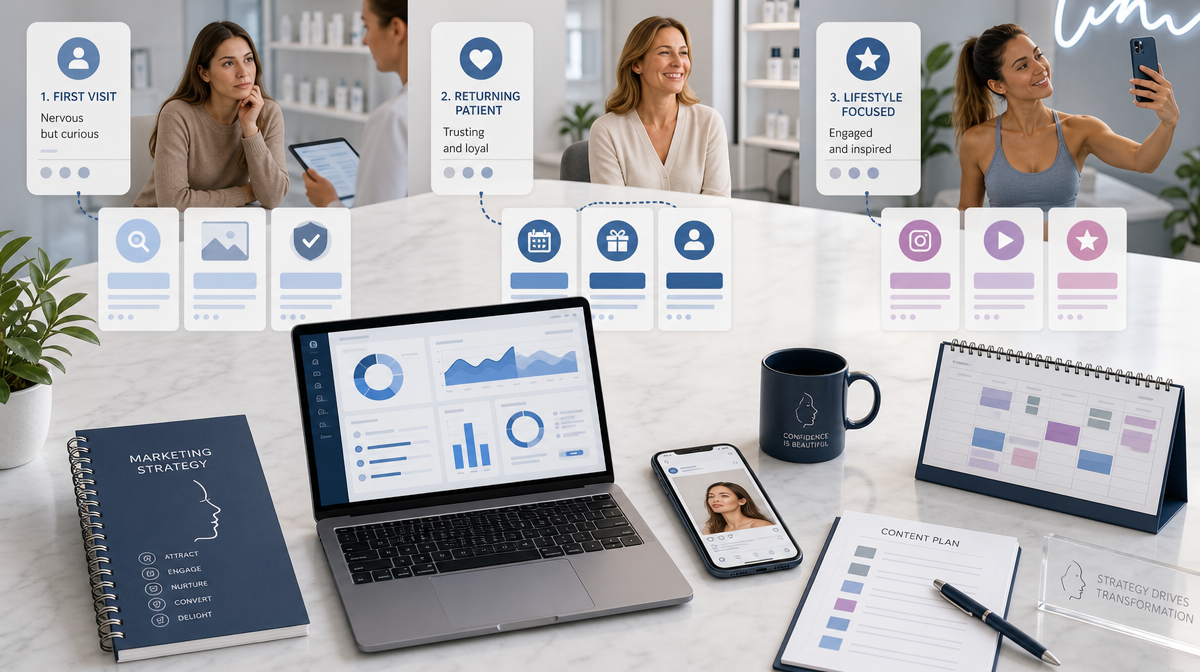
There are three distinct patient segments driving the majority of injectables revenue at aesthetic clinics right now, and each one requires a fundamentally different approach to messaging, timing, and platform selection.
These prospective patients are actively researching but haven’t committed. Their hesitation isn’t price — it’s fear: fear of looking frozen, fear of the needle, fear of making a permanent mistake with something that isn’t actually permanent. Your marketing job here is trust-building, not selling. Educational content that directly addresses the “what if it looks weird?” concern converts this segment far better than any discount offer.
Your existing patients who rebook every three to four months represent your most predictable revenue. They’ve already cleared the trust hurdle. What keeps them loyal — and prevents them from testing a competitor down the street — is convenience, recognition, and the feeling that your practice values their continued business.
This is the fastest-growing segment in the injectables market — neuromodulator use among 20-to-29-year-olds jumped 71% between 2019 and 2022. Younger patients aren’t coming in to fix deep lines — they’re coming in to stay ahead of them. They’ve been educated by TikTok and Instagram, they’re comfortable with the concept, and they respond to lifestyle-forward messaging rather than clinical language.
No amount of clever ad copy closes the gap between a prospective patient’s curiosity and their decision to book — but a compelling before-and-after photo of a real person getting natural results often does. Social proof is the single most persuasive conversion asset in your botox marketing toolkit because it answers the one question every first-timer carries into their research: Will I still look like myself?
The key word in that last sentence is “real.” Stock photography and overly polished studio shots actually work against you here — patients can spot inauthenticity instantly, and it erodes the trust you’re trying to build.
Here’s how to build a social proof system that actively moves prospective patients toward booking:
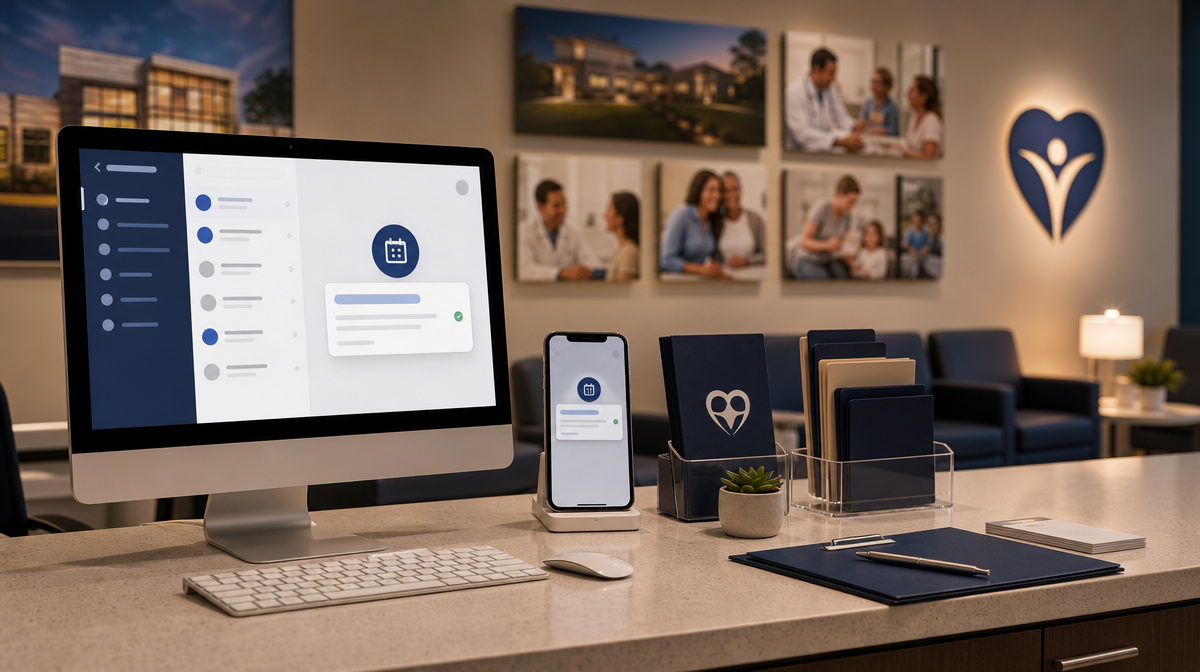
- Before-and-after galleries: Standardize your photo protocol — consistent lighting, neutral expression, same camera distance — so results are directly comparable. Always secure written authorization before publishing any patient image, and note that results vary.
- Video testimonials: A 60-second clip of a satisfied patient describing her experience in her own words outperforms static imagery because it communicates personality, not just results. Authenticity is the differentiator.
- Google and RealSelf reviews: Proactively request reviews within 48 hours of a successful treatment while the experience is fresh — 84% of patients check online reviews before choosing a provider, and review volume directly influences your local search rankings.
- User-generated content: Encourage loyal patients to tag your clinic on social media, then repost with explicit permission. UGC carries more credibility than anything your marketing team produces because it’s unsolicited.
Collect these assets consistently and distribute them everywhere — your website, Google Business Profile, and paid retargeting campaigns.
Yes, you can run paid ads for injectable treatments — but the path looks different depending on the platform, and mixing up the rules between Google and Meta is one of the fastest ways to burn budget or lose your ad account entirely.
Google Search is your highest-intent channel. Someone typing “wrinkle injector near me” or “anti-aging treatment [city]” is already decision-ready — they just need to find you. Google permits text ads targeting these queries, and your click costs here will be higher than display, but your conversion rates will be dramatically better because you’re intercepting active demand rather than creating it.
Target keywords worth bidding on in your Google campaigns:
- “Wrinkle treatment [city]” and neighborhood-level variants
- “Best injector near me” — high commercial intent
- “Anti-aging injections [city]” — compliant phrasing that still captures intent
- “Cosmetic injections consultation” — attracts first-timers at the consideration stage
Meta operates under a separate rulebook. Facebook and Instagram restrict brand-name mentions in ad copy for prescription products, so your creative strategy here shifts toward awareness and retargeting rather than direct response. Run short video campaigns showcasing patient experiences and natural-looking results. Then layer in retargeting audiences built from website visitors — people who already know your practice and just need a nudge to book.
The combination of Google capturing active searchers and Meta warming up passive audiences creates a full-funnel botox marketing system that neither platform can deliver alone.
Your Google Ads are doing their job — someone in your city just searched for a wrinkle treatment, clicked your ad, and landed on your website. What happens in the next eight seconds determines whether that click becomes a consultation or a bounce. Sending paid traffic to your homepage is one of the most expensive mistakes aesthetic practices make, because homepages are designed to introduce your whole practice, not convert a specific intent.
A dedicated landing page eliminates that friction. Every element on the page exists for one purpose: getting that visitor to book. Here’s what needs to be present for it to actually work:
- A benefit-focused headline above the fold: Lead with the patient’s goal, not your clinic name. “Look naturally refreshed without looking done” outperforms “Welcome to [Clinic Name]” every time.
- Visual proof positioned immediately: Place your strongest before-and-after imagery where visitors see it without scrolling — this directly addresses hesitation before the visitor has a chance to leave.
- Credentials and trust signals: Injector certifications, years of experience, and recognizable review platform badges compress the trust-building timeline for first-time visitors.
- A single, unmistakable CTA: One action — book a consultation or call now. Multiple competing buttons create decision paralysis and suppress conversions.
- Mobile-first design: The majority of patients searching for cosmetic treatments are on their phones. A page that loads slowly or requires pinch-zooming loses the booking before it begins.
A well-structured landing page can double your conversion rate from the same ad spend — making it one of the highest-leverage investments in your entire botox marketing operation.
Paid ads get you in front of patients who are actively searching right now — but local SEO for doctors is what fills your schedule three, six, and twelve months from now without ongoing ad spend. Most Botox patients pick a provider within a short drive of home or work, which means the practices that dominate the map pack and organic results for location-based queries have a structural advantage that compounds over time.
Five distinct levers drive local search performance for aesthetic practices, and each one reinforces the others:
- Location-specific service pages: Create dedicated pages for each city or neighborhood you serve. A single generic “Botox services” page can’t compete with a page built around “anti-wrinkle treatments in [Neighborhood], [City]” — Google rewards geographic specificity, and building those pages is the on-site half of medical SEO services.
- Educational blog content: Answering questions like “how long do wrinkle injections last” and “what areas can be treated” builds topical authority and captures long-tail searches that your competitors are ignoring.
- NAP consistency across directories: Your Name, Address, and Phone number must match exactly on Yelp, Healthgrades, RealSelf, and every other directory listing. Even minor inconsistencies — a suite number here, an abbreviation there — send conflicting signals that suppress your rankings.
- Weekly Google Business Profile activity: Regular posts, new photos, and updated offers signal to Google that your practice is active. Responding to every review — including the occasional critical one — also carries ranking weight, and the reply rules are covered in online reputation management for doctors.
- Generative Engine Optimization (GEO): When patients ask Google’s AI Overviews or ChatGPT to recommend a local provider, the answer comes from structured, authoritative content — how those answers are assembled is covered in AI in healthcare SEO. Most local competitors have not touched this channel yet. A.L.I. 360 by Target Patients MD, a proprietary AI-powered patient-acquisition system for medical and dental practices — the name stands for Attract, Learn, and Influence — is built to position your practice inside these AI-generated responses.
Botox has a built-in rebooking clock. The neurotoxin metabolizes in roughly 90 to 120 days, which means every treated patient represents a predictable future appointment — if you reach them at the right moment. Most practices let that window close through sheer inaction, watching a loyal patient drift to a competitor simply because nobody followed up.
Automated email and SMS sequences solve this without adding a single task to your front desk’s workload. The trigger is the treatment date stored in your practice management software. The sequence runs itself.
Three campaign types drive the most rebooking revenue for aesthetic practices:
- The 80-day touch-up reminder: Send an SMS at day 80 — before the patient starts noticing fade — framing the message around maintaining their results rather than correcting a problem. Proactive beats reactive every time.
- The VIP loyalty offer: Reserve your best pricing and earliest appointment slots exclusively for patients who rebook through your automated sequence. This creates a tangible incentive to respond rather than procrastinate.
- The educational nurture email: Between treatment cycles, send one or two brief emails covering complementary topics — skincare routines that extend results, new treatment areas, or seasonal skincare tips. Patients who feel informed stay more engaged with your practice overall.
The compounding effect here is significant. A practice running structured rebooking sequences fills a meaningful share of its monthly injectables schedule from automated outreach alone — appointments that would otherwise require paid acquisition to replace.
Digital channels fill your funnel with people who are already searching — but in-person events convert a different kind of prospect entirely: the one who’s curious but not quite ready to Google anything yet. An injector party or educational evening gives that person a low-stakes reason to walk through your door, meet your team, and form an opinion based on direct experience rather than a landing page.
The format matters less than the intention. What works is removing the clinical formality that makes first-timers hesitant and replacing it with a social environment where questions feel welcome. Consider these structures:
- VIP injectable evenings hosted at partner venues: Boutiques, yoga studios, and wine bars already have your target demographic walking through their doors. Co-hosting at a complementary local business puts your practice in front of warm audiences who trust the venue introducing you.
- Preventative treatment seminars: A 45-minute presentation framed around proactive skin health — not sales — draws younger patients who want education before commitment. The Q&A afterward does more conversion work than any brochure.
- Exclusive event-day perks: Complimentary consultations, first-appointment discounts, or add-on treatments reserved only for attendees create urgency without discounting your core service. People book when they feel the offer is genuinely limited.
Events also generate botox marketing content you can use for months afterward — patient testimonials, behind-the-scenes footage, and social posts that show your practice as a community presence rather than just a clinic. Film everything with consent, and your next event practically promotes itself.
Acquiring a new Botox patient costs real money — paid clicks, staff time, follow-up sequences. Keeping one costs almost nothing by comparison. That math is why a structured loyalty program isn’t a nice-to-have in your botox marketing mix; it’s a direct lever on profitability.
The most effective retention programs don’t just reward repeat visits — they create a psychological switching cost. When a patient has accumulated points, pre-purchased a treatment package, or holds “Gold” status at your practice, switching to the competitor two blocks away means leaving something tangible on the table.
Three program structures consistently outperform generic discount offers in aesthetic practices:
- Points-per-unit rewards: Patients earn credits with every treatment that can be redeemed against future visits or retail skincare products. This keeps spend inside your practice rather than leaking to outside retailers.
- “Bank Your Treatments” annual packages: Pre-selling a year’s worth of treatment units at a modest discount locks in 12 months of guaranteed revenue per patient while giving them a concrete savings reason to commit upfront.
- Referral incentives tied to membership tiers: Reward patients who bring in a friend with a credit that only activates after the referred patient completes their first treatment. This filters for quality referrals rather than casual mentions.
One practical note: whatever structure you choose, make the redemption process simple. Programs that require patients to track points manually or call the front desk to redeem see dramatically lower participation than those integrated directly into your booking confirmation workflow.
Ad spend buys you reach. A trusted local referral buys you credibility — and those two things don’t cost the same. Strategic partnerships let your practice borrow the goodwill that complementary businesses have already built with your exact target demographic, without adding a dollar to your monthly ad budget.
The businesses worth approaching aren’t just any local vendor — they’re establishments whose clientele already invests in their appearance and wellness. A high-end blowout bar, a boutique fitness studio, or a luxury bridal shop attracts women who are actively spending money to look and feel their best. That audience overlap is your opportunity.
Here’s how to structure these relationships so they actually generate appointments:
- Retail and salon cross-promotions: Offer an exclusive first-visit incentive redeemable only through the partner’s referral. This gives the partner something tangible to offer their customers and gives you a trackable attribution source.
- Micro-influencer trade arrangements: Local creators with 3,000 to 25,000 engaged followers often deliver stronger conversion rates than larger accounts because their audiences trust their opinions as peer recommendations. Offer a complimentary treatment in exchange for documented, authentic coverage — not a scripted endorsement.
- Joint client appreciation events: Co-hosting with a complementary business splits your venue and promotion costs while doubling your combined audience reach.
Track every partnership with a unique booking code or dedicated landing page URL. Without attribution data, you can’t distinguish which collaborations are filling chairs and which are just generating goodwill.
Millennials and Gen Z now represent the fastest-expanding patient segment in the injectables market — and their decision-making process looks nothing like the patients who came before them. They aren’t walking in to reverse a decade of sun damage. They’re coming in at 24 or 28 because a creator they follow on TikTok normalized the conversation, and they want to stay ahead of lines that haven’t fully formed yet.
That context changes everything about how you position your botox marketing for this demographic. Clinical language and before-and-after transformations aimed at older patients will fall flat here. What resonates is proactive self-care framing — positioning early treatment the same way a 25-year-old thinks about SPF: not corrective, just smart maintenance.
Four messaging angles consistently outperform generic anti-aging copy when targeting younger patients:
- Prevention over correction: Smaller muscle movement now means shallower lines later — frame the math plainly without clinical jargon.
- Subtle is the point: This demographic’s biggest fear is looking overdone. Lead with the fact that prevention requires fewer units, producing results their friends won’t clock.
- Lower per-visit investment: Preventative doses are genuinely smaller, which means lower cost per appointment — a real affordability advantage worth stating directly.
- Native social formats: Instagram Reels and TikTok are where this patient discovers you. Short, unscripted content from your injector outperforms polished studio video because authenticity is the currency on these platforms.
Younger patients also convert differently — they research extensively before contacting you, so your FAQ content and educational posts do more closing work than your ads.
Every other tactic in your botox marketing mix depends on human execution — someone has to write the ad, send the email, answer the inquiry, and remember to follow up. AI removes that dependency. The practices pulling ahead in competitive aesthetic markets right now aren’t necessarily outspending competitors; they’re using AI-driven marketing to out-automate them.
Here’s where AI creates measurable lift specifically for injectables practices:
- 24/7 appointment capture: An AI-powered chat or virtual assistant responds to patient inquiries at 11pm on a Sunday with the same speed and accuracy as your best front desk staff at 10am Monday — closing the response gap that causes most practices to lose warm leads to voicemail.
- Smarter ad targeting: AI continuously analyzes which audiences, creative formats, and bid strategies generate booked appointments — not just clicks — and shifts budget toward winners without waiting for a monthly campaign review.
- Predictive lead scoring: Not every inquiry converts at the same rate. AI identifies behavioral signals that distinguish a patient who’s two days from booking from one who’s six months away, letting your team prioritize outreach accordingly.
- Behavior-triggered messaging: Rather than blasting the same sequence to every contact, AI-driven systems send personalized follow-ups based on what a prospect actually did — which page they visited, which service they viewed, how many times they returned.
A.L.I. 360 integrates these capabilities into a unified patient acquisition system built specifically for medical practices — not retrofitted from a generic marketing tool. The difference shows up in your booked appointment count, not just your dashboard.
Running botox marketing campaigns without tracking the right numbers is roughly equivalent to leaving your waiting room lights on all night — it costs money, and you have no idea what you’re getting for it. The metrics that matter aren’t vanity figures like impressions or social media reach; they’re the numbers that tell you whether your spend is generating patients who actually show up and return.
Five measurements give you a complete picture of campaign performance:
- Cost per lead: How much you spend to generate a single inquiry — useful as a directional benchmark, but incomplete on its own because inquiries don’t pay your overhead.
- Cost per booked appointment: The number that actually matters. Divide your total campaign spend by confirmed appointments to understand your true acquisition cost per chair-fill.
- Patient lifetime value: A patient who returns every 110 days for three years is worth dramatically more than their first invoice suggests. Knowing this figure justifies higher acquisition costs for channels that attract loyal patients.
- Rebooking rate: The percentage of treated patients who schedule a follow-up appointment. A declining rebooking rate is an early warning sign that your retention systems need attention before your acquisition budget has to compensate.
- Review volume and average rating: Both influence how often Google surfaces your practice in local results — making reputation metrics simultaneously a trust signal and an organic traffic driver.
Review these numbers monthly, not quarterly. Campaigns that look average at 30 days often reveal clear winners and clear money pits by day 45 — and waiting longer to act means spending more to learn the same lesson.
Most practice owners reading about botox marketing reach the same conclusion: the tactics make sense, but finding the time and expertise to execute them consistently is a different problem entirely. You didn’t build a medical career to spend evenings optimizing Google Business Profiles or debugging Meta ad disapprovals.
Target Patients MD exists specifically for that gap. As a healthcare-exclusive med spa marketing agency, we handle the full patient acquisition stack for aesthetic practices — from compliant paid campaigns and local SEO to AI-driven follow-up and reputation management — so your schedule fills without pulling you away from patient care.
Here’s what working with us looks like in practice:
- Accountability on booked patients: Every engagement is measured by appointments on the schedule, not impressions or clicks.
- A specific, measurable outcome: Reporting is built around new injectable appointments attributed to each channel, so you can see what your investment is producing.
- A.L.I. 360: Our proprietary system unifies paid acquisition, AI-powered lead engagement, and generative engine optimization into a single patient growth engine built for medical practices.
- Healthcare-specific expertise: Over 735 medical practitioners have trusted us with their patient acquisition. We understand compliance constraints, treatment cycles, and the economics of an injectables practice in ways a generalist agency simply doesn’t.
If your Botox schedule has open slots that paid effort should be filling, learn more about Target Patients MD and book a practice growth session to see what a structured patient acquisition system looks like for your specific market.
Doctors running aesthetic practices tend to hit the same wall of uncertainty when it comes to botox marketing — not from lack of effort, but from genuinely murky territory around what’s permitted, what’s realistic, and what actually moves the needle. These four questions come up repeatedly from practice owners navigating that uncertainty.
- Can you legally advertise Botox on Google and social media? Google permits text-based search campaigns targeting injectable treatment queries — the platform draws a distinction between keyword targeting and prohibited drug promotion. Meta operates differently: using the registered brand name directly in Facebook or Instagram ad copy risks disapproval or account restriction, so compliant campaigns lean on descriptive treatment language instead. When in doubt, a healthcare marketing attorney familiar with FDA advertising rules is worth a conversation before you launch.
- How much should an aesthetic clinic budget for Botox marketing? There’s no universal figure because your local competitive density, target patient volume, and channel mix all shift the number. What consistent performers share is a multi-channel commitment — allocating meaningfully across paid search, organic visibility, and patient retention rather than concentrating everything in one channel and hoping for the best.
- How quickly will a new campaign produce appointments? Paid search campaigns can surface qualified inquiries within days of going live. Organic search authority builds over several months and delivers compounding returns well after your initial investment.
- What’s a realistic cost per lead for injectable advertising? Market conditions vary too widely for a single benchmark to be actionable. The more useful measurement is cost per booked appointment — what you actually paid to put a patient in your chair — evaluated against that patient’s projected lifetime value to your practice.