

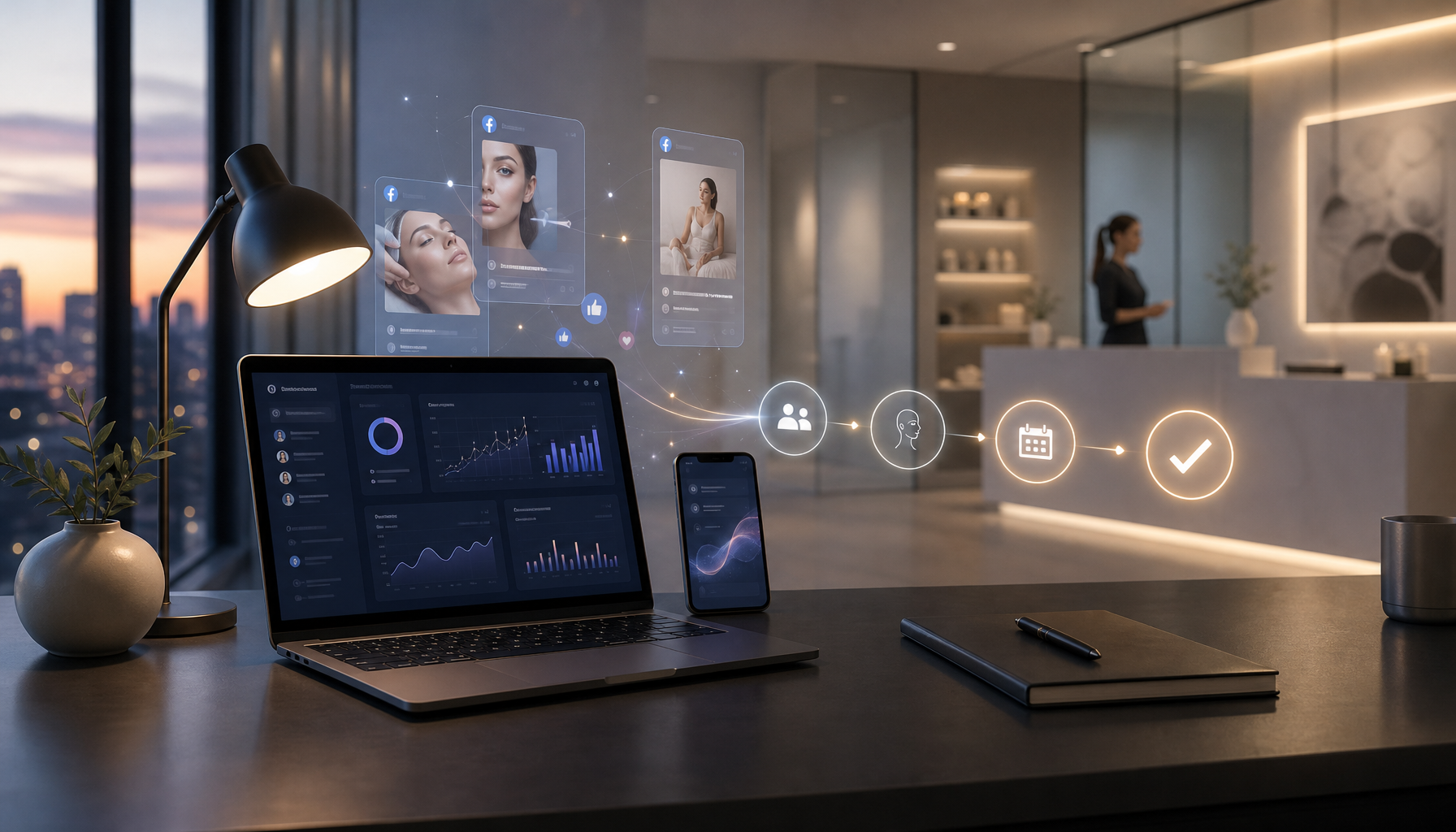
Most med spas that try Facebook ads end up with the same story. The ads run, the leads come in at a price that looks like a bargain, and the front desk spends two weeks calling people who do not pick up, do not remember filling out a form, or wanted the discount and nothing else. The owner looks at a full spreadsheet and an empty schedule and decides the platform does not work for aesthetics. The platform is rarely the problem. The account was built to collect leads, and collecting leads is not the same thing as booking consults.
The usual causes are easy to spot. A generic discount shown to a broad audience. An instant form that takes two taps to submit. No one calling until the next afternoon. Creative that gets rejected or quietly limited because it breaks a rule nobody on the team has read. Paid social is also a different discipline from organic posting, and the two do different jobs: the feed builds familiarity over months, as our guide to healthcare social media marketing explains, while ads put a specific offer in front of people who have never heard of the practice.
Facebook ads for med spas can work well, on Facebook and on Instagram, when the account is built around the appointment rather than the lead. The table below sets out the four campaign types a med spa is likely to use. The rest of this guide covers choosing among them, targeting and creative that stay within Meta’s rules, what to promote, what happens after the click, tracking without exposing client information, and the one number worth measuring.
| Campaign type | What it’s for | Send people to | Watch out for |
|---|---|---|---|
| Lead form campaign | Collecting consult requests without leaving Facebook or Instagram | An in-app form, then a fast call or text from the front desk | Low-intent leads if follow-up is slow |
| Conversion campaign | Booked consults on the practice’s own site | A landing page built for one offer | Tracking that sends treatment details to Meta |
| Retargeting | People who visited the site or engaged with the page but didn’t book | A specific treatment or offer page | Ads that imply the viewer has a condition |
| Awareness / video views | Introducing providers and the practice to a new local audience | The practice page or a short video | Spend with no path to a booking |
With Facebook ads for med spas, the choice of campaign should follow from what the practice can actually handle, not from what is easiest to launch. Lead form campaigns produce the most inquiries for the least money, because the form opens inside the app with the person’s details already filled in. That ease is also the weakness. Someone who submits in two taps while watching television has shown curiosity, not commitment, and the only thing that turns that curiosity into a consult is a call or text within minutes. A practice with a front desk that can respond that fast will do well with lead forms. A practice that returns calls the next day will pay for a list of strangers.
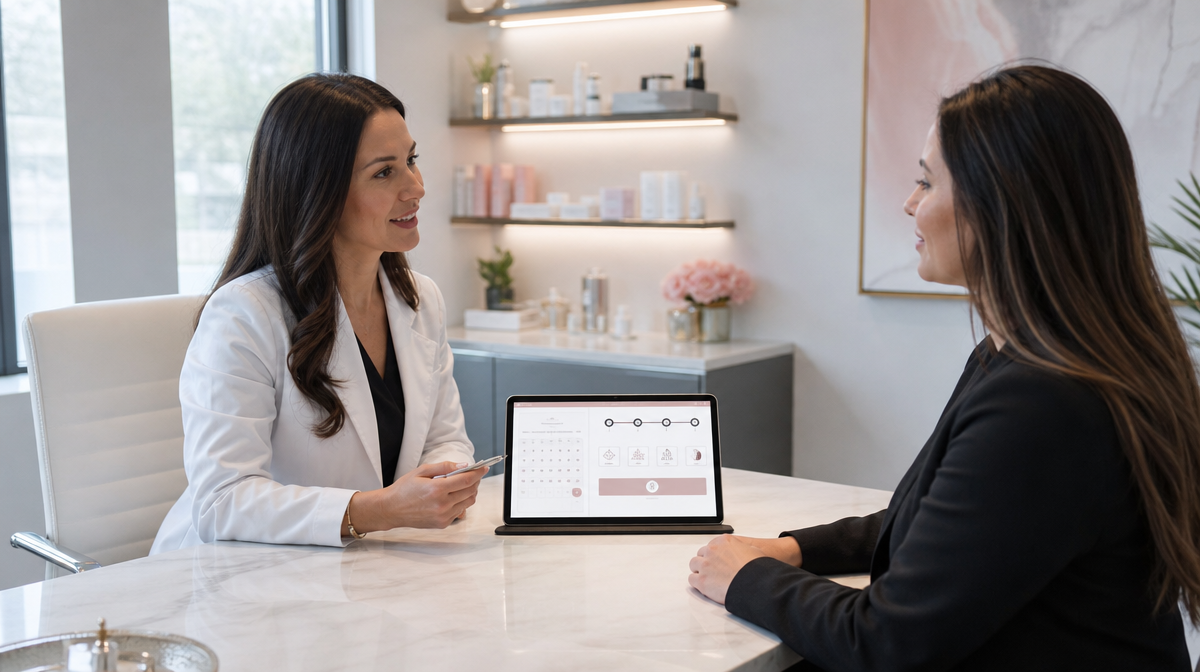
Conversion campaigns send people to the practice’s own website to book. Fewer people complete the trip, and each inquiry costs more, but the people who read a page and type in their own details are further along in the decision. This suits a practice with a strong booking page and less capacity for chasing leads. Whichever fits, start with one. Running every campaign type at once on a modest budget spreads the money too thin for any of them to produce a clear result, and makes it impossible to tell what is working. The boost button on a page post is not a substitute for either; it buys reach, not consults.
Targeting for a med spa is simpler than most owners expect, partly because Meta has removed many of the detailed options that touched on health. What remains is what matters: a radius around the practice that reflects how far clients actually travel, an age range that matches the client base, and a small number of broad interests such as skincare or wellness. The platform’s delivery system does much of the rest once it has booking data to learn from. What a practice must not do is try to target people by a health condition, by weight, or by anything that amounts to a perceived flaw. Those options are largely gone, and attempts to recreate them invite policy problems.
Audiences built from the practice’s own data need more care. Uploading a client list to build a custom or lookalike audience means sending information about real clients to a third party, and for a med spa that information can reveal that someone received care. That is a decision for the practice’s medical director and counsel, not a default setting to switch on because the platform suggests it. Retargeting people who visited the website raises a related question, which comes up again under tracking.
Creative is where most Facebook ads for med spas get into trouble. Meta’s advertising standards include a personal health and appearance policy that restricts ads built on before-and-after comparisons, ads that promise or imply unrealistic results, and ads designed to make the viewer feel bad about how they look. In practice that rules out the two approaches aesthetic practices reach for first: the side-by-side photo and the headline that names a flaw. Copy that addresses the viewer’s body directly, in the second person, tends to fail review for the same reason.
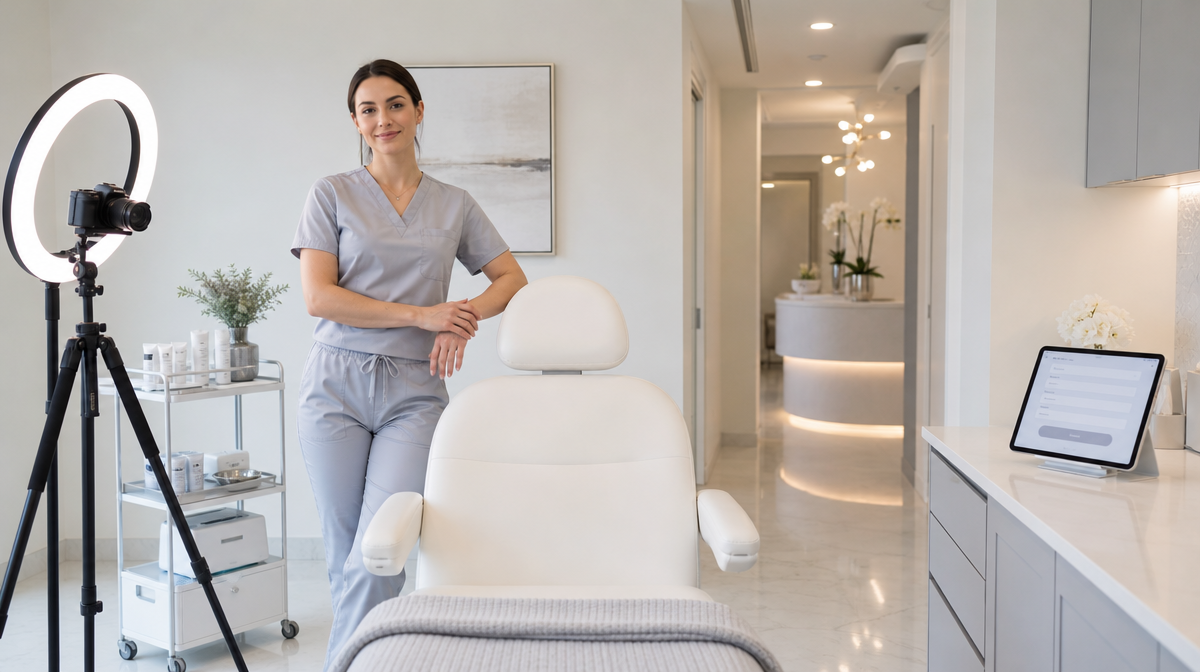
What gets approved is also what tends to book. Show the space, so a stranger can picture walking in. Show the providers, by name, because people are choosing who will treat them. Describe the treatment and the experience of the visit rather than the problem it addresses. One treatment and one clear next step per ad will outperform a menu of everything the practice offers. Neurotoxin is a common place to start, since most people already know what it is and the appointment is short, and the seasonal angles covered in our guide to botox marketing adapt well to paid creative. Client testimonials can work when the client has given written authorization and the words describe an experience rather than promise an outcome.

The offer matters as much as the picture. A blanket discount on all services attracts people shopping on price, and they will keep shopping. A specific offer attracts a specific person: a first-visit consult for one treatment, an open evening where prospective clients can meet the providers, a seasonal package with a real end date. A defined slot, a named provider and a clear reason to act this month are usually enough. Series-based services suit this approach particularly well, because the ad is selling the first conversation rather than the whole course, and the planning ideas in our guide to body contouring marketing apply directly to how those consult offers are framed.
Lower-priced services can serve as an introduction. Some med spas promote wellness add-ons such as IV drips to bring new people through the door, and the fuller picture of how those services are promoted is covered in our guide to IV therapy marketing. The principle is the same as with any offer: one service, one audience, one next step.
Not every campaign has to chase strangers. People who already follow the practice, have visited before, or engaged with earlier ads are a warmer audience, and a different message suits them. That is the right place to promote ongoing offers rather than first-visit deals. A practice that has built a med spa membership program, for example, will find it far easier to sell to someone who has already had a treatment than to someone seeing the practice name for the first time.
Most leads are lost after the click, not before it. An ad that sends people to the homepage asks them to find their own way to the right treatment, the right offer and the booking button, and most will not bother. A landing page built for the campaign removes those decisions: one offer, the same wording and image as the ad, the provider’s name and credentials, a short form or booking tool visible without scrolling, and nothing else competing for attention. The page should load quickly on a phone, where nearly all of this traffic arrives.
Then comes the part no ad can fix. A consult request should be answered within minutes during business hours, while the person still remembers sending it. A text that names the practice and offers two appointment times will reach people a phone call does not. Requests that arrive in the evening should get an automatic acknowledgment and a call first thing the next morning. Adding one or two questions to a lead form, such as which treatment the person is interested in and when they hope to come in, filters out some of the idle taps and gives the front desk something to open the conversation with. A lead that is not contacted for a day has, in most cases, already been lost.
Tracking deserves more attention than it usually gets, because the default setup can share more than a med spa should. Conversion tracking works by placing code on the practice’s website that reports visitor activity back to the ad platform. On a retail site that is unremarkable. On a healthcare site, the pages someone views and the forms they submit can reveal what care they are seeking. The Department of Health and Human Services has published guidance on the use of online tracking technologies by regulated entities and their vendors, explaining how these tools can result in disclosures of protected information.
The practical answer is to track the booking, not the browsing. A med spa needs to know that a campaign produced a consult request; it does not need the platform to know which treatment page a named individual read beforehand. A HIPAA-conscious setup limits what is sent, keeps identifying details out of the data, and is reviewed with counsel before it goes live. Whether the rules apply to a particular practice depends on how it is structured and how it bills, and requirements vary by state, so this is worth settling once and properly instead of copying a general retail configuration.
Budget should be set by what the practice is trying to learn, not by a number that feels safe. Start with an amount the practice can sustain for a couple of months, because the platform needs a steady stream of results before its delivery settles down, and a campaign that is switched on and off every week never gets there. Test one thing at a time. If the audience, the image and the offer all change at once, there is no way to know which change mattered. Give each version long enough to produce real bookings before judging it, then keep what books and cut what does not, however good its click numbers look.

That last point is the heart of the matter. Cost per lead is the number the platform shows most prominently, and it is the one most likely to mislead. A cheap lead who never answers the phone costs more than an expensive one who books and shows up. The figure a med spa should watch is the cost of a booked consult that was actually attended, and after that, what those clients went on to spend. Getting there means matching leads to appointments in the practice’s own records, since the ad platform cannot see who walked through the door. It is the only way to know whether med spa Facebook ads are paying for themselves.
Paid social also does not work alone. Someone who sees an ad will often search the practice name before booking, read the reviews, and look at the website. Increasingly they will ask an AI assistant which med spa near them is worth visiting, and the answer is assembled from the practice’s public footprint: its reviews, its listings and how clearly its own pages describe what it offers. Ads that lead to real visits and honest reviews strengthen that footprint, and practices that invest in AI-driven search visibility get more from every dollar they spend on ads as a result.
A.L.I. 360 by Target Patients MD is a proprietary AI-powered patient-acquisition system for medical and dental practices. The name stands for Attract, Learn, and Influence. For med spa paid social, that means learning which audiences and creative produce booked consults rather than cheap leads, and automating follow-up so an inquiry from an ad is answered while the person is still interested.
Facebook advertising for med spas rewards the practices that treat it as the start of a conversation rather than a lead machine. Pick one campaign type the team can support, show real people and a specific offer, send the click somewhere built for it, answer fast, protect client information, and judge everything by the consults that actually happen. The same principles hold for Instagram ads for med spas, since both run from the same account. To talk through how this would work for your practice, request a practice growth session.
- Do Facebook ads work for med spas?
Yes, when the account is built to book consults and not just collect leads. That means one campaign type the practice can support, a specific offer, creative that follows Meta’s rules, a landing page or form designed for the offer, and a front desk that responds within minutes. Without fast follow-up, even inexpensive leads rarely turn into appointments. - Can a med spa use before-and-after photos in Facebook ads?
Generally not as the basis of the ad. Meta’s personal health and appearance policy restricts side-by-side comparisons, promises of unrealistic results and content meant to make viewers feel bad about their appearance. Photos of the space and the providers, and client testimonials used with written authorization, are safer and tend to perform well. - How should a med spa target Facebook ads?
By location, age range and a few broad interests, not by health condition, weight or perceived flaws. Set the radius to how far clients really travel. Audiences built from the practice’s own client list involve sharing client information with a third party, so that decision should be made with the medical director and counsel. - Should a med spa use Facebook lead forms or send people to its website?
It depends on the front desk. Lead forms produce more inquiries at lower cost, but the leads are less committed and need a call or text within minutes. Sending people to a landing page produces fewer, more serious inquiries. Start with whichever one the team can follow up on properly. - How do you measure whether med spa Facebook ads are working?
By the cost of a booked consult that was actually attended, and by what those clients go on to spend. Cost per lead and click-through rate say little about revenue. Match leads to appointments in the practice’s own records, because the ad platform cannot see who showed up.