


Tummy tuck marketing refers to the digital and traditional promotional strategies plastic surgeons use to attract qualified abdominoplasty candidates — from paid search campaigns and local SEO to social media advertising and referral partnerships. It’s procedure-specific, intent-driven, and fundamentally different from general cosmetic surgery promotion because the patient’s path to consultation is longer and more research-intensive than almost any other elective procedure.
Right now, demand for abdominoplasty is accelerating in ways that weren’t predictable five years ago. The widespread adoption of GLP-1 medications like semaglutide and tirzepatide — nearly 12% of Americans have used them — has created an entirely new wave of body contouring candidates — patients who’ve shed significant weight but are left with excess abdominal skin that no amount of exercise will address. Add the post-bariatric surgery population growing alongside the meteoric rise of gastric sleeve procedures, and you have a patient pool that is actively searching for solutions and ready to book consultations.
The practices winning this audience aren’t necessarily the best surgeons in their market. They’re the ones with targeted campaigns built for this specific moment. Here’s what’s at stake if your marketing hasn’t caught up:
- High-intent patients are choosing competitors who appear first in local search results and run ads that speak directly to their post-weight-loss concerns
- Generic plastic surgery messaging misses the mark for GLP-1 and bariatric patients who need messaging tailored to their unique journey
- Consult calendars stay thin while demand for the procedure is genuinely at a historic high
If you spend any time around plastic surgeons right now, you’ll hear the same thing: the phone is ringing differently than it used to. The callers aren’t just post-pregnancy moms or longtime gym-goers who hit a plateau. A significant portion are people who started Ozempic, Wegovy, Mounjaro, or Zepbound 12 to 18 months ago — and they’ve lost 40, 60, sometimes 80+ pounds. The weight is gone. The loose abdominal skin is not.
GLP-1 use has scaled with extraordinary speed, and the prescribing boom shows no signs of slowing. Even a fraction of that population represents a transformational patient pipeline — ASPS reports 39% of GLP-1 patients under plastic surgeons’ care are considering a surgical procedure — for abdominoplasty practices that position themselves correctly.
Bariatric surgery adds another layer. Gastric sleeve procedures alone account for roughly 150,000 operations annually in the U.S., and those patients typically enter body contouring candidacy about a year post-op. The same dynamic plays out upstream of the medication wave: the GLP-1 and medical weight loss providers prescribing these drugs are the referral source that sends loose-skin patients your way a year later. Either way, it’s a steady, predictable referral stream — if your practice has cultivated the right relationships and messaging to capture it.
What makes this audience particularly valuable from a tummy tuck marketing standpoint isn’t just volume — it’s intent. These patients aren’t casually browsing. They’ve already done the hard work of weight loss and are now specifically searching for a surgeon who understands their situation. Compare that to a general cosmetic inquiry, and the difference in lead quality is substantial:
- Post-weight-loss patients arrive with a clear, defined problem and high emotional motivation to solve it
- GLP-1 patients are often unfamiliar with abdominoplasty as a solution — making education-first content a powerful conversion tool
- Post-bariatric patients have typically already navigated a major surgical decision, making them more decisive consultation bookers
Not every post-weight-loss patient arrives at your door with the same timeline, mindset, or set of concerns — and treating them as one homogenous group is where most tummy tuck marketing falls apart. Effective segmentation means your messaging meets each patient exactly where they are in their journey, which dramatically improves both lead quality and consultation show rates.
- Post-bariatric surgery patients are methodical researchers. They’ve navigated insurance approvals before, they understand surgical risk, and they’re often weighing a cosmetic abdominoplasty against a potentially insurance-covered panniculectomy. Target keywords like “tummy tuck after gastric sleeve” and “body contouring after bariatric surgery,” and make sure your landing page content addresses the panniculectomy distinction directly. These patients typically become candidates 12–18 months post-operation, so timing your outreach to that window matters.
- GLP-1 medication patients require a different approach entirely. Many don’t yet know abdominoplasty is a solution to their loose skin problem — they’re searching “loose skin after Ozempic” or “what to do after semaglutide weight loss” before they ever reach a surgical keyword. Education-first content and top-of-funnel ads that name their medication by brand are far more effective than generic body contouring messaging for this segment.
- Post-pregnancy patients seeking mommy makeover bundles respond to procedure combination messaging and social proof from similar demographics. They’re active on Instagram and Facebook, making Meta Ads the primary channel for this group.
- Lifestyle weight-loss patients represent the traditional abdominoplasty candidate — stable weight, gradual results, motivated by aesthetics. Broad keyword targeting and strong before/after galleries drive this segment.
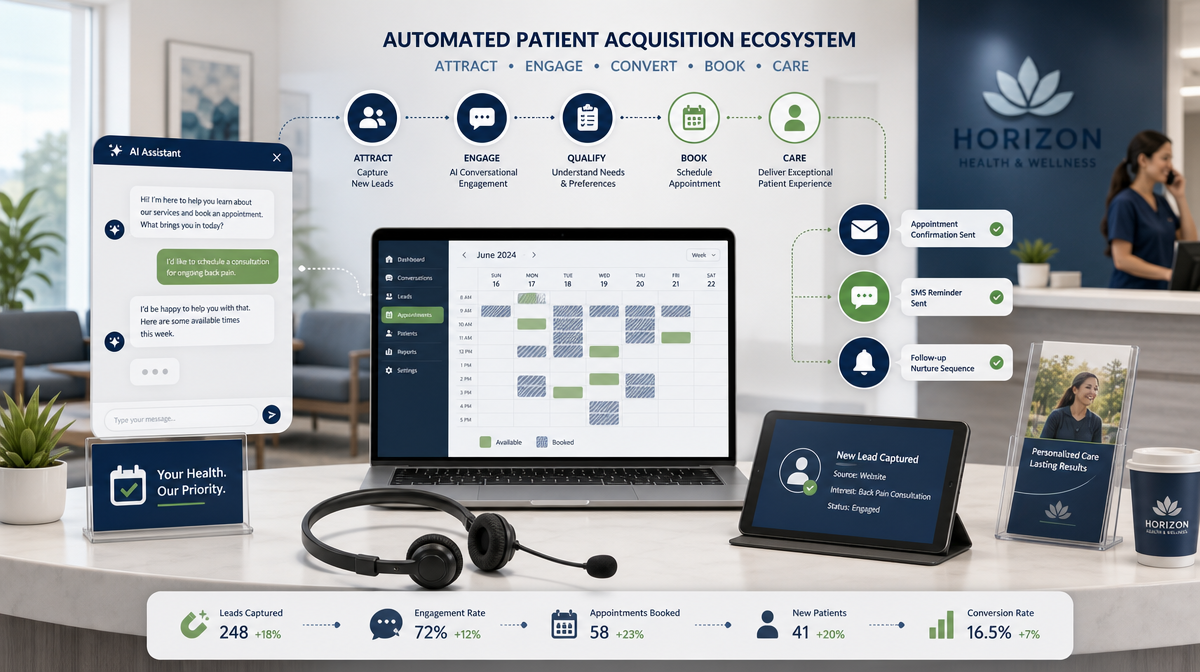
Seven distinct tactics consistently move tummy tuck practices from unpredictable inquiry volume to a reliably full consult schedule. Each one works independently — but the practices seeing the strongest patient acquisition numbers are running most of them simultaneously.
- Build a conversion-focused abdominoplasty landing page. Your procedure page needs to do more than explain the surgery. Board certification badges, financing details, patient reviews, and a prominent booking CTA above the fold are non-negotiable. And your medical website design has to be mobile-first — over 70% of cosmetic surgery searches happen on a phone.
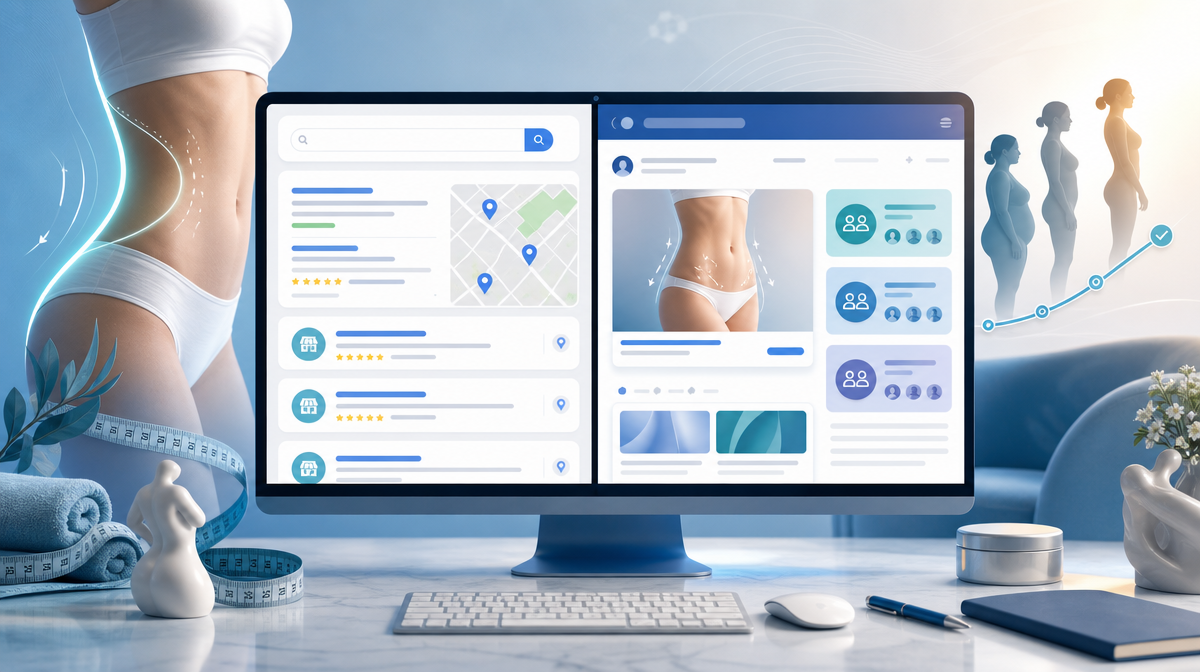
- Launch high-intent Google Search campaigns. Bottom-funnel queries like “abdominoplasty cost [city]” and “best tummy tuck surgeon near me” signal a patient who is ready to act. Google Ads captures them at exactly that moment.
- Run Meta Ads targeting post-weight-loss audiences. Facebook and Instagram let you layer weight loss interests, fitness behaviors, and lookalike audiences from past patients. Educational video content outperforms static images in this channel.
- Publish local SEO content for tummy tuck searches. City-specific blog content and procedure pages compound over time, reducing your cost per lead as organic rankings build.
- Deploy cost and financing calculators. Patients researching price are among your highest-intent visitors. An interactive tool that estimates monthly payments gives them a reason to submit their contact information right then.
- Activate email and SMS drip sequences. Most abdominoplasty patients research for weeks before scheduling. Automated nurture sequences keep your practice visible during that entire decision window.
- Add AI chat and online booking. Leads submitted at 10pm on a Sunday need an immediate response — not a callback two business days later. AI-powered chat captures those inquiries before they find a competitor who answers faster.
Organic search is the only marketing channel that compounds — meaning the rankings you earn in month six continue generating consultation requests in month eighteen without additional spend. For tummy tuck practices specifically, SEO operates differently than for non-surgical procedures because the keyword universe is unusually deep and stratified across patient types, procedure variants, and geographic intent.
Start with keyword architecture. A single procedure page targeting only “tummy tuck” leaves enormous search volume uncaptured. Your content strategy needs to span five distinct keyword clusters:
- Primary procedure terms: tummy tuck, abdominoplasty — high volume, competitive, require strong domain authority to rank
- Procedure variants: mini tummy tuck, extended tummy tuck, tummy tuck with lipo — lower competition, high conversion intent
- Post-weight-loss modifiers: tummy tuck after bariatric surgery, body contouring after Ozempic — emerging search volume with very little competing content from other practices
- Local intent: tummy tuck [city], abdominoplasty surgeon near me — the queries that drive actual consultation bookings
- Cost and financing: tummy tuck cost, abdominoplasty financing — commercial intent signals a patient ready to move
On-page optimization requires more than dropping keywords into body copy. Title tags, meta descriptions, header structure, and medical procedure schema markup all contribute to how Google interprets and ranks your procedure pages. Each page should answer patient questions comprehensively enough that a visitor doesn’t need to return to search results.
Your Google Business Profile is a separate but equally critical asset. Practices that optimize it with procedure-specific categories, current photos, and consistent review responses appear in the local pack — the map results that capture a disproportionate share of “near me” consultation traffic.
Paid media for abdominoplasty operates on two completely different psychological planes depending on the platform — and conflating them is one of the most expensive mistakes a plastic surgery practice can make.
Google Search campaigns intercept patients at the bottom of the funnel, the moment of active decision-making. Structuring your campaign around tightly themed ad groups — one for cost-intent queries, one for surgeon-qualification queries, one for post-weight-loss specific terms — prevents budget bleed and keeps your quality scores high. Negative keyword lists matter enormously here: terms like “tummy tuck recovery complications” and “tummy tuck risks” signal research mode, not booking mode, and clicking through to your consultation page wastes spend on visitors who aren’t ready to convert.
Meta campaigns work the opposite way. You’re interrupting someone’s scroll, which means your creative has to earn attention before it earns a click. Video content consistently outperforms static images for body contouring procedures on Facebook and Instagram — specifically short-form educational videos that name the patient’s situation before presenting the solution. A carousel ad showing a transformation journey resonates far more with a post-bariatric patient than a generic “book your consultation” banner.
Retargeting is where paid media pays for itself. Visitors who landed on your procedure page but didn’t submit a form are your warmest audience — they’ve already self-qualified. Pixel-based retargeting on both Google Display and Meta keeps your practice visible across the 2–6 week window most abdominoplasty patients spend comparing surgeons before committing to a consultation request.
- Search campaign structure: separate ad groups by intent type, not just keyword theme
- Meta creative: short educational video outperforms static for surgical procedures
- Retargeting window: 30–60 days captures the full abdominoplasty research cycle
- Negative keywords: filter out informational and complication-research queries to protect budget
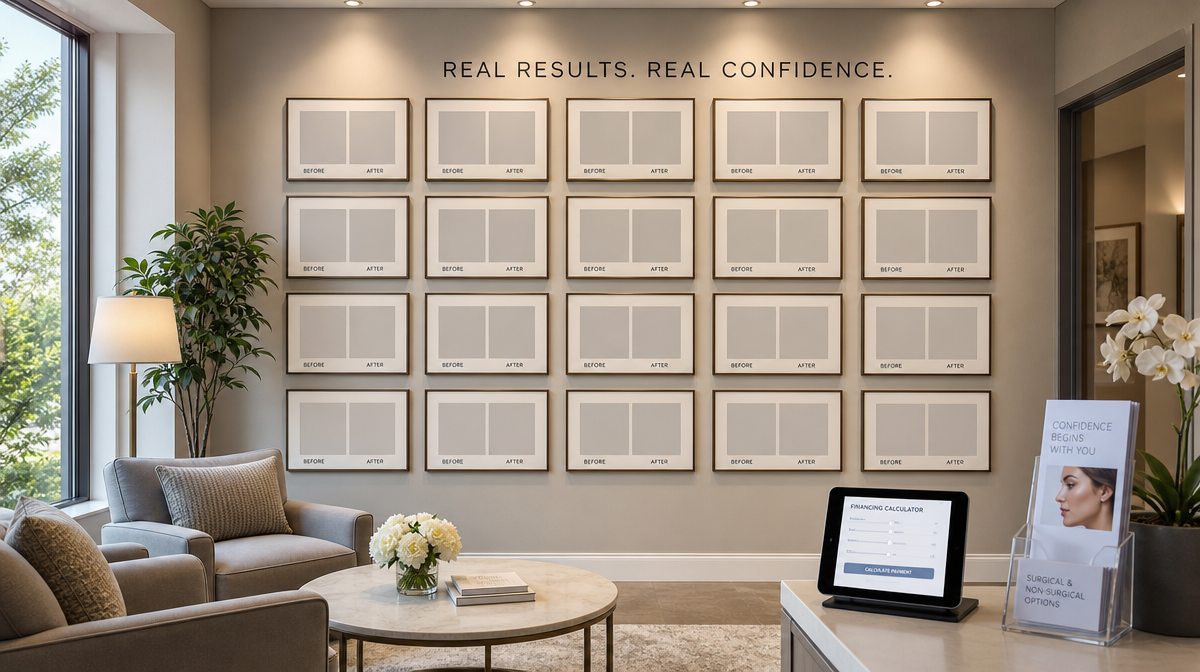
In plastic surgery, patients don’t buy with logic — they buy with their eyes. A prospective abdominoplasty patient scrolling your website at 11pm isn’t reading your credentials paragraph. She’s looking at your gallery, deciding whether the transformations she sees match her own situation.
The difference between a gallery that converts and one that doesn’t comes down to organization. Categorize your before and after photos by patient type — post-bariatric, post-pregnancy, post-GLP-1 weight loss — so visitors can self-identify immediately. A 52-year-old woman who lost 70 pounds on tirzepatide needs to see a patient who looks like her, not a 28-year-old mommy makeover case. Mismatched visuals kill consultation intent before a single word of copy gets read.
Photo quality standards matter more than volume. Consistent lighting, neutral backgrounds, and standardized positioning across every image signal professionalism and build the subconscious trust that converts browsers into booked consultations. Inconsistent photos — even of excellent surgical results — make your outcomes look unreliable.
Video testimonials close the gap that still images can’t. When a real patient describes what recovery felt like, how her confidence changed, and what she wishes she’d known before surgery, she answers the exact questions your prospective patients are too nervous to ask during a consultation. Two to three well-produced patient stories covering different weight-loss journeys can meaningfully improve your consult-to-booking rate.
- Written patient consent and HIPAA-compliant storage are non-negotiable before publishing any visual content
- Embed testimonials directly on procedure pages, not buried in a separate reviews tab where most visitors never find them
- Refresh your gallery quarterly — stale before/after photos signal an inactive practice to high-intent researchers
Cost is the single biggest reason a qualified abdominoplasty candidate walks away from a consultation without booking. The procedure routinely runs between $8,000 and $15,000 all-in — a number that stops many patients cold, even when they’re emotionally ready to move forward. Your tummy tuck marketing strategy needs to neutralize that objection before the patient ever picks up the phone.
The most effective lever is prominent, specific financing messaging. Practices that display monthly payment estimates directly on their procedure pages — “as low as $189/month with approved credit” — see meaningfully higher consultation request rates than those that vague it up with “financing available.” CareCredit, Alphaeon Credit, and PatientFi each serve different credit profiles, so offering multiple options captures patients that a single-lender approach would lose.
Procedure bundling compounds this effect. A mommy makeover package combining abdominoplasty with a breast lift or augmentation increases your average case value while simultaneously making the per-procedure cost feel more justified to the patient. From a marketing standpoint, bundles also create a distinct campaign angle — mommy makeover advertising targets a different emotional trigger than standalone tummy tuck ads, broadening your addressable audience without cannibalizing existing campaigns.
- Display financing monthly estimates on procedure pages, not just on a buried payment options tab
- Offer at least two financing partners to accommodate varying credit profiles
- Build dedicated mommy makeover landing pages that price the bundle and highlight the value of combining procedures under one recovery
- Train front desk staff to introduce financing proactively during the first inquiry call, before sticker shock becomes a silent objection
For elective cosmetic procedures, the patient’s decision to book a tummy tuck consultation often hinges on what strangers say about you online — not what you say about yourself. RealSelf data consistently shows that prospective plastic surgery patients read an average of seven or more reviews before reaching out to a practice, and that number climbs for high-ticket procedures like abdominoplasty where the emotional and financial stakes are significant.
The practices that win on reputation aren’t necessarily the ones with the most reviews — they’re the ones with the most recent reviews. A 4.9-star average built entirely on reviews from three years ago raises quiet doubts about whether the practice is still active and performing at the same level. Automated post-procedure email and SMS requests, triggered 7–10 days after a patient’s follow-up appointment, keep your review velocity consistent without requiring any manual effort from your front desk team.
Platform coverage matters as much as volume. Your tummy tuck patients are checking multiple surfaces before committing:
- Google — primary for local search visibility and map pack rankings
- RealSelf — the dominant specialty platform where surgical procedure researchers specifically congregate
- Healthgrades and Vitals — where insurance-adjacent and medically-minded patients verify credentials
- Facebook — influential for the post-pregnancy demographic active on social
Negative reviews demand a response strategy, not silence. A professional, HIPAA-compliant reply that acknowledges the concern without disclosing patient details signals to every reader watching that your practice takes accountability seriously — often converting a damaging post into a trust-building moment.
Most plastic surgery practices are running their tummy tuck marketing the same way they did in 2019 — manually adjusting bids, reviewing campaign reports weekly, and making decisions based on data that’s already 7 days stale. AI-powered patient acquisition platforms operate on a fundamentally different model: they’re reading performance signals in real time and reallocating budget, adjusting targeting parameters, and modifying bid strategies before your team has even opened their inbox on Monday morning.
The practical difference for your practice isn’t theoretical. When a spike in “body contouring after weight loss medication” searches hits your market on a Wednesday afternoon, an AI-optimized campaign captures that demand surge automatically. A manually managed campaign misses it entirely.
A.L.I. 360 — Target Patients MD’s proprietary AI acquisition system — applies this logic specifically to high-value cosmetic procedures like abdominoplasty. It synthesizes data across paid search, social, and organic channels simultaneously, identifying which patient segments are converting to booked consultations versus which are burning budget. Practices using AI-driven systems can see meaningful improvements in patient acquisition compared to conventional campaign management.
Beyond campaign optimization, AI transforms your intake process in ways that directly affect booked procedure volume:
- Predictive lead scoring flags which incoming inquiries are most likely to convert so your front desk prioritizes follow-up accordingly
- Automated qualification chatbots screen and capture leads at hours when your staff is unavailable — without letting high-intent visitors go cold
- Dynamic audience modeling continuously refines who sees your ads based on actual consultation conversion data, not assumed demographics
Running tummy tuck marketing campaigns without tracking the right numbers is the equivalent of operating without anesthesia — technically possible, but painful and avoidable. Three metrics separate practices that scale profitably from those that spend without understanding what’s working.
Cost per lead (CPL) is your baseline: total ad spend divided by total leads generated in a given period. For abdominoplasty campaigns, CPL typically runs higher than non-surgical procedures — expect $80–$200 on Meta and $150–$400 on Google Search depending on market competitiveness. That range sounds steep until you account for what a booked procedure is actually worth.

Cost per booked consultation is the metric that exposes lead quality problems CPL alone won’t catch. If you’re generating 50 leads per month at $120 each but only 8 convert to scheduled appointments, your real acquisition cost per consultation is $750 — a number that changes how you evaluate campaign performance entirely. Track this separately for each channel, because social and search traffic rarely convert at the same rate.
Patient lifetime value (LTV) is where the math on tummy tuck marketing becomes genuinely compelling. A single abdominoplasty patient who returns for a breast procedure, refers two colleagues, and books annual non-surgical maintenance represents $25,000–$40,000 in total practice revenue over time. Evaluating your marketing spend against single-procedure revenue systematically undervalues every consultation you book.
- Set monthly benchmarks for CPL, cost per booked consult, and consultation-to-procedure close rate by channel
- Separate lead source data in your CRM so you can attribute which campaigns produce consultations that actually show up
- Review LTV quarterly to ensure your acquisition math reflects the full revenue picture, not just the first procedure
Plastic surgery is one of the most competitive patient acquisition environments in healthcare marketing — and generic agencies that dabble in it between dental clients and urgent care accounts will cost you far more than their retainer fee. A specialized plastic surgery marketing agency earns its keep precisely here. Target Patients MD works exclusively with medical practices, with deep specialization in high-value cosmetic procedures where the margin for wasted spend is zero.
What separates a specialized partner from a generalist shop isn’t just familiarity with the terminology. It’s knowing that a post-bariatric patient and a post-GLP-1 patient require completely different ad creative, different landing page messaging, and different follow-up sequences — and having the infrastructure to execute all of it without you managing the details.
The fully managed model matters specifically for plastic surgeons, who have neither the bandwidth to supervise campaign builds nor the appetite to become marketing experts. You should be in the operating room. The tummy tuck marketing strategy — from keyword targeting to conversion optimization to reputation management — should be handled by people who have built these exact systems for practices like yours.
- Proven plastic surgery experience across a broad network of cosmetic and reconstructive practices
- A.L.I. 360 AI technology driving real-time campaign optimization and patient acquisition
- Accountability built around patient growth — measurable campaign performance and reporting tied to booked consultations
If your consult calendar isn’t where it should be, the answer isn’t a bigger ad budget managed the same way. It’s a different approach entirely.
Tummy tuck marketing raises practical questions that don’t always have obvious answers — especially as the patient landscape shifts with new weight-loss treatments entering the mainstream. Here are the questions practice owners ask most often when building or evaluating their abdominoplasty patient acquisition strategy.
- What is the average cost per lead for tummy tuck advertising campaigns? There’s no single number because CPL varies by geographic market, channel mix, and how well your landing page converts. Google Ads tends to produce fewer but more purchase-ready leads, while Meta generates higher volume at lower individual cost. The more important benchmark is cost per booked consultation — that’s where channel quality differences become visible.
- How long does tummy tuck marketing take to generate new patient consultations? Paid search can produce qualified inquiries within the first week of a properly configured campaign. Organic rankings through SEO typically require three to six months of consistent content and technical work before meaningful traffic materializes. Most practices see the fastest traction from launching paid campaigns while building organic assets in parallel.
- Which plastic surgery marketing company specializes in tummy tuck patient acquisition? Target Patients MD focuses exclusively on medical practices, with specific experience in high-value cosmetic procedures including abdominoplasty, rhinoplasty, mommy makeover, and post-weight-loss body contouring.
- Can plastic surgeons use before and after photos in tummy tuck advertisements? Yes, with conditions. Meta restricts certain cosmetic surgery imagery in specific ad placements, and platform policies evolve frequently. Written patient consent and HIPAA-compliant content handling are required regardless of platform.
- When should plastic surgeons start marketing to post-bariatric surgery patients? The targeting window opens around months 9–12 post-operation, when weight stabilization begins and patients start researching next steps. Referral relationships with bariatric programs can accelerate that timeline considerably.