


Radiology marketing has a problem most specialties never face: two customers who make their decisions in two different places. The referring provider decides that a scan is needed and usually suggests where to get it. The patient, more often than ever, decides where it actually happens. High-deductible plans, published self-pay prices, wait times and distance all push patients to compare imaging centers the way they compare anything else they pay for out of pocket.
Most independent imaging centers market to only one of those customers. Centers built on physician relationships treat the patient as a name on an order and lose the shoppable scans: the screening mammograms, the cash-pay MRIs and the second opinions that never came through a liaison. Centers that advertise heavily to patients often neglect the ordering practices that still send most of their volume, and they discover the leak only when a high-volume referrer quietly moves orders across town. Strong physician referral marketing and strong patient-facing marketing have to run at the same time, on separate tracks, with separate measurements.
This guide covers both tracks for independent imaging centers and outpatient radiology groups: how to earn and keep referring providers, how to get found and chosen by patients who are shopping, and how to tell which track is actually filling the schedule. The table below separates the three ways a scan reaches your center and what wins each one.
| Track | Who decides | What wins them |
|---|---|---|
| Referring provider | The ordering physician, PA or NP and their staff | Easy ordering, fast scheduling, quick report turnaround, a direct line for questions |
| Direct-to-patient | The patient choosing where to book | Clear self-pay pricing, short waits, a nearby location, easy online booking, strong reviews |
| Payer-steered | The insurer’s network and prior authorization | In-network status, clean authorization support, transparent estimates |
Start with the referral track, because that is where most of the volume still lives and where it is easiest to lose without noticing. The traditional approach is a liaison who drops by with lunch. That still works, but only when the visit carries something the office can use: current turnaround times by modality, new evening or weekend hours, a change in how a study is ordered, or a direct number the front desk can call when a patient has a question about contrast or claustrophobia. A visit that solves a problem for the referring staff earns a place on the short list. A visit that only delivers sandwiches does not.
Make ordering easy, because the ordering practice’s staff are the people who actually pick the imaging center most of the time. One scheduling line that answers quickly, electronic ordering that fits the referrer’s workflow, same-day or next-day slots for urgent studies, and a clear process for prior authorization all remove reasons to send the patient elsewhere. Orthopedic practices tend to be the single largest MRI source for an independent center, and they judge an imaging partner the way a good orthopedic marketing agency judges a campaign: on whether it shortens the path from decision to result.
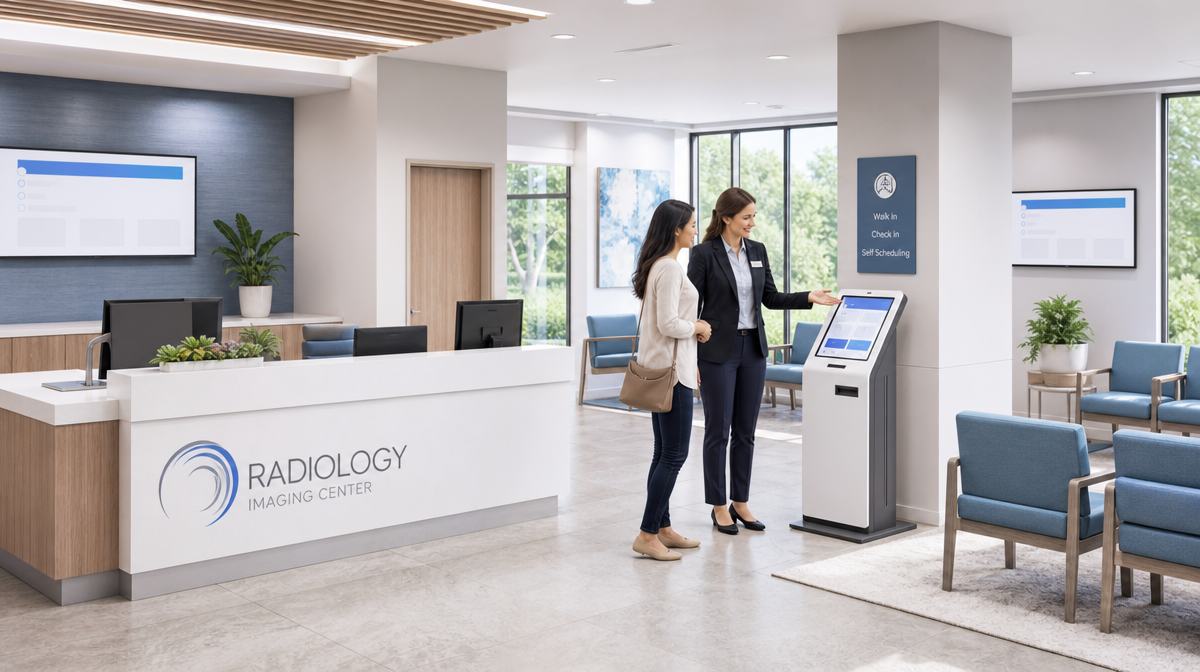
Report turnaround and radiologist access are the real retention tools. A referring physician who can get a read back the same day, reach a radiologist for a quick question about an unexpected finding, and trust that the report will be in the chart before the patient’s follow-up has very little reason to look elsewhere. Pain management groups are a good example of a steady referral source that values this: they order repeat studies on the same patients, and the lesson from pain management marketing applies in reverse. They want an imaging partner who handles authorization and contrast questions without bouncing the patient back to their own front desk.
Track orders by referring practice every month. The point is not a leaderboard but an early warning system. A practice that sent a steady stream of studies and then went quiet for several weeks is telling you something, whether that is a new imaging center nearby, a staffing change at the front desk, or a bad experience one of their patients had with your scheduling line. Catching the drop early turns it into a conversation. Catching it at the end of the quarter turns it into a lost account.
The patient-facing track starts with search, because that is where a shopping patient begins. The practical rule is one optimized page per location and per modality. Patients search for the scan plus the town, so a single generic services page cannot rank for MRI, CT, ultrasound, mammography and bone density across three locations. Each page should say what the study is for, how long it takes, how to prepare, what it costs for self-pay patients and how to book, in plain language and with the location’s address and hours visible. Ultrasound is a useful illustration of a shared service: a vascular ultrasound page competes for the same local searches a vein practice targets, and the approach that works in vein clinic marketing, one clear page per study with preparation, duration and price, works just as well for an imaging center.
Every location also needs its own Google Business Profile, kept current with hours, the modalities offered at that site, accessibility details and a booking link. Patients searching from a phone often never reach the website at all, so the profile has to answer the first questions on its own. The site should then answer the questions patients actually type: whether they need a referral for a screening mammogram, how long an MRI takes, whether they can eat before a CT with contrast, and what to do if they are anxious in enclosed spaces. Pages that answer those questions directly tend to rank for them, and they reduce calls to the front desk at the same time.

Self-pay pricing deserves its own treatment, because it is the fastest-growing reason patients choose one center over another. A patient with a high deductible or no coverage will compare prices before booking, and a center that publishes its cash price for common studies will usually be chosen over one that says to call for a quote. Publish the price, say what it includes, such as the scan, the radiologist’s read and the report, and note anything that costs extra, like contrast. Offer a good-faith estimate for self-pay patients before the visit, in writing, and make it easy to request from the modality page. Price clarity converts shoppers because it removes the one question they cannot answer on their own.
Trust signals matter more in imaging than in most outpatient settings, because the patient is handing over a diagnosis to people they will probably never meet. Accreditation is the clearest signal, and it is worth explaining rather than just displaying as a badge. The American College of Radiology’s accreditation program evaluates equipment, image quality, staff qualifications and quality control by modality, and a short paragraph on each service page saying what that review covers tells a patient far more than a logo in the footer.
Say who reads the images. Board-certified radiologists, and subspecialty readers where you have them, belong on the website with photos and plain-language descriptions of what they focus on. Describe the equipment in terms of the patient’s experience rather than the specification sheet. An open or wide-bore MRI matters to a patient who is anxious about enclosed spaces, and three-dimensional mammography matters to a patient who has been called back before. Translate those features into the problem they solve and the page does its job.
Patient preparation content is the quiet workhorse of radiology marketing. A preparation page for each exam, covering fasting windows, contrast instructions, what to do about metal, medications and implants, how long the visit takes and what happens if the patient feels claustrophobic, reduces no-shows, cuts repeat phone calls and ranks for the long questions patients type the night before an appointment. Link to a trusted patient-education source such as RadiologyInfo.org, published by the Radiological Society of North America and the American College of Radiology, for the clinical detail, and keep your own page focused on what happens at your center specifically.
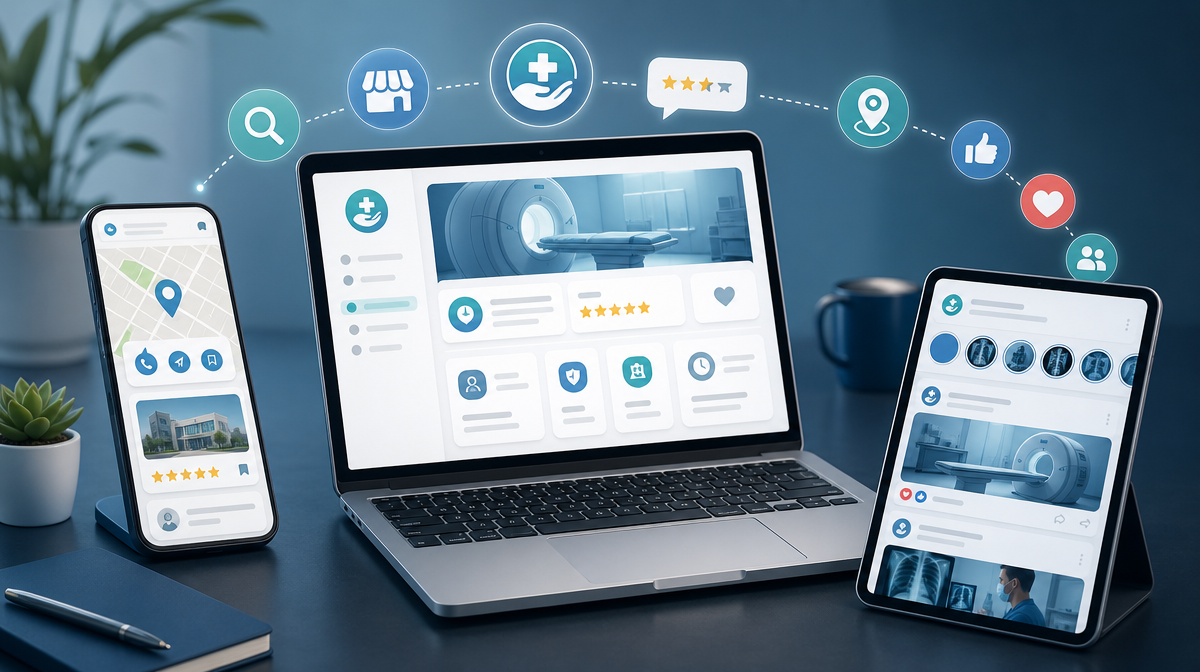
Paid search earns its place in the patient-facing track when it is tied to specific studies and locations. A patient typing a phrase like MRI near me or cash-pay CT with a town name is ready to book, and a search ad that lands on the matching modality page, with the price and a booking button visible, converts well. Keep campaigns separated by modality and location so you can see which combinations produce appointments rather than clicks, use call tracking so phone bookings are counted, and follow the platform’s healthcare advertising policies closely. Avoid any language about outcomes or diagnoses in ad copy; describe the service, the location, the price and the convenience.
Screening outreach is the other paid-and-owned channel that imaging centers underuse. Annual mammography reminders to existing patients, lung screening information for patients who meet the criteria, and bone density reminders for the right age groups keep the schedule full with patients who already know the center. These campaigns should run through email and text with proper consent, be written in a HIPAA-conscious way that reveals nothing about the recipient’s history in the message itself, and point to a page where the patient can book without calling.
Reviews close the loop for a shopping patient. Most people comparing two imaging centers will read reviews before they read anything else on the site, and the reviews that move them mention wait time, how staff handled anxiety and whether the results came back when promised. Ask for a review at checkout while the experience is fresh, make the link easy to tap, respond to every review within a day, and respond to critical ones with a calm offer to continue the conversation offline rather than a defense. A steady flow of recent reviews on each location’s profile does more for conversion than any amount of homepage copy.
Measurement is what keeps the two tracks honest. Track volume by source, separating referred studies from direct patient bookings, and break the referred volume down by practice so leakage shows up as a trend rather than a surprise. Track the time from order to scan, because a long gap is the moment a patient or a referrer looks elsewhere. Track no-show rates by modality and by booking source, since a channel that produces cheap appointments that do not show is not actually cheap. A simple medical practice KPI dashboard that puts those numbers on one page, reviewed monthly, is enough for most independent centers to see where to put the next dollar.

One more measurement belongs on that page. A growing share of patients now ask an AI assistant which imaging center to choose or what a scan should cost before they ever open a search results page, and those answers are built from the same clear, well-structured modality pages that rank in traditional search. Treat AI-driven search visibility as a tracked channel: note which questions about your services the assistants answer, whether your center is named, and which pages they draw from.
Running two tracks at once is where most imaging centers want help, because the referral side and the patient side require different skills and different reporting. A.L.I. 360 by Target Patients MD is a proprietary AI-powered patient-acquisition system for medical and dental practices. The name stands for Attract, Learn, and Influence. For an imaging center it means one program covering the modality pages and local profiles that bring in shopping patients, the search and screening campaigns that fill specific studies, and the reporting that shows volume by source so referral leakage and patient demand are visible on the same page.
Radiology marketing comes down to a simple discipline: treat the referring provider and the patient as two customers, give each one what makes the choice easy, and measure them separately so you know which track is working. The centers that do this consistently are rarely the biggest or the cheapest in their market. They are the easiest to find, the easiest to understand and the easiest to book.
If you want help building both tracks for your imaging center, request a practice growth session with Target Patients MD.
- What is radiology marketing?
Radiology marketing is the set of activities an imaging center or radiology group uses to bring in scan volume from two sources at once: referring providers who order studies and patients who choose where to have them done. It covers referral relationships, local search, pricing transparency, reviews, paid search and screening outreach, with measurement that separates the two sources. - How do imaging centers get more physician referrals?
Referring practices choose imaging partners that make ordering easy, schedule quickly, return reports fast and give them direct access to a radiologist when a question comes up. Regular liaison visits that bring useful information, a single responsive scheduling line and monthly tracking of orders by practice keep existing referrers and surface problems early. - Should an imaging center publish self-pay prices?
Yes. Patients with high deductibles or no coverage compare prices before booking, and a center that shows its cash price for common studies, explains what is included and offers a written good-faith estimate will usually win over one that asks patients to call for a quote. - What should an imaging center website include?
One page per location and per modality, each with what the study is for, how long it takes, how to prepare, the self-pay price and a way to book. Add preparation pages for each exam, an explanation of accreditation and who reads the images, and a current Google Business Profile for every location. - How do you measure whether radiology marketing is working?
Track volume by source, separating referred studies from direct patient bookings, and break referrals down by practice. Add time from order to scan, no-show rate by modality and booking source, and a monthly review of which channels produced completed studies rather than clicks or calls.