


GLP-1 provider marketing refers to the digital and traditional strategies that clinics, telehealth practices, and medspas use to attract and convert patients seeking medications like semaglutide, tirzepatide, Ozempic, Wegovy, and Mounjaro. It’s a distinct category within healthcare marketing — and if you’ve tried running it like you would a general medical practice campaign, you’ve probably noticed it doesn’t behave the same way.
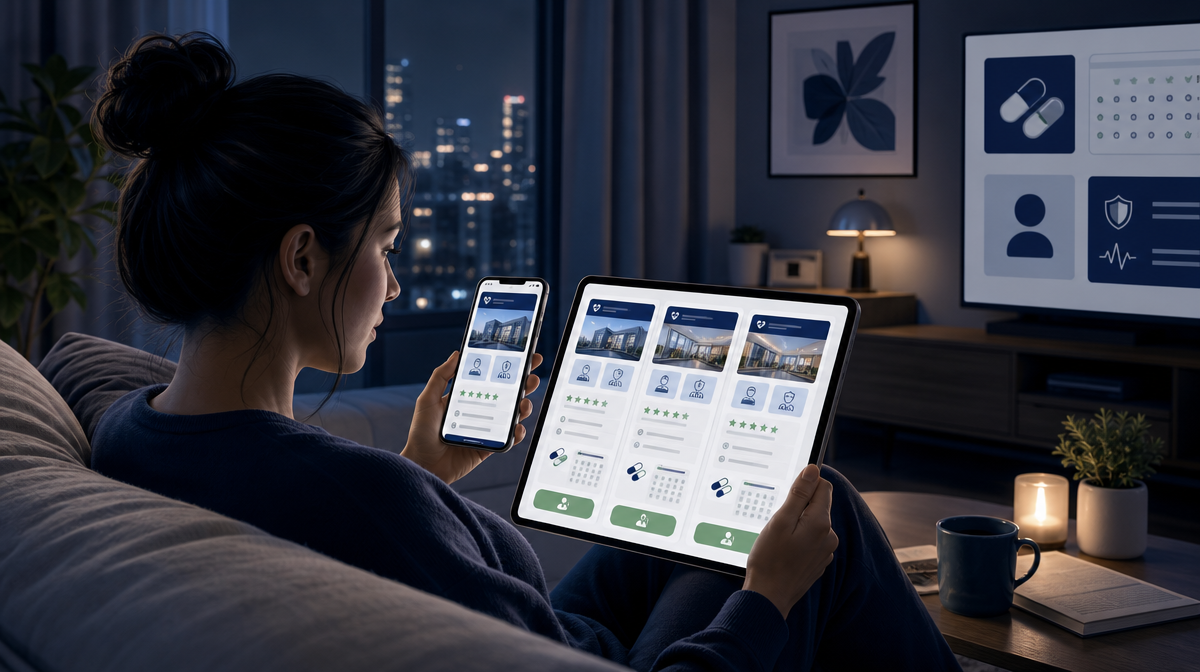
The difference comes down to patient behavior. Weight loss patients are highly motivated, do extensive online research before picking up the phone, and often compare multiple providers before committing. They’re not waiting for a referral. They’re Googling at 11pm, reading reviews, watching before-and-after videos, and making decisions fast. That kind of intent requires a marketing system built specifically around how they search and what moves them to act.
A complete GLP-1 provider marketing strategy typically covers four core areas:
- Paid search and SEO: Capturing patients actively searching for specific medications and local providers
- Patient education content: Building trust around safety, efficacy, dosing protocols, and realistic expectations
- Lead nurturing systems: Converting initial inquiries into booked consultations before a competitor does
- Reputation management: Showcasing real patient outcomes and reviews that validate your clinic’s results
Each of these components works together. A patient might find you through a Google search, read your educational content to build trust, see your reviews to feel confident, and then fill out a form — all within the same evening. Miss any piece of that chain, and you’ve lost the patient to someone who didn’t.
The GLP-1 market isn’t growing — it’s exploding. According to Grandview Research, the GLP-1 agonist market is projected to expand from $70 billion in 2025 to $201 billion by 2030. That’s not a niche opportunity. That’s a structural shift in how Americans manage chronic disease, and it’s happening right now.
Several forces are converging to drive this demand surge. Celebrity endorsements and relentless media coverage turned Ozempic into a household name virtually overnight. Word-of-mouth followed quickly — when a patient loses 30 pounds and tells everyone at the office, that’s free advertising no clinic could buy. Meanwhile, Morgan Stanley estimates that only about 6 percent of eligible obesity patients in the U.S. are currently on GLP-1 therapy, which means the overwhelming majority of the addressable market hasn’t been reached yet.
The availability of compounded semaglutide and tirzepatide has also dramatically widened the patient pool. Patients who couldn’t afford or access brand-name medications now have alternatives, and they’re actively searching for providers who offer them.
What this means for GLP-1 provider marketing specifically is that the demand side of the equation is largely solved. Patients want these treatments. The gap is on the supply side — clinics that can be found, trusted, and contacted easily win the patient. Those that can’t get discovered online, or that fail to convert inquiries quickly, are leaving a significant and growing revenue opportunity on the table.

Most clinics think about GLP-1 marketing as a patient acquisition problem. Get more leads, book more consultations, fill the schedule. That framing isn’t wrong — but it’s incomplete, and the clinics that treat it as the whole picture are leaving serious money behind.
Patient lifetime value (LTV) is the total revenue a single patient generates over the entire course of their relationship with your clinic. For GLP-1 treatments, that number compounds quickly. Semaglutide and tirzepatide aren’t one-and-done prescriptions — patients typically stay on these medications for months or years, with ongoing refills, dosage adjustments, and monitoring visits. A patient who stays for twelve months is worth dramatically more than one who fills a single prescription and disappears.
Here’s how the two approaches compare in practice:
| Metric | Acquisition-Only Focus | LTV-Focused Approach |
|---|---|---|
| Revenue per patient | Single consultation | Months of refills and follow-ups |
| Marketing efficiency | Constantly replacing churned patients | Lower cost per retained patient |
| Patient outcomes | Inconsistent adherence | Better results through ongoing support |
Clinics that build their GLP-1 provider marketing strategy around retention — not just acquisition — create a more predictable revenue base and reduce the pressure to constantly chase new leads just to keep the lights on.
Not every marketing channel pulls equal weight when it comes to GLP-1 patient acquisition. Some channels capture patients who are ready to book today. Others build awareness weeks or months before someone picks up the phone. The clinics winning in this space aren’t picking one and hoping for the best — they’re running a coordinated mix that meets patients at every stage of the decision process.
Here’s how the four highest-converting channels break down for GLP-1 providers specifically:
- SEO for semaglutide and tirzepatide searches: Patients search by medication name, not clinic name. Ranking for terms like “semaglutide near me” or “tirzepatide weight loss [city]” requires dedicated local landing pages and consistent content investment. It’s a long-term play, but it generates compounding returns.
- Google Ads and paid search: Paid search captures patients who are actively comparing providers and ready to act. Tight keyword targeting is essential — broad match campaigns bleed budget on informational queries that never convert. Cost per click varies significantly by market, so local competition matters.
- Paid social on Meta and TikTok: These platforms reach patients earlier in the decision journey, before they’ve started searching. Lookalike audiences built from existing patient lists and creative featuring real, consented outcomes consistently outperform generic stock imagery.
- Google Business Profile and local search: A fully optimized GBP drives direct calls and direction requests from high-intent “near me” searches. Reviews displayed on your profile directly influence whether a patient clicks through to your website or moves on to a competitor.
Artificial intelligence has quietly become the biggest competitive differentiator in GLP-1 provider marketing — and most clinics are still running manual processes while their competitors automate circles around them. AI doesn’t replace strategy; it executes strategy faster, cheaper, and with less guesswork than any human team can manage at scale.

The practical applications fall into three areas that directly affect how many patients you acquire and at what cost:
- Predictive targeting and audience modeling: AI analyzes behavioral signals — search patterns, content engagement, demographic overlaps — to identify which prospects are most likely to book a consultation. high-intent audiences without wasting budget on people who are nowhere near ready to commit. Platforms like Target Patients MD’s A.L.I. 360 Technology use this approach to deliver up to 377% lifts in patient acquisition for weight loss clinics.
- Automated ad creative and landing page testing: Instead of running one or two ad variations and waiting weeks for results, AI generates and tests dozens of variations simultaneously. It can also personalize landing page content based on the specific search term or ad that brought a visitor in — so a patient who clicked a semaglutide ad sees semaglutide-specific messaging, not a generic weight loss page.
- AI chatbots and automated scheduling: Weight loss patients who don’t get an immediate response often move on to the next provider within minutes. AI-powered chatbots answer questions and book appointments around the clock, in a conversational tone that feels helpful rather than robotic.
Your marketing channels — SEO, paid search, social, AI-driven targeting — are only as effective as the page patients land on. If your website can’t convert the traffic those channels deliver, you’re essentially paying to send patients to your competitors. For GLP-1 clinics specifically, three website elements separate the practices that book consultations from the ones that collect bounces.
- Mobile-first design and page speed: The majority of GLP-1 patients research on their phones, often late at night when motivation is high. A page that takes more than three seconds to load loses a significant portion of those visitors before they ever read a word — and Google penalizes slow pages in rankings, compounding the damage. Fast, clean mobile design isn’t optional; it’s table stakes.
- Instant quotes and financing options: With fewer than 1 in 5 employers covering GLP-1s for weight loss, self-pay patients want to know what treatment costs before they commit to a consultation. Clinics that hide pricing behind a phone call see dramatically higher drop-off rates. Embedding financing tools like CareCredit or Cherry directly on your service pages removes the sticker-shock barrier and makes treatment feel accessible.
- One-click intake and secure forms: A twelve-field intake form is a conversion killer. For initial contact, ask for the minimum — name, phone number, and perhaps a single qualifying question. Shorter forms dramatically increase submission rates. These forms must also be HIPAA-compliant, which requires encryption and proper data handling protocols covered in more detail later in this article.
Think of your website as your highest-volume staff member — it’s working every hour you’re not.
Getting a patient to book their first consultation is hard. Getting them to stay on treatment for six, twelve, or eighteen months is where the real revenue lives — with over half discontinuing within one year, that’s where most GLP-1 clinics drop the ball. Automated email and SMS sequences do the retention work your staff doesn’t have time to do manually.
The sequence structure matters as much as the content. Three flows cover the full patient lifecycle:
- Step 1 — Onboarding and first thirty days: The highest dropout risk happens early. Patients experience side effects, question whether the medication is working, and feel uncertain about dosing. A welcome sequence that covers what to expect, how to manage nausea, and when to expect visible results dramatically reduces early churn. The goal is confidence, not just compliance.
- Step 2 — Refill reminders and adherence nudges: Missed refills rarely happen because patients want to stop — they happen because life gets in the way. SMS outperforms email for time-sensitive reminders because open rates are significantly higher. Sending a refill prompt five to seven days before a prescription runs out, with a one-tap reorder link, eliminates the friction that causes lapses.
- Step 3 — Education and trust-building series: Ongoing content — nutrition guidance, exercise compatibility, milestone acknowledgments — signals that your clinic is a long-term partner in the patient’s journey, not just a prescription source. This is a meaningful differentiator from telehealth competitors who disappear after the first shipment.
Done right, these flows run entirely in the background, keeping patients engaged and on track without adding a single task to your front desk team.
Weight loss patients do something most other healthcare patients don’t: they compare outcomes before they commit. Someone researching semaglutide isn’t just vetting your credentials — they’re reading what your previous patients experienced, how much weight they lost, and whether the process felt supported. That makes reputation management one of the highest-leverage investments in your overall GLP-1 provider marketing strategy.
Reviews also function as an SEO signal. Google factors review volume, recency, and response rate into local search rankings, meaning a clinic with 200 well-managed reviews will consistently outrank a competitor with 40 stale ones — regardless of which clinic has the better website.
Three systems make reputation management sustainable at scale:
- Automated review requests by email and text: Timing matters more than most clinics realize. Asking for a review immediately after a successful weigh-in or a positive dosage milestone yields far better results than a generic post-visit email. Manual requests are inconsistent — automation makes the process repeatable without relying on staff memory.
- Centralized monitoring across twenty-plus review sites: Patients leave feedback on Google, Healthgrades, Yelp, Facebook, and condition-specific directories. A single dashboard that aggregates all of these lets you respond quickly to negative reviews before they compound — and professional, empathetic responses to criticism can actually build trust with prospective patients who are watching how you handle complaints.
- Video testimonials and outcome stories: Text reviews describe results. Video testimonials show them. A 60-second clip of a real patient discussing their experience — captured with proper written consent — outperforms stock imagery in paid social creative and converts better on service pages than any written copy.
Weight loss advertising sits in one of the most regulated corners of digital marketing — and the compliance stakes in GLP-1 provider marketing are genuinely high. A disapproved ad campaign or a HIPAA violation doesn’t just cost you money; it can pause your entire patient pipeline at the worst possible moment.
- Meta and Google policies on weight loss ads: Both platforms prohibit before-and-after imagery and restrict claims that promise specific outcomes, such as guaranteed pounds lost or timeframes. Google additionally requires healthcare and medicine certification for certain prescription-adjacent terms. Common rejection reasons include unsubstantiated efficacy claims and imagery deemed exploitative. Working with marketers who specialize in healthcare advertising — rather than generalists learning the rules on your dime — significantly reduces approval delays and wasted ad spend.
- HIPAA-safe email, forms, and tracking: Any tool that touches patient data must meet HIPAA requirements, including encryption at rest and in transit, and a signed Business Associate Agreement (BAA) with your vendor. Standard platforms like Mailchimp do not offer BAAs by default, making them a compliance liability for patient communications. Purpose-built healthcare marketing platforms are the safer choice for email, intake forms, and any tracking that involves identifiable patient information.
- Compounded GLP-1 advertising restrictions: The regulatory landscape around compounded semaglutide and tirzepatide continues to evolve as the FDA reassesses shortage designations. Currently, advertising compounded formulations is permitted, but specific efficacy claims and comparative statements against branded medications remain restricted. This area changes quickly — clinics need a marketing partner actively monitoring FDA guidance and platform policy updates, not one who set your campaigns up six months ago and moved on.
Clicks and impressions tell you your ads are running. They don’t tell you whether your GLP-1 marketing is actually generating revenue. The practices that consistently outperform their competitors aren’t the ones with the most traffic — they’re the ones tracking the metrics that connect marketing spend to patient revenue.
Three measurement layers give you a complete picture:

- Cost per lead (CPL) and cost per acquired patient (CPA): CPL measures what you spend to generate an inquiry. CPA measures what you spend to convert that inquiry into a paying patient. The gap between the two reveals where your funnel is leaking — whether that’s a weak follow-up sequence, a slow response time, or a consultation process that isn’t closing.
- Show rate, close rate, and refill retention: A full calendar of consultations means nothing if patients don’t show up — automated reminders cut no-show rates by 34%. Show rate tracks the percentage of booked consultations that actually attend. Close rate measures how many of those consultations start treatment. Refill retention captures how many patients continue past their initial prescription — the metric most directly tied to long-term revenue.
- Attribution across calls, forms, and visits: Most GLP-1 patients interact with your clinic across multiple touchpoints before converting — a paid search ad, a GBP listing, a service page, and a form submission. Without call tracking, UTM parameters, and proper form attribution, you can’t tell which channels are actually driving patients. Cutting a channel because it looks inactive in your dashboard might mean cutting the one that closed the deal.
Measurement isn’t a reporting exercise — it’s how you decide where to invest next month’s budget.
Everything covered in this article — the acquisition channels, the AI-driven targeting, the retention flows, the compliance guardrails, the attribution systems — represents a significant operational lift for a practice that’s already managing patients, staff, and clinical protocols. Most GLP-1 clinics don’t fail at marketing because they lack knowledge. They fail because they don’t have the bandwidth to execute consistently across all of it at once.
That’s the problem Target Patients MD was built to solve. We handle GLP-1 provider marketing as a done-for-you system — not a collection of disconnected vendors — so your practice gets a coordinated patient pipeline without the internal overhead of managing it yourself.
Here’s what that looks like in practice:
- Proprietary A.L.I. 360 Technology that drives AI-powered targeting, ad creative testing, and predictive audience modeling — the same system responsible for up to 377% patient acquisition lifts for weight loss clinics
- A weight loss–specific CRM with built-in lead capture, automated SMS and email sequences, refill tracking, call recording, and HIPAA-compliant intake forms
- Reputation management across 20+ review sites with automated review request drips timed to patient milestones
- No long-term contracts — and a new-patients-or-you-don’t-pay guarantee that puts our incentives exactly where yours are
We’ve served 735+ practitioners, and 90% see results within day one of launch. If your GLP-1 clinic needs a predictable, measurable patient pipeline built by a team that understands this market, learn more about Target Patients MD.
- What companies provide GLP-1 provider marketing services?Specialized healthcare marketing agencies like Target Patients MD focus exclusively on medical practices, including GLP-1 weight loss clinics. Unlike general marketing agencies that apply the same playbook across industries, healthcare-specific firms understand the regulatory environment, patient psychology, and platform compliance requirements that make GLP-1 marketing fundamentally different from marketing a restaurant or a law firm.
- Can GLP-1 clinics advertise on Google and Facebook?Yes — both platforms accept GLP-1 clinic advertising, but each enforces specific weight loss advertising policies. Prohibited content includes before-and-after imagery, guaranteed outcome claims, and certain prescription-adjacent terms without proper certification. Clinics that work with experienced healthcare marketers navigate these restrictions faster and with fewer costly disapprovals.
- How much does it typically cost to acquire a GLP-1 patient through digital marketing?Cost per acquired patient varies significantly based on your market’s competition level, the channels you’re running, and how well your funnel converts. Industry averages can be misleading — a clinic in a low-competition market with strong reviews and fast follow-up will outperform a high-spend competitor with a leaky intake process. Track your own numbers.
- What type of CRM works best for GLP-1 weight loss clinics?GLP-1 clinics need a CRM built around healthcare workflows — lead capture, automated follow-up, refill tracking, and HIPAA compliance. General-purpose CRMs like standard Salesforce configurations or basic email platforms typically lack these features and create compliance exposure when handling patient data.
- Are compounded semaglutide and tirzepatide legal to advertise?Currently yes, but the regulatory landscape around compounded GLP-1 medications shifts as FDA shortage designations change. Clinics should work with a marketing partner actively monitoring both FDA guidance and platform policy updates — not one who set your campaigns up and moved on.