




Ten years ago, a well-placed Yellow Pages ad and a referral network were enough to keep a cosmetic surgery schedule full. That world is gone. Today, the average patient considering a rhinoplasty or mommy makeover will spend weeks — sometimes months — researching surgeons online before they ever pick up the phone. By the time someone calls your office, they’ve already compared your before-and-after gallery against three competitors, read your Google reviews, and watched a procedure walkthrough on YouTube.
Plastic surgery digital marketing exists to meet those patients at every stage of that research journey — not just at the moment they’re ready to book. It encompasses everything from how your practice appears in local search results to how your content performs inside Google’s AI-generated answers, which now sit above traditional organic listings for many high-intent queries.
Three forces are reshaping what effective cosmetic surgery marketing actually requires in 2026:
- Patient research behavior: Most consultations now originate with a Google search, not a word-of-mouth referral — meaning your digital presence is your first impression, full stop.
- Competitive density: With the cosmetic surgery market projected to reach $160 billion by 2034, more practices are bidding on the same local procedure keywords than ever before, compressing visibility for anyone without a deliberate strategy.
- AI search visibility: Google’s AI Overviews now answer patient questions directly on the results page, reducing organic clicks by 58% for sites that aren’t structured to be cited as authoritative sources.
Practices that treat their website as a digital brochure and their marketing as an afterthought are losing ground fast — not because their clinical outcomes are inferior, but because their online presence doesn’t reflect the quality of care they actually deliver.
Your website is the single most expensive piece of real estate in your marketing stack — and most plastic surgery websites are losing money quietly, every day. Not because they look bad, but because they’re built to inform rather than convert. A prospective rhinoplasty patient who lands on your site and can’t find pricing guidance, a clear consultation CTA, or a before-and-after gallery organized by procedure will bounce to the next surgeon in thirty seconds flat.
What separates a high-performing plastic surgery website from a digital brochure comes down to three structural decisions:
- Mobile-first design and page speed: Over 60% of medical searches happen on smartphones. If your site takes longer than three seconds to load on a mobile device, you’re forfeiting leads before they’ve seen a single photo. Mobile-first design means your layout, forms, and galleries are engineered for the phone screen first — desktop second.
- HIPAA-compliant intake forms and online booking: Patients expect to self-schedule without picking up the phone. Secure, encrypted forms reduce friction at the most critical conversion point while keeping your practice legally protected.
- Dedicated procedure pages built for search and conversion: A single “services” page doesn’t rank for “breast augmentation surgeon Houston” — a dedicated, keyword-optimized page with procedure-specific FAQs, recovery timelines, and a prominent consultation button does. Each core procedure deserves its own page.
Think of your website not as a credentialing document but as your highest-volume sales associate — one that works around the clock and either closes the consultation or loses it.
Local SEO is the mechanism that determines whether your practice shows up when someone in your city types “breast augmentation surgeon near me” or “facelift Dallas” into Google. Unlike broad organic rankings, local SEO governs the map pack — those three prominent listings that appear above traditional results and capture the majority of clicks for location-based searches. For plastic surgeons, this is where patient acquisition actually begins.
Three components drive meaningful local search performance for cosmetic practices:
- Google Business Profile optimization: Your GBP listing is frequently the first contact a prospective patient has with your practice — before they ever reach your website. Accurate NAP data (name, address, phone), procedure-specific categories, high-quality photo uploads, and consistent weekly posts all influence how prominently Google surfaces your practice in local results.
- Citation consistency across medical directories: When your practice information appears identically on Healthgrades, RealSelf, Vitals, and Zocdoc, Google interprets that consistency as a trust signal. Mismatched addresses or outdated phone numbers across these platforms actively suppress your local rankings.
- Geo-modified procedure keywords: Patients searching with specific intent use terms like “mommy makeover Los Angeles” or “rhinoplasty surgeon Chicago.” Targeting these high-intent, location-paired keywords on your procedure pages and GBP listing positions your practice directly in front of patients who are ready to book a consultation — not just browsing.
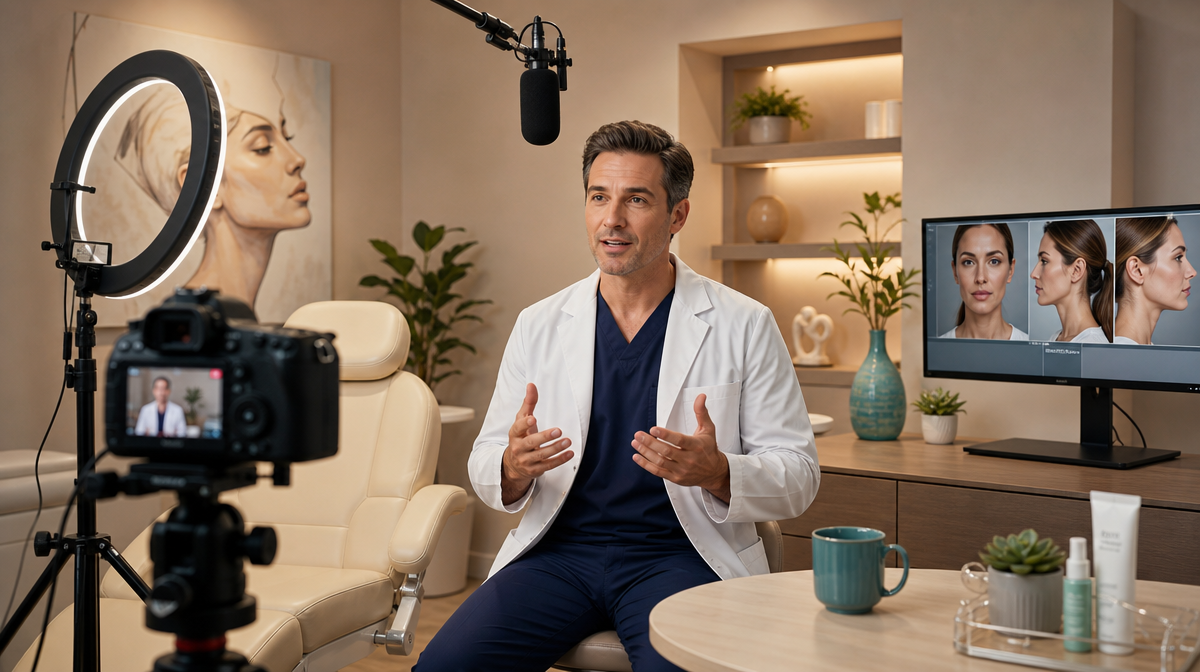
Practices that invest in local SEO as part of a broader plastic surgery digital marketing strategy consistently outperform competitors who rely on paid ads alone, because local visibility compounds over time rather than disappearing the moment ad spend stops.
SEO builds equity over time, but it doesn’t fill your schedule next Tuesday. That’s where Google Ads earns its place in a plastic surgery digital marketing strategy — it puts your practice in front of patients who are already searching for exactly what you offer, right now, today.
The difference between profitable Google Ads and expensive ones comes down to keyword intent. Broad terms like “plastic surgery” attract researchers and browsers. High-intent terms like “tummy tuck consultation Houston” or “rhinoplasty cost Atlanta” signal a patient who is actively evaluating surgeons and ready to inquire. Bidding on the latter costs more per click — and converts at a dramatically higher rate.
Three execution decisions separate practices that see strong ROI from those that burn through budget:
- Procedure-specific landing pages: Sending paid traffic to your homepage is one of the most common and costly mistakes in cosmetic surgery advertising. Every ad group should connect to a dedicated page that mirrors the search term, presents relevant before-and-after results, and has a single clear path to booking a consultation.
- Bid on consultation and cost queries: Searches like “breast augmentation consultation” or “how much does a facelift cost” represent patients deep in the decision process — these are the clicks worth paying for.
- Retarget visitors who didn’t book: Elective surgery has a long consideration cycle. A patient who visits your liposuction page and leaves without converting is still a warm lead. Retargeting campaigns keep your practice visible during the weeks they continue comparing options.
Without this structure, even a generous ad budget produces leads that never become booked procedures.
No other specialty in medicine benefits from visual platforms the way plastic surgery does. Instagram and TikTok aren’t social media channels you should consider — they’re where your future patients are actively forming opinions about which surgeon they’ll trust with their face or body. According to a systematic review published in Aesthetic Surgery Journal, roughly half of patients who ultimately undergo cosmetic procedures report that social media influenced their decision to pursue surgery in the first place.
The key to making these platforms work is understanding that each one serves a different role in the patient journey — and attracts a slightly different demographic:
- Compliant before-and-after content: Every transformation photo requires documented patient consent, consistent lighting and positioning for honest comparison, and careful framing that avoids idealized claims. Platforms have tightened restrictions on cosmetic procedure ads specifically — organic posts carry more flexibility than paid placements, which is exactly why a strong organic content foundation matters.
- Short-form video and Reels: Procedure explainers, recovery timelines narrated by the surgeon, and day-in-the-life operating room content consistently outperform static posts. Educational content earns saves and shares; promotional content gets scrolled past.
- Platform-to-audience alignment: Instagram skews toward ages 30–50 researching established procedures like facelifts and breast augmentation. TikTok indexes younger — ages 25–40 — and rewards trending, educational short-form content. YouTube captures all age groups during the deep research phase.
Posting inconsistently across all three platforms produces noise. Choosing one or two based on where your ideal patient actually spends time — and showing up there with genuine, consent-approved results — produces consultations.
When a prospective patient is deciding between you and the surgeon down the street, they’re not just comparing before-and-after photos — they’re reading. Procedure guides, recovery timelines, cost breakdowns, surgeon credentials. Content marketing for plastic surgery practices is the discipline of putting authoritative, well-structured answers to those questions on your website before a competitor does.
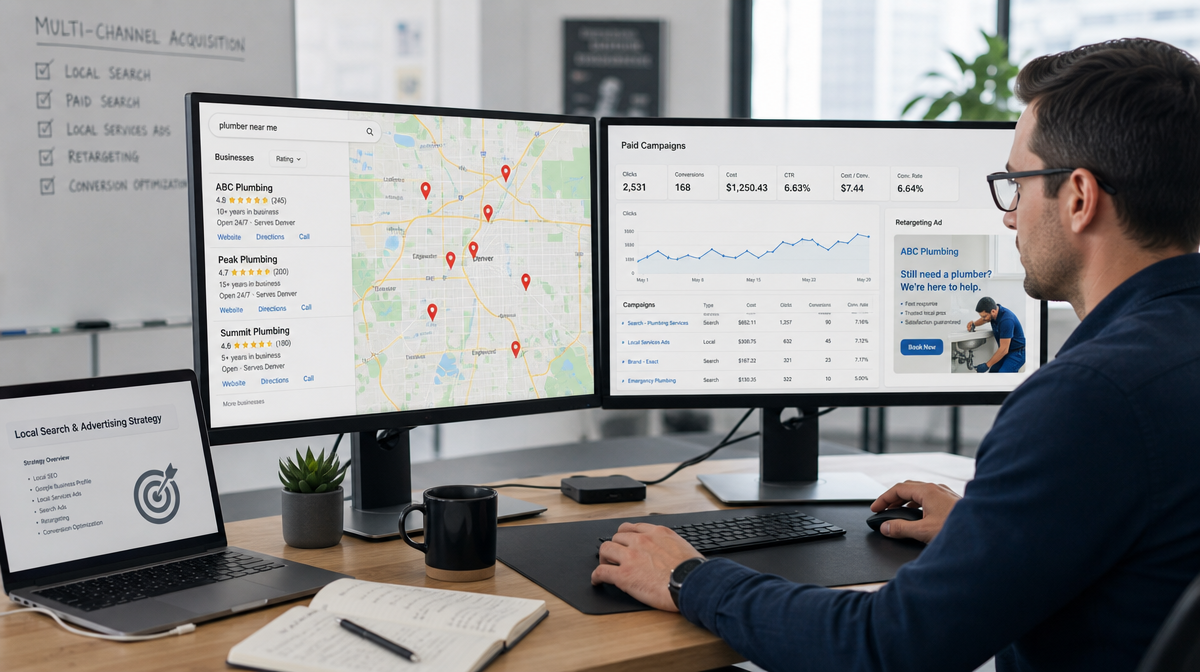
Google evaluates medical content through a framework called E-E-A-T: Experience, Expertise, Authoritativeness, and Trustworthiness. For cosmetic surgery specifically, this means generic blog posts attributed to “admin” don’t move the needle. Content attributed to the operating surgeon — complete with board certification details, fellowship training, and a real author bio — carries measurable weight in how search engines evaluate and rank your pages.
Three content categories drive the most organic traffic and patient trust for cosmetic practices:
- Procedure guides and recovery FAQs: Patients searching “how long is rhinoplasty recovery” or “what to expect after a tummy tuck” are deep in their decision process. Pages that answer these questions thoroughly earn rankings and credibility simultaneously.
- Cost and financing articles: Patients research pricing whether or not you publish it. Addressing cost transparently — explaining the variables without locking in a number — captures high-intent traffic and positions your practice as honest rather than evasive.
- Surgeon-authored authority content: When your name, credentials, and photo appear on a published piece, Google reads that as a trust signal. It also tells prospective patients there’s a real expert behind the information — not a content mill.
Practices that publish consistently in these areas build compounding search visibility that paid advertising simply cannot replicate.
Written reviews are easy to dismiss. A five-star rating with two sentences of generic praise doesn’t answer the question every prospective patient is actually asking: what was it really like? Video testimonials answer that question in a way no star rating ever can — because watching a real patient describe their experience, in their own words, with visible emotion, bypasses skepticism in a way that typed text simply cannot.
Social proof in plastic surgery marketing carries unusual weight because the stakes of the decision are so personal. A patient considering a facelift or body contouring procedure isn’t just evaluating clinical outcomes — they’re trying to imagine themselves trusting you with something irreversible. Video closes that trust gap faster than any other format.
- Filmed patient story testimonials: The most effective videos focus on the journey — the anxiety before surgery, the recovery experience, and the emotional outcome — not just the physical result. Capture these with documented consent, professional lighting, and a format that works natively on your website, YouTube channel, and social profiles simultaneously.
- Procedure walkthrough videos hosted by you: When you explain what happens during a rhinoplasty or breast augmentation in plain language, on camera, you reduce patient anxiety and demonstrate expertise before a single consultation is booked. These videos position you as the authority — not a stranger.
- YouTube as an active search channel: YouTube processes more than 3 billion searches per month. Patients searching “what does a tummy tuck recovery feel like” are finding answers there right now — and if your practice isn’t producing that content, a competitor is.
Most prospective cosmetic surgery patients won’t book a consultation the first time they encounter your practice. They’ll request information, go quiet for six weeks, compare three other surgeons, and eventually circle back — or disappear entirely. Email and SMS nurture campaigns exist specifically to prevent that second outcome.
The consideration window for elective procedures like abdominoplasty or body contouring routinely stretches two to six months. A lead who doesn’t convert immediately isn’t a lost lead — they’re a patient who needs consistent, low-pressure touchpoints while they work through the decision. Automated sequences handle that relationship-building without requiring your front desk to manually chase every inquiry.
- Consultation reminders and re-engagement sequences: Automated texts sent 24 and 48 hours before scheduled consultations measurably reduce no-show rates. Separately, a short drip sequence targeting leads who went cold — sent at 7, 21, and 45 days after initial inquiry — recovers a meaningful percentage of prospects who simply got busy and forgot to follow up.
- Post-operative care sequences: Structured follow-up messages after surgery — covering recovery milestones, answering common day-three questions, and checking in at the two-week mark — improve patient satisfaction scores and generate the kind of organic review activity that no incentive program can replicate.
- Repeat-patient promotions: Your existing surgical patients are warm prospects for non-surgical add-ons like injectables, laser treatments, and skincare. A quarterly SMS to your post-procedure list costs almost nothing and consistently outperforms cold acquisition campaigns on cost per booked appointment.
Executed correctly, email and SMS become the connective tissue between your other plastic surgery digital marketing efforts — keeping your practice top-of-mind across the entire patient decision arc.
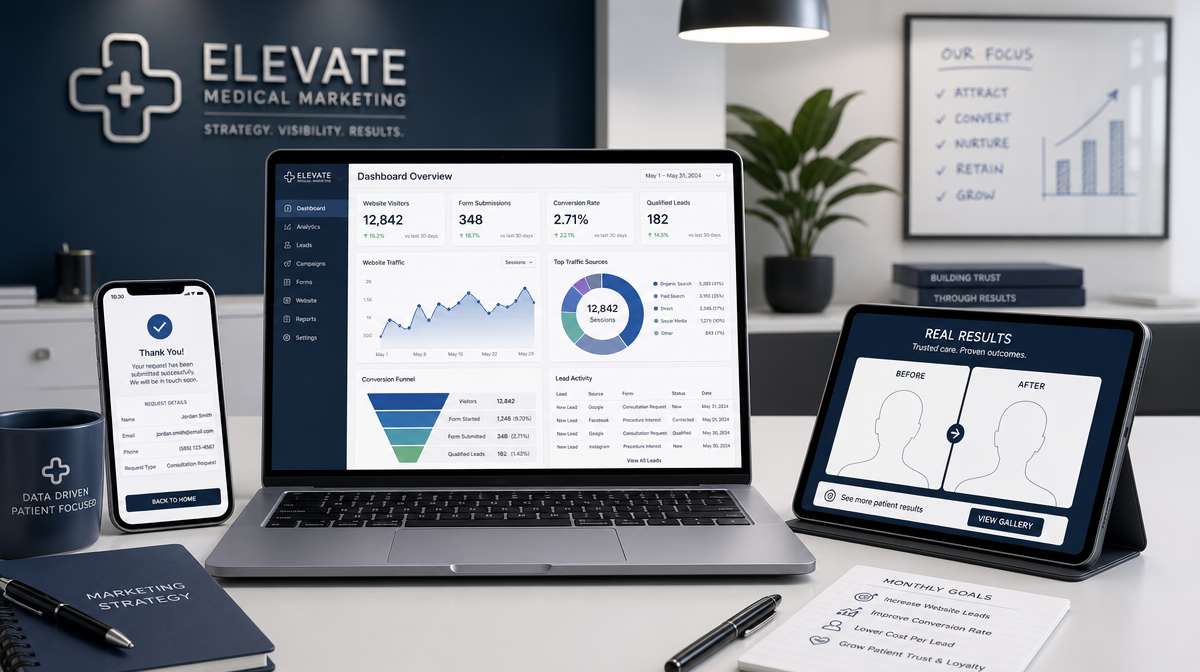
In plastic surgery, your reputation isn’t just marketing — it’s the deciding factor. A 2024 survey by Software Advice found that 71% of patients use online reviews as their first step when selecting a new physician, and cosmetic surgery patients are even more review-dependent than most because the procedure is irreversible and elective. One three-star average on Google can quietly redirect hundreds of consultation requests to a competitor with a 4.8.
Protecting and growing your reputation across the platforms where cosmetic patients actually look requires three distinct actions:
- Automate review requests at the right moment: The highest-quality reviews come from patients at their two-week or six-week post-op visit — when satisfaction peaks and results are visible. Automated systems that send a personalized text or email within 24 hours of that appointment capture that window without adding a single task to your front desk’s day.
- Monitor Google, RealSelf, and Healthgrades centrally: Plastic surgery patients cross-reference all three platforms before booking. A negative review that sits unaddressed on RealSelf for 90 days signals indifference to every prospective patient who reads it. Centralized monitoring dashboards let you catch and respond to new reviews within hours, not weeks.
- Respond publicly without triggering HIPAA liability: You cannot confirm that a reviewer is your patient in any public response. A compliant reply acknowledges the feedback professionally — “We take all patient experiences seriously and invite you to contact our office directly” — without disclosing any protected health information or implicitly confirming a patient relationship.
Review volume and recency also function as local ranking signals, meaning a consistent stream of new reviews directly supports your plastic surgery digital marketing performance in search — not just patient perception.
Google’s AI Overviews now appear above traditional organic results for a significant share of cosmetic procedure queries — and they pull their answers from a specific type of content. Generative Engine Optimization (GEO) is the practice of structuring your website so that AI systems select your practice as a cited source when patients ask questions like “what’s the best procedure for loose skin after weight loss” or “how do I choose a board-certified plastic surgeon.”
This is genuinely new territory in plastic surgery digital marketing, and most practices haven’t touched it yet — which means the competitive window is open right now.
- Format content for AI extraction: AI Overviews favor pages with clear, direct answers in the opening sentence of each section, descriptive H3 headings, and FAQ schema markup. If your procedure pages bury the key answer in paragraph four, AI systems will cite a competitor who leads with it.
- Reinforce the authority signals AI models trust: Board certification credentials, medical citations, consistent NAP data across directories, and surgeon-attributed content all function as trust signals that AI ranking systems weight heavily — the same way a peer-reviewed source gets cited over a forum post.
- Deploy an AI chatbot for after-hours inquiries: A prospective rhinoplasty patient researching at 11 PM won’t wait until morning. AI chat tools integrated into your website can answer procedure questions, qualify leads by procedure interest and timeline, and capture contact information for next-day follow-up — turning passive traffic into actionable leads while your office is closed.
Practices that optimize for AI visibility now will hold a compounding advantage — cited brands earn 35% more clicks — as AI-generated answers continue displacing traditional search results across high-intent cosmetic procedure queries.
Clicks, impressions, and social media engagement are vanity metrics. What actually tells you whether your plastic surgery digital marketing is working is a much shorter list: how many inquiries did each channel generate, what did each inquiry cost, and how many of those inquiries became booked surgical cases?
Attribution — the process of connecting a booked procedure back to the specific marketing touchpoint that initiated it — is where most practices fall apart. Without it, you’re allocating budget based on gut instinct rather than revenue data.
- Track cost per lead versus cost per patient: These are two different numbers that tell different stories. A Google Ads campaign might deliver leads at $85 each, but if only one in twelve converts to a surgical booking, your true patient acquisition cost is over $1,000. Knowing both figures lets you evaluate channels honestly.
- Connect marketing spend to procedure revenue: Call tracking software assigns unique phone numbers to each campaign, so when a patient calls from your rhinoplasty landing page versus your facelift ad, that revenue gets credited correctly. Integrate call tracking with your CRM and you have a closed-loop view from first click to signed consent form.
- Allocate budget by procedure margin: A mommy makeover generating $18,000 in revenue justifies a higher patient acquisition cost than a non-surgical injectable appointment. Shift spend toward campaigns driving your highest-margin procedures and pull back where the math doesn’t work.
Practices that build this measurement infrastructure stop asking “is marketing working?” and start asking “which specific campaign should get more budget this quarter?” — a much more productive question.
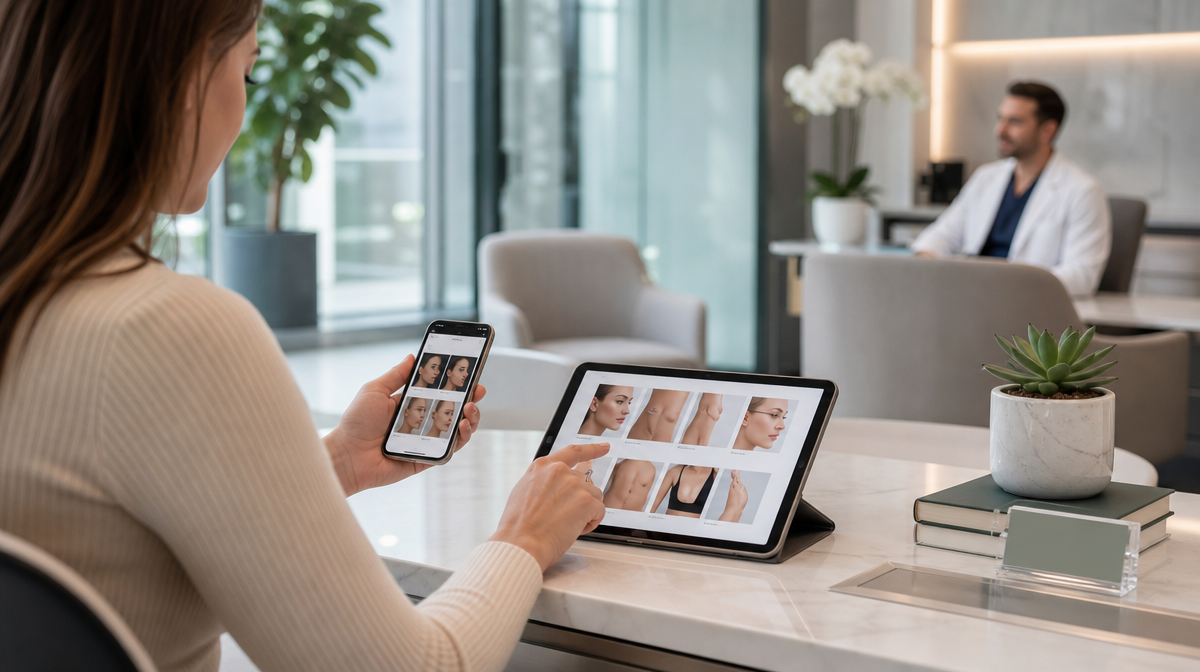
Every tactic covered so far — paid search, local SEO, content, reputation — operates on borrowed time if your practice looks identical to the surgeon two miles away. Tactics amplify differentiation; they can’t create it. Before your plastic surgery digital marketing can reach its ceiling, you need a clear, defensible reason why a patient should choose you specifically.
The practices that consistently outperform their market aren’t necessarily the most technically skilled — they’re the most clearly positioned. Here’s where that positioning actually lives:
- Specialize in signature procedures: Becoming known as the rhinoplasty surgeon in your city — rather than a generalist who does everything — concentrates your authority and makes your marketing message far more memorable. Patients searching for a specific procedure want a specialist, not a menu.
- Showcase your facility and technology: A spa-calibrated environment and modern imaging technology signal quality before a patient has exchanged a single word with your staff. High-quality photography of your consultation rooms and recovery suites earns trust that no ad copy can manufacture.
- Humanize your team: Staff bios with genuine personality, behind-the-scenes content, and surgeon-narrated videos create familiarity before the first appointment. Patients choose surgeons they feel they already know.
- Formalize word-of-mouth with a referral program: Your happiest post-surgical patients are your most credible advocates. A structured program with clear incentives — account credits toward non-surgical treatments, for example — converts passive satisfaction into active referrals your competitors aren’t capturing.
The practices winning patient acquisition right now have combined a sharp differentiator with the execution infrastructure to broadcast it consistently across every channel.
Running a plastic surgery practice and executing all ten of these tactics simultaneously is genuinely not realistic without dedicated infrastructure behind you. Most surgeons we talk to are managing patient care, staff, and operations — marketing gets handled in whatever time is left over, which is usually none.
That’s the exact problem Target Patients MD was built to solve. We’re a done-for-you plastic surgery digital marketing partner that handles the full acquisition engine — from search visibility and paid campaigns to reputation systems and AI-powered lead conversion — so your team stays focused on delivering results in the operating room rather than decoding ad dashboards.
What makes our approach different from a general marketing agency:
- A.L.I. 360 AI technology: Our proprietary system continuously optimizes your campaigns, identifies the highest-converting patient segments, and adjusts spend allocation in real time — without requiring your involvement between reporting calls.
- Guaranteed patient acquisition: We back our work with a performance commitment. A standard no general agency will agree to.
- Built exclusively for medical practices: Every campaign structure, compliance safeguard, and conversion framework we deploy was designed around the specific regulatory environment and patient psychology of elective healthcare — not repurposed from an e-commerce playbook.
If your current marketing isn’t producing a predictable, measurable flow of booked consultations, a free strategy call with our team is the fastest way to identify exactly where the gap is.
Plastic surgery digital marketing raises practical questions that don’t always have tidy answers — especially when you’re running a busy practice and need to make budget decisions without a full-time marketing team on staff. Here are the questions practice owners ask most often.
- How much should a plastic surgery practice spend on digital marketing? There’s no universal figure, but your growth targets, local market saturation, and the specific procedures you want to fill should drive the number — practices in competitive metro markets typically allocate more aggressively than those in lower-density areas.
- How long does it take to see results from plastic surgery SEO? Meaningful ranking movement typically takes several months, though practices with strong foundational authority or low local competition may see incremental gains earlier in the process.
- Can plastic surgeons advertise before-and-after photos on Facebook and Instagram? Meta’s paid ad policies restrict certain cosmetic surgery imagery and idealized claims, so paid placements require stricter compliance than organic posts, which carry more flexibility under current platform guidelines.
- What is the average cost per lead for plastic surgery practices? It varies substantially by procedure, geography, and competitive intensity — which is why tracking your own historical cost-per-lead data matters far more than benchmarking against industry-wide averages that may not reflect your market.
- Is AI-powered marketing effective for a solo plastic surgery practice? Yes — AI-driven tools level the playing field by automating campaign optimization and audience targeting that previously required large agency teams, making sophisticated plastic surgery digital marketing accessible regardless of practice size.


