




Plastic surgery digital marketing is the coordinated use of online channels to attract cosmetic surgery patients, convert their interest into consultation requests, and build the kind of trust that turns a first inquiry into a booked procedure. It’s not a single tactic — it’s a system.
What makes cosmetic surgery marketing fundamentally different from promoting a primary care practice or urgent care clinic is the purchase psychology involved. Patients researching a rhinoplasty or mommy makeover are making a deeply personal, high-stakes decision. They’re not choosing based on insurance networks. They’re choosing based on visual proof, surgeon credibility, and emotional confidence. That means your digital presence has to do a lot of heavy lifting before anyone picks up the phone.
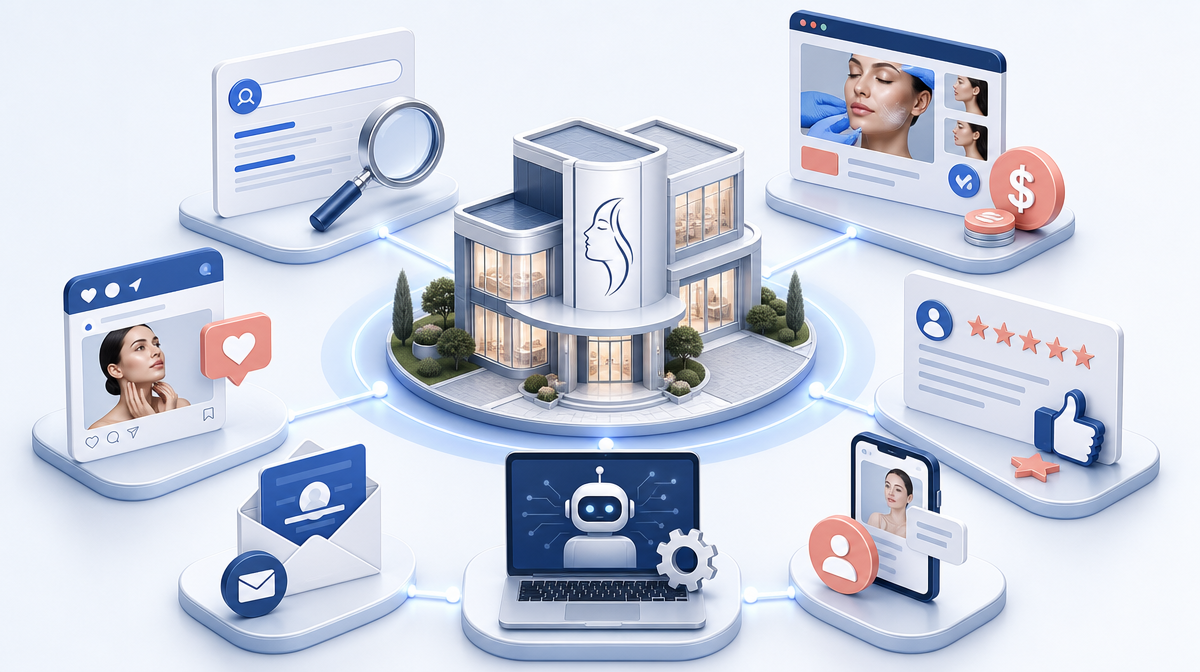
The core channels that make up a complete plastic surgery digital marketing strategy include:
- SEO: ranking for procedure-specific searches so qualified patients find you organically
- PPC advertising: capturing high-intent searchers who are ready to book now
- Social media marketing: showcasing real results visually to build desire and trust
- Reputation management: converting positive patient experiences into public proof
- Email and SMS nurturing: moving consultation leads toward booked procedures
Each channel plays a distinct role, but the practices that consistently grow patient volume are the ones running all five in a coordinated way — not picking one and hoping for the best.
Before you spend a dollar on ads or an hour on SEO, you need a clear picture of who actually books cosmetic procedures — because the answer shapes every channel decision you’ll make.
Women represent the majority of cosmetic surgery patients, but the demographic spread is wider than many surgeons expect. Millennials and Gen Z patients in the 25–40 range are driving strong demand for rhinoplasty, breast augmentation, and minimally invasive treatments — 54% of breast augmentations globally are performed on 18–34-year-olds. They’ve grown up on Instagram and TikTok, they research visually, and they decide based on what they see — not what they read. Older patients in the 40–60+ bracket, meanwhile, tend to research more deliberately, spend more per procedure, and place heavier weight on credentials and documented outcomes before they ever reach out.
Platform behavior follows those patterns closely, and that’s what makes targeting so important in plastic surgery digital marketing:

| Demographic | Primary Platforms | Common Procedures | Decision Factors |
|---|---|---|---|
| Younger (25–40) | Instagram, TikTok | Rhinoplasty, breast augmentation, lip filler | Visual results, social proof |
| Older (40–60+) | Facebook, YouTube | Facelift, eyelid surgery, body contouring | Credentials, before-and-after galleries |
Patients also pursue procedures for deeply personal reasons — post-pregnancy body restoration, aging concerns, career confidence, or a life milestone like a divorce or major weight loss. When your messaging speaks directly to those motivations rather than listing procedure names, your conversion rates reflect it.
Running a competitive cosmetic surgery practice today means executing across multiple fronts simultaneously — and doing it with a level of precision that generalist marketing simply can’t deliver. The ten strategies below form an integrated system where each component reinforces the others, compounding your results over time rather than producing isolated wins.
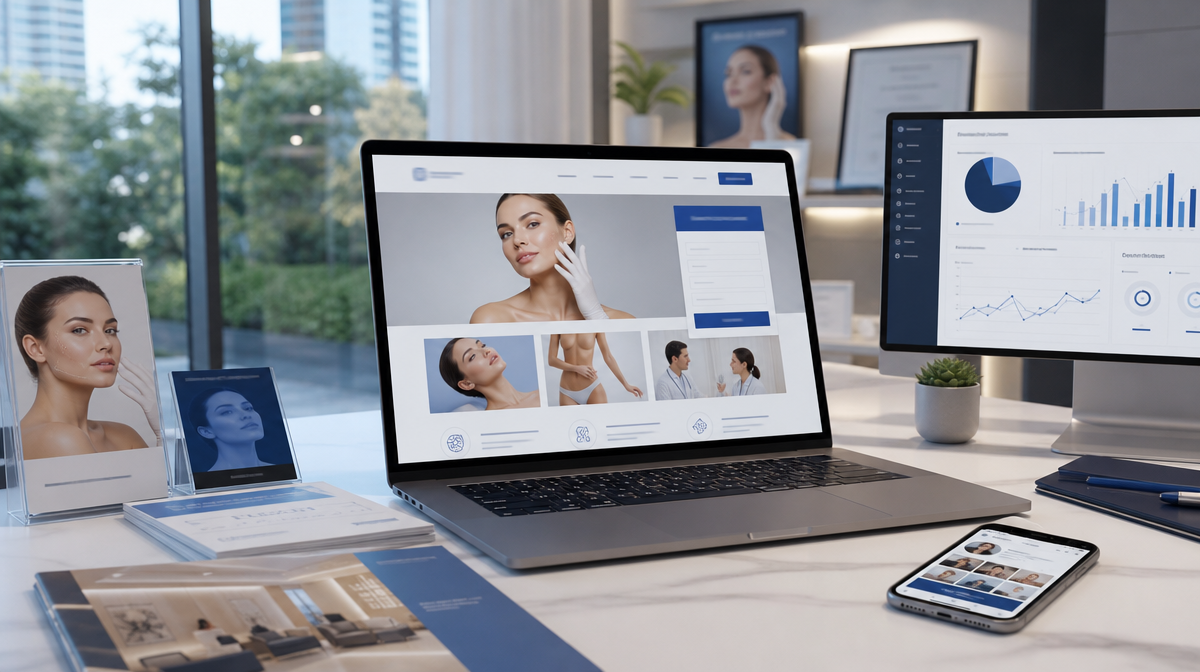
- Build a conversion-focused plastic surgery website: Your site is where every channel deposits its traffic. Mobile-first design, fast load speeds, prominent before-and-after galleries, clear consultation CTAs, and HIPAA-compliant intake forms are non-negotiable foundations.
- Win local SEO with your Google Business Profile: Accurate NAP data, proper category selection, regular photo uploads, and consistent review solicitation capture the high-value “near me” searches your competitors are fighting for.
- Rank for high-intent procedure keywords: Dedicated landing pages for facelifts, liposuction, and rhinoplasty — each targeting procedure-plus-city combinations — pull in patients who already know what they want.
- Run Google Ads for cosmetic procedures: Geo-targeted, procedure-specific PPC campaigns intercept patients at peak decision-making moments and deliver them directly to aligned landing pages.
- Launch paid social campaigns on Instagram and Meta: Lookalike audiences, demographic filters, and video creative build awareness among patients who match your best existing cases.
- Build trust with reputation and review management: Active solicitation and professional responses across Google, Healthgrades, RealSelf, and Yelp directly influence whether prospective patients choose you or scroll past — 84% of patients check online reviews before selecting a provider.
- Grow organic social with before-and-after content: Reels, TikToks, behind-the-scenes footage, and patient testimonials build surgeon credibility between paid campaigns.
- Create procedure playbooks for rhinoplasty, breast aug, and mommy makeover: Integrated, procedure-specific campaigns align messaging across SEO, PPC, and social for your highest-revenue services.
- Nurture consultations with email and SMS automation: Automated follow-up sequences re-engage leads that went quiet and convert fence-sitters into booked appointments.
- Apply AI and generative engine optimization: Optimizing content for AI-generated search results — including Google SGE and ChatGPT, which BrightEdge found now appear on 100% of treatment and procedure queries — positions your practice to capture the next generation of patient discovery.
Compliance isn’t a box to check after your campaigns are live — it’s a structural requirement that shapes how you collect patient data, what content you can publish, and which ad formats are actually available to you. Plastic surgery practices that treat HIPAA as an afterthought tend to discover the hard way that a single misstep can trigger platform penalties, patient complaints, or federal scrutiny.
Here’s what compliant plastic surgery digital marketing looks like in practice:
- Patient consent for photos and testimonials: Written authorization is required before publishing any before-and-after image or patient story — verbal permission carries no legal weight and won’t protect you if a patient disputes it later.
- HIPAA-compliant intake forms: Standard contact forms on most website platforms are not encrypted to HIPAA standards. Any form that collects names, contact details, or procedure interests needs to be built with proper data security protocols in place.
- Protected health information in advertising: Patient names, diagnoses, procedure histories, and any detail that could identify an individual are off-limits in ad copy, retargeting audiences, and campaign targeting — even when using third-party ad platforms.
- Platform-specific healthcare ad policies: Meta and Google both impose restrictions on healthcare advertisers that go beyond general guidelines. Certain targeting parameters, remarketing configurations, and creative formats are restricted or prohibited in medical advertising categories.
Working with an agency that understands both the marketing side and the regulatory landscape removes a significant liability from your plate. Generalist firms rarely flag these issues until something goes wrong.
Knowing which channels drive patient growth is only half the equation. The other half is proving it with numbers your practice can actually act on. Without a measurement framework in place, you’re essentially guessing which budget lines are working and which ones are quietly draining your overhead.
Three metrics do the heaviest lifting in plastic surgery digital marketing performance tracking:
- Cost per lead (CPL): Divide total ad spend by the number of leads generated in a given period. Tracking CPL separately by channel — Google Ads versus Meta versus organic — and by procedure reveals exactly where your acquisition dollars are most efficient. A rhinoplasty lead that costs $45 through paid search versus $180 through social tells you something actionable about where to shift budget next month.
- Lead-to-booked-surgery conversion rate: This is the percentage of initial inquiries that become scheduled procedures. A low conversion rate doesn’t always signal a marketing problem — it often points to friction inside the consultation process itself, which means the fix lives in your front desk workflow, not your ad spend.
- Return on ad spend (ROAS): Calculated as revenue generated divided by advertising cost, ROAS only becomes meaningful when you can attribute specific procedure revenue back to the campaign that sourced the patient. Without that attribution chain, you’re measuring activity instead of outcomes.
Review these numbers monthly, not quarterly. Cosmetic surgery demand shifts with seasons, trends, and local competition — and practices that catch underperforming campaigns early reallocate that budget before it compounds into a bad quarter.
AI isn’t a future consideration for plastic surgery practices anymore — it’s actively changing which practices patients find, contact, and book. The shift is happening across every stage of the patient acquisition funnel, and the practices benefiting most are the ones treating AI as infrastructure, not novelty.
Four specific applications are producing the most measurable impact for cosmetic surgery practices right now:
- AI-driven SEO optimization: Machine learning tools analyze search intent patterns, identify content gaps, and surface keyword opportunities specific to cosmetic procedures faster than any manual audit. Your content strategy gets sharper, and your organic rankings reflect it.
- Automated campaign management: AI bidding systems in Google Ads and Meta continuously adjust spend allocation based on real-time performance signals — time of day, device, geographic micro-trends — without requiring a human to manually pull levers every morning.
- AI chatbots for 24/7 patient engagement: Most consultation inquiries happen outside business hours. AI-powered chat tools qualify leads, answer procedure questions, and capture contact information around the clock, so a patient who visits your site at 11pm doesn’t go cold by morning.
- Predictive analytics for patient targeting: Behavioral data models identify which audience segments are most likely to convert for specific procedures, letting you concentrate ad spend on the prospects with the highest booking probability.
Platforms like A.L.I. 360 integrate these capabilities into a single system built specifically for medical practices — which is why practices using AI-powered marketing infrastructure are reporting patient acquisition lifts that manual campaigns simply can’t match.
Most plastic surgery practices that struggle with marketing don’t have a strategy problem — they have an agency-fit problem. They’re working with a firm that builds great campaigns for restaurants or e-commerce brands but has never navigated a RealSelf listing, a healthcare ad policy rejection, or a patient consent workflow. That mismatch costs you money and months.
When evaluating potential partners for plastic surgery digital marketing, filter aggressively on these criteria:
- Healthcare specialization: Look for agencies whose client roster is built around medical and aesthetic practices — not firms where your surgery center is sandwiched between a car dealership and a SaaS company.
- HIPAA compliance expertise: Ask directly how they handle patient data in ad platforms, what their intake form infrastructure looks like, and whether they’ve had campaigns flagged for healthcare policy violations. Vague answers are a red flag.
- Plastic surgery case studies: Documented results for cosmetic procedures — not just “healthcare clients” in general — tell you whether the agency understands procedure-specific buying cycles and the visual-first nature of cosmetic patient acquisition.
- Transparent reporting: You should receive dashboards showing channel-level performance, not summary emails with cherry-picked wins. If an agency can’t tell you which campaign produced which consultation, you can’t make informed budget decisions.
- Flexible contract terms: Month-to-month arrangements signal an agency confident enough in its results to earn your business every month. Long lock-in contracts often protect the agency, not your practice.
The right agency functions as a growth partner who understands the regulatory environment and the cosmetic patient journey — not just someone who knows how to run ads.
Growing a plastic surgery practice takes more than running a few ads and hoping the phones ring. It takes a partner who understands the full patient acquisition cycle — from the moment someone searches “rhinoplasty near me” to the day they sign their pre-op paperwork.
Target Patients MD works exclusively with medical and aesthetic practices, which means every system we build is calibrated for the specific buying behavior of cosmetic patients — not borrowed from a retail playbook and rebranded for healthcare.
Here’s what working with us looks like in practice:
- Done-for-you execution: We handle the full stack — website, SEO, paid campaigns, reputation systems, and AI-powered automation — so you stay focused on patient care instead of managing vendors.
- Plastic surgery specialization: Our team has hands-on experience with cosmetic procedure marketing across competitive markets, with results we can document and show you before you commit.
- Built-in compliance infrastructure: From intake forms to ad creative, our systems are designed with healthcare privacy requirements baked in from the start.
- Performance you can measure: You’ll see exactly which campaigns are driving consultation requests and what each patient acquisition is costing you — no vanity metrics, no ambiguity.
If your current plastic surgery digital marketing isn’t producing consistent, measurable consultation volume, the problem is solvable. Learn more about Target Patients MD and find out what a purpose-built growth system can do for your practice.
Answers to the most common questions plastic surgery practice owners ask when they’re evaluating digital marketing options — or trying to figure out why their current approach isn’t converting.
- How much should a plastic surgery practice budget for digital marketing? A custom website is typically the largest single foundational investment, while monthly SEO retainers and paid advertising budgets scale with your market’s competitiveness and how aggressively you want to grow consultation volume.
- How long does plastic surgery SEO take to show results? Meaningful organic rankings generally take several months to build, while paid search campaigns can begin generating consultation requests within days of launch — which is why most practices run both simultaneously rather than waiting on one to mature.
- What should you look for in a plastic surgery SEO company? The strongest firms combine healthcare marketing specialization with documented cosmetic surgery results, a clear understanding of patient privacy requirements, and reporting that tracks actual patient leads rather than just keyword positions.
- How do plastic surgery practices attract self-pay cosmetic patients? Self-pay patients respond to strong visual proof of outcomes, financing options displayed prominently across both your website and ad creative, and credible third-party reviews that reduce the perceived risk of an out-of-pocket investment.
- Why is social media effective for promoting plastic surgery procedures? Platforms like Instagram and TikTok are inherently visual environments, which makes them uniquely suited for communicating surgical outcomes, establishing surgeon credibility, and reaching patients who are actively researching procedures before they ever run a Google search.


