



When a general web agency builds your site, they’re optimizing for aesthetics and basic functionality. That’s fine for a restaurant or a law firm. But medical website design operates under a completely different set of rules — ones that directly affect whether patients trust you enough to book, whether you’re legally protected, and whether your site actually shows up when someone searches for a doctor in your area.
The gap between a generic business website and a healthcare-specific one comes down to four distinct requirements that most agencies simply aren’t equipped to handle:
- Compliance requirements: Your site needs HTTPS encryption, ADA-accessible design that meets WCAG standards, and patient intake forms built to HIPAA specifications — not just a standard contact form that sends unencrypted data to your inbox.
- Trust-building elements: Patients choosing a doctor are making a high-stakes personal decision. Board credentials, verified reviews, provider photos, and before/after galleries aren’t optional extras — they’re the evidence patients need before they’ll hand over their health.
- Conversion focus: Every page needs a clear path to an appointment. Click-to-call buttons, online booking integrations, and mobile-first layouts aren’t features to add later — they’re the architecture that turns visitors into patients.
- Specialty content: Patients researching procedures, insurance coverage, and provider backgrounds expect depth. Generic copy doesn’t answer the questions that move someone from “considering” to “scheduled.”
Miss any one of these, and you’re not just leaving money on the table — you’re actively pushing ready-to-book patients toward a competitor who got it right.
Think of your website as your practice’s front door — except it’s open 24 hours a day, and most patients are judging it from a 4-inch screen while sitting in a parking lot. When something feels off, they don’t call to ask questions. They hit the back button and book with whoever ranks next.
Here are the six most common design failures that send patients straight to your competitors:

- Slow load times and poor mobile experience: Patients on phones abandon slow sites within seconds. Most patients searching “urgent care near me” or “medspa [city]” never make it past your homepage if it crawls.
- Confusing navigation and buried booking options: If a patient has to scroll, hunt, or think about how to schedule an appointment, you’ve already lost them. The path to booking should be frictionless from every single page.
- Generic templates that look like every other practice: Cookie-cutter designs signal nothing about why you’re the right choice. When your site looks identical to three competitors down the street, patients have no reason to pick you over whoever has the better review count.
- Missing or outdated provider information: Patients actively research who will be treating them. Stale headshots, missing certifications, or a bio that reads like a resume from 2015 raises doubt — and doubt kills conversions.
- Weak local search visibility: A beautifully designed site that doesn’t rank for your specialty and city is essentially invisible to the patients who are ready to book right now — which is why design and medical SEO services have to be planned together, not sequentially.
- Unsecured patient communication: Standard contact forms transmit data without encryption. Beyond the privacy exposure, patients who notice a missing padlock icon or an HTTP URL will quietly close the tab.
Picture the patient journey that actually ends in a booked appointment. Someone searches “dermatologist [your city],” lands on your site, immediately understands what you specialize in, sees a real photo of your physician alongside a 4.9-star rating from 200 verified patients, and books a consultation in under 90 seconds — without calling your front desk. That’s what a high-converting medical website design makes possible, and it’s a fundamentally different experience from what most practices are delivering right now.
The gap between a site that loses patients and one that captures them comes down to a handful of concrete elements:
- A value proposition above the fold: Within two seconds of arrival, patients should know exactly who you serve, what makes you different, and how to take the next step — not a generic “Welcome to our practice” banner.
- Booking access on every page: Sticky headers with click-to-call buttons and floating “Book Now” prompts eliminate dead ends regardless of where a patient enters your site.
- Authentic visual proof: Real physician photos, patient testimonials with names and conditions treated, and procedure-specific before/after galleries communicate outcomes in ways that stock imagery never can.
- Embedded social validation: Dynamically pulled Google and Healthgrades ratings displayed prominently — not buried on a separate reviews page — keep high-intent visitors moving toward a decision.
- Speed-optimized mobile experience: The entire journey from landing to confirmed appointment should be completable on a phone in under two minutes.
Each element reinforces the others. Remove one, and the conversion path develops a leak your competitors are happy to benefit from.
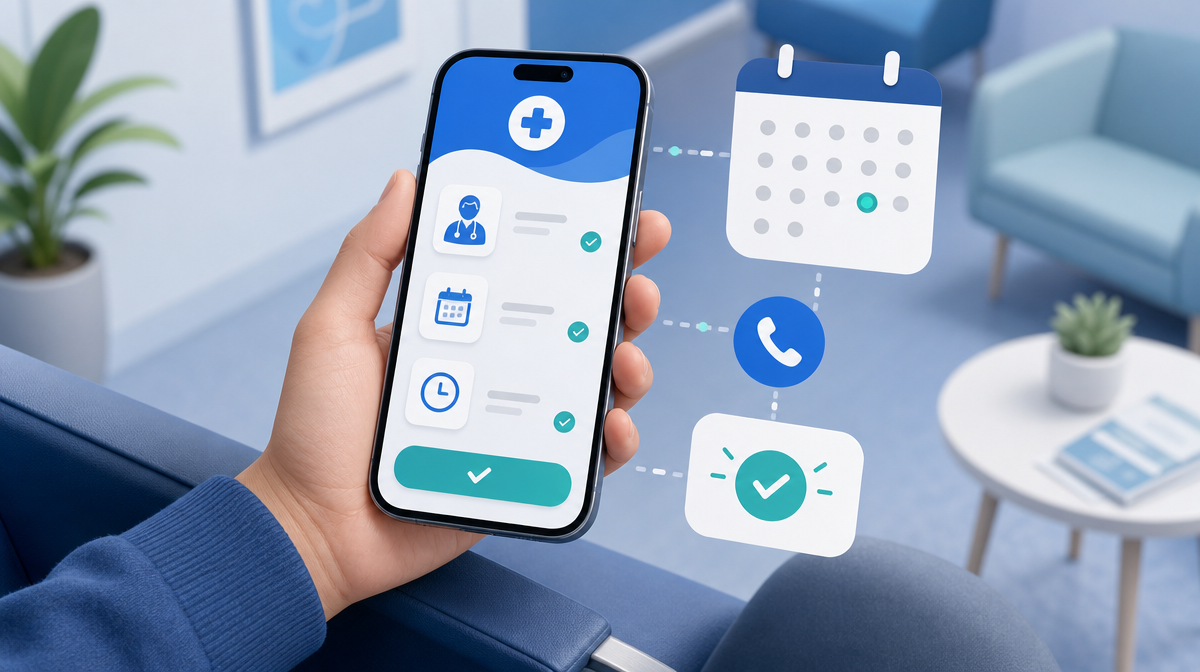
Diagnosing the problem is one thing. Fixing it is where most practices either gain significant ground on competitors or keep throwing money at tactics that can’t compensate for a broken foundation. Here are six concrete steps that turn an underperforming site into a genuine patient acquisition engine:
- Rebuild on a mobile-first conversion foundation: This means designing for a 390-pixel phone screen first, then scaling up to desktop — not the reverse. Navigation collapses cleanly, buttons are thumb-sized, and forms auto-fill. Patients searching during a lunch break or in a waiting room complete the booking without pinching and zooming.
- Place click-to-call and online booking on every page: Sticky headers and floating action buttons ensure no page is a dead end. A patient reading your rhinoplasty procedure page at 10 PM shouldn’t have to navigate anywhere to take the next step.
- Integrate local SEO for doctors with your Google Business Profile: Your website and your GBP listing must reinforce each other with consistent NAP data, service-area keywords, and schema markup so you appear in the map pack when nearby patients search your specialty.
- Pull in reviews dynamically from multiple platforms: Aggregate Google, Healthgrades, and RateMDs ratings directly onto your service pages so high-intent visitors see social proof exactly where they’re making decisions.
- Deploy AI chat for after-hours lead capture: A.L.I. 360 by Target Patients MD, a proprietary AI-powered patient-acquisition system for medical and dental practices — the name stands for Attract, Learn, and Influence — acts as a 24/7 virtual front desk — answering procedure questions, qualifying leads, and capturing contact information when your staff has gone home for the night.
- Connect analytics, call tracking, and CRM for closed-loop reporting: Closed-loop reporting links every booked appointment back to the specific page or campaign that generated it, so you know your website’s actual revenue contribution — not just its traffic numbers.
Standing out in a local market isn’t about having the most polished design — it’s about giving patients a reason to choose you that no competitor on the same search results page can replicate. Most practices settle for websites that describe what they do. The ones that win new patients build sites that communicate why they’re the only logical choice for a specific person with a specific need.
- Anchor your site to a unique value proposition: Specialized procedures, proprietary technology, multilingual staff, or same-week availability are competitive advantages only if patients can see them immediately. If your differentiator is buried three scrolls down a generic services page, it doesn’t exist.
- Invest in original visual storytelling: Custom photography and short video tours of your facility communicate something stock images fundamentally cannot — that your practice is real, specific, and worth trusting. Patients comparing three nearby providers will remember the one that felt human.
- Publish content your competitors haven’t written: Doctor-authored procedure guides, condition-specific FAQs, and honest explanations of what recovery actually looks like build search authority while positioning your providers as the credible experts in the room — and, increasingly, get your practice cited in the AI-generated answers patients see first, which is the subject of AI in healthcare SEO.
- Demand area exclusivity from your design partner: A medical website design partner who builds sites for your direct competitors is structurally working against you. Target Patients MD maintains a strict area exclusivity policy — your local market belongs to your practice, not to whoever calls next.
- Highlight patient experience infrastructure: Telemedicine options, transparent pricing pages, and online intake forms aren’t just conveniences — they’re visible signals that your practice is built around modern patient expectations, not 2012 workflows.
Healthcare is one of the few industries where a stranger is expected to trust you with their body before they’ve ever shaken your hand. That trust gap is what your website has to close — and patients aren’t passive about it. Most patients read reviews before they choose a provider, and many read several. The design elements that build that trust aren’t cosmetic. They’re structural.
- Board certifications and practitioner credentials: Display these on your homepage, provider bios, and relevant service pages — not just buried in an “About” section. Fellowship status, specialty board certifications, and hospital affiliations are exactly what patients search for when they’re deciding whether to proceed.
- Multi-platform review aggregation: Patients cross-reference. Someone who finds you through Google will check Healthgrades before booking, then glance at RateMDs for good measure. Surfacing ratings from multiple platforms in one place removes friction from that verification process.
- Before and after galleries and video testimonials: For aesthetic, dental, and vision practices especially, outcome imagery is the single most persuasive element on the page. A 60-second patient video explaining their experience outperforms paragraphs of written copy in both trust and time-on-page metrics.
- Third-party accreditations and media recognition: “Top Doctor” designations, hospital system affiliations, and press mentions function as external validation that no amount of self-promotional copy can replicate. Display these prominently — they signal that someone outside your practice has independently vetted your quality.
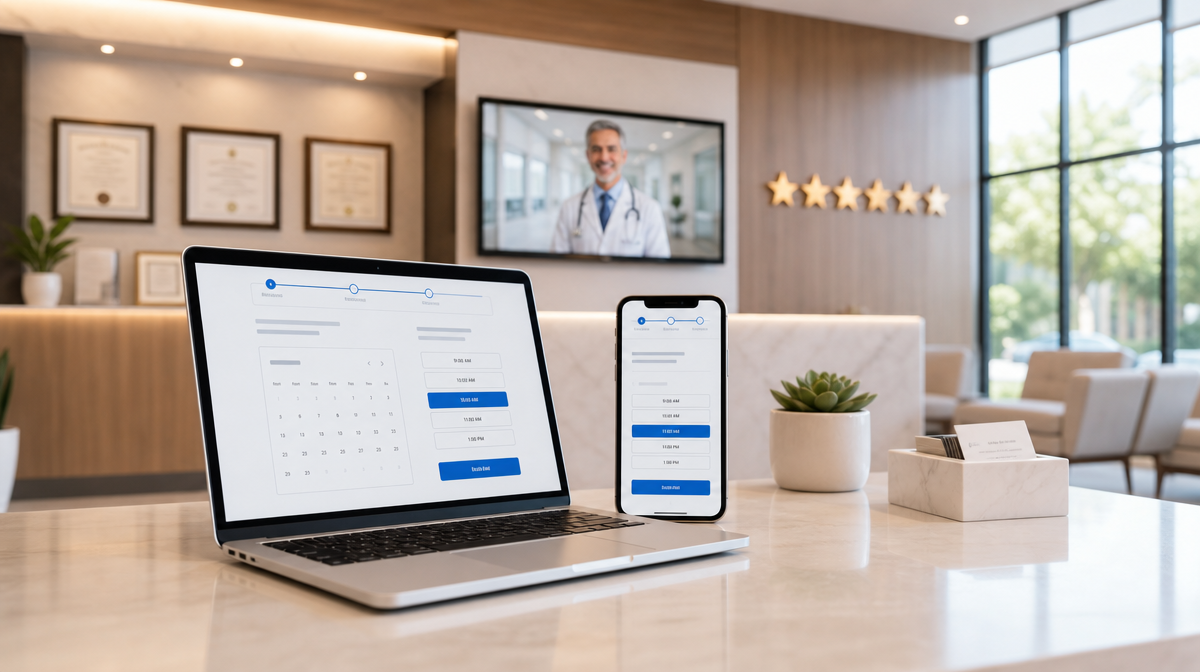
Every one of these elements answers the unspoken question every new patient carries: How do I know I can trust this person with my health?
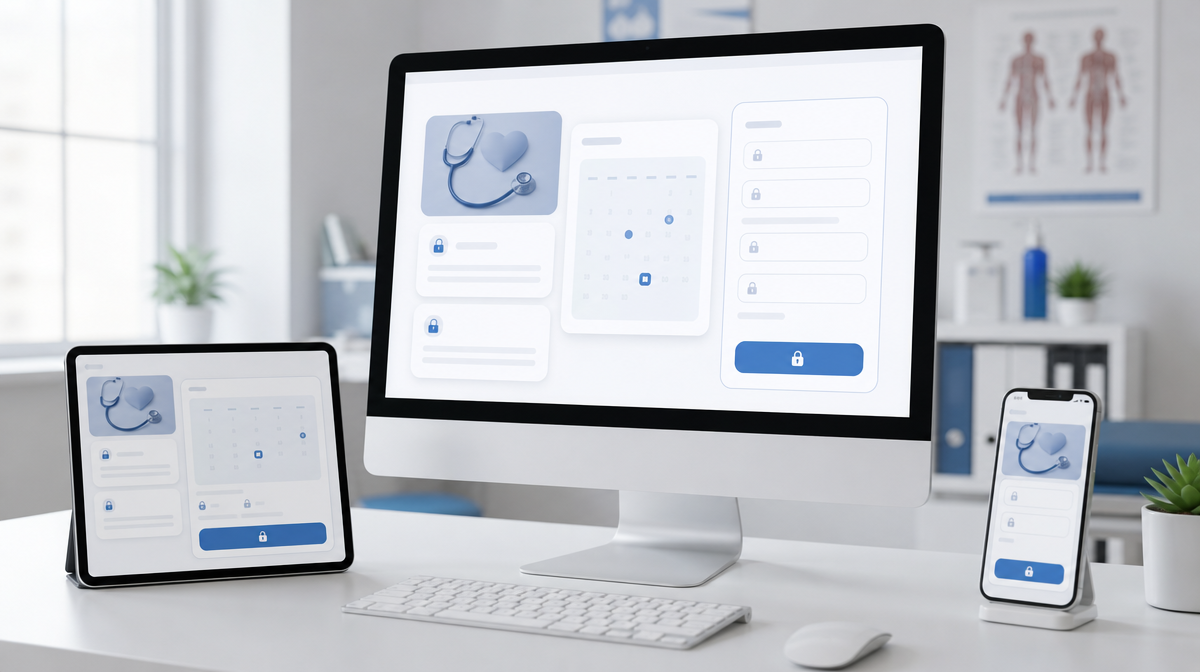
Compliance isn’t just a legal checkbox — it’s a visible signal patients pick up on before they ever fill out a form. A medical website design that cuts corners on security doesn’t just expose your practice to regulatory penalties; it hands skeptical patients a concrete reason to close the tab. Here’s what the technical foundation of a compliant healthcare site actually requires:
- SSL certificates and HTTPS encryption: That padlock icon in the browser bar isn’t decorative. Without it, Google flags your site as “Not Secure,” which tanks both patient confidence and your organic rankings simultaneously. Every page — not just intake forms — must run over HTTPS.
- HIPAA-conscious intake forms and email: Standard web forms send unencrypted data through general email servers, which is exactly the exposure a HIPAA-conscious practice avoids the moment a patient types in a health-related inquiry. HHS is clear that providers may communicate with patients electronically provided they apply reasonable safeguards — encrypted forms, secure storage, and a Business Associate Agreement with any vendor who handles that information.
- ADA and WCAG accessibility standards: The Department of Justice’s guidance on web accessibility and the ADA states that the ADA’s requirements apply to the goods and services businesses offer online, and healthcare practices are open to the public. Proper alt text, keyboard navigation, sufficient color contrast, and screen reader compatibility are non-negotiable, both legally and ethically.
- Enterprise-grade cloud hosting with automated backups: Shared hosting plans that cost $10 a month go down at the worst possible times and offer zero redundancy if your site is compromised. Medical sites require HIPAA-eligible hosting environments with documented uptime commitments and daily encrypted backups.
Each of these requirements adds real cost to a website build — which is exactly why generic agencies skip them and why practices end up exposed.
Most practice owners have no idea whether their website is generating revenue or just generating bills. Traffic numbers and page views feel meaningful until you realize they tell you nothing about whether a single patient actually booked an appointment as a result. The metrics worth tracking are the ones tied directly to patient acquisition — not vanity numbers that look good in a monthly report.
- New patient appointments booked online: This is the only conversion metric that directly maps to revenue. If your booking software can’t tell you how many appointments originated from your website specifically, you have a reporting gap.
- Phone calls from website visitors: Unique tracking numbers assigned to your site separate web-generated calls from referrals, walk-ins, and returning patients — giving you a true read on what your medical website design is actually producing.
- Form submissions and chat conversations: These represent patients who engaged but haven’t yet committed. Your front desk follow-up rate on these leads is often where appointments are won or lost.
- Bounce rate and average session duration: When patients land and leave immediately, that’s a signal — either the wrong traffic is arriving or the right traffic isn’t finding what it needs fast enough.
- Local search ranking positions: Track where you appear for your core specialty-plus-city searches monthly. Ranking movement is an early indicator of SEO health before it shows up in patient volume.
- Cost per acquired patient: Divide your total website and marketing spend by confirmed new patients. This is the number that tells you whether your investment is working or whether it’s time for a serious conversation about your current setup.
Not every agency that builds websites understands what it takes to fill an appointment calendar. The difference between a general digital vendor and a medical marketing agency comes down to a specific set of qualifications — most of which never appear on a proposal.
- Healthcare-only focus: An agency that splits its time between restaurant menus, e-commerce stores, and medical practices doesn’t have the accumulated pattern recognition to know why patients abandon booking flows or which trust elements move the needle in your specialty. Ask directly: what percentage of their active clients are medical practices?
- Custom design versus template libraries: If an agency can spin up your site in 72 hours, they’re filling in a pre-built template with your logo. Patients in competitive markets will recognize it — because they’ve already seen it on three other practices nearby.
- Proven patient acquisition results: Request specific outcomes — new patient volume increases, conversion rate improvements, appointment growth tied to a redesign. Portfolio screenshots are not the same as performance data.
- Ongoing optimization commitment: A website that launches and then sits untouched degrades in performance as competitors improve and search algorithms shift. Monthly testing, content updates, and analytics reviews are what separate a living asset from a depreciating one.
- Area exclusivity policy: If your design partner is actively building sites for competing practices in your market, your investment is working against itself. Target Patients MD holds one practice per specialty per geographic area — your competitive advantage stays yours.
Investing in medical website design raises practical questions — especially when you’re weighing costs, timelines, and whether the outcome will actually move the needle on patient volume. Here are the questions practice owners ask most frequently before committing to a build or redesign:
- How much does a medical website design cost? Pricing varies considerably based on the number of service pages, booking integrations, HIPAA-conscious form infrastructure, and whether you’re starting from scratch or rebuilding an existing site. Budget expectations differ sharply between template-based solutions and fully custom builds — the latter typically commands a higher investment but delivers functionality and differentiation that generic options structurally cannot match.
- How long does it take to build a custom medical website? Custom healthcare sites typically require several weeks to a few months from kickoff to launch. Content readiness on your end — provider bios, photography, service descriptions — is usually the biggest variable affecting that timeline.
- Should I use a template or invest in a custom design? Templates offer faster launches at lower upfront cost. In competitive local markets, however, they rarely produce the differentiation or conversion infrastructure that drives meaningful new patient growth.
- How often should a medical practice redesign its website? A full structural redesign every three to four years keeps pace with evolving mobile standards. Content, review feeds, and SEO elements should be updated on a continuous basis — not treated as a one-time launch deliverable.
- Can a new website genuinely increase patient bookings? Yes — when the underlying architecture prioritizes conversion, local visibility, and trust signals simultaneously rather than treating any one of those as optional.