




If your practice is in NYC, you’re not competing locally — you’re competing globally. Patients fly into Manhattan from London, São Paulo, and Dubai specifically to consult with surgeons here. That international draw sounds flattering until you realize it also means your Google Ads are bidding against practices with multi-decade reputations, celebrity endorsements, and marketing budgets that would make most practice owners choke on their coffee.
The structural reality of the New York market makes standard marketing playbooks functionally useless. Consider what you’re actually up against:
- Surgeon concentration unlike any other U.S. market: Manhattan ZIP codes contain more board-certified plastic surgeons per square mile than virtually any city on earth — meaning a patient within walking distance of your practice has dozens of credentialed alternatives to evaluate before ever picking up the phone.
- Cost-per-click premiums that punish generic campaigns: Procedure keywords in New York routinely run 40–60% above national CPC averages, which means an unfocused campaign burns through budget without producing consultations.
- Patients who research like it’s their job: NYC cosmetic patients often spend weeks cross-referencing credentials, before-and-after results, and review profiles across multiple platforms before initiating any contact with a practice.
Generic plastic surgery marketing in New York doesn’t just underperform — it actively wastes money. The practices filling their consultation calendars here have abandoned the one-size-fits-all approach entirely and replaced it with hyper-specific strategies built around how affluent, skeptical, research-driven New Yorkers actually make decisions.
Understanding who actually books consultations in this market changes how you allocate every dollar of your marketing budget. The NYC cosmetic patient is not the same person walking into a practice in Phoenix or Charlotte — and treating them as such is where most plastic surgery marketing in New York quietly falls apart.
The typical high-value patient in Manhattan, Brooklyn, or the outer boroughs tends to be a professional in their late 30s to mid-50s with household income well above $250,000. They are not price-shopping. They are credential-shopping, outcome-shopping, and experience-shopping — in that order.
- Research-driven: These patients compare multiple surgeons across weeks or months, reading review threads, watching surgeon interview videos, and scrutinizing before-and-after galleries with the kind of rigor you’d expect from someone making a $20,000 decision — because they are.
- Value credentials above convenience: Board certifications, named hospital affiliations, fellowship training, and media recognition carry more weight than proximity or availability. A surgeon two neighborhoods farther away with stronger credentials will win the consultation.
- Expect concierge-level communication: Response speed, the quality of your intake process, and how personalized the pre-consultation experience feels all influence whether they show up — or quietly book elsewhere.
Discretion also matters in ways that directly affect your marketing approach. Many of these patients are recognizable in professional or social circles and will not engage with practices that feel public-facing or promotional in a way that compromises their privacy.
Elite NYC practices aren’t just doing the same things better — they’re operating from a completely different strategic framework. The gap between a mid-market cosmetic practice and a top-performing Manhattan operation isn’t budget size; it’s the four specific decisions that separate practices with full consultation calendars from those chasing leads.
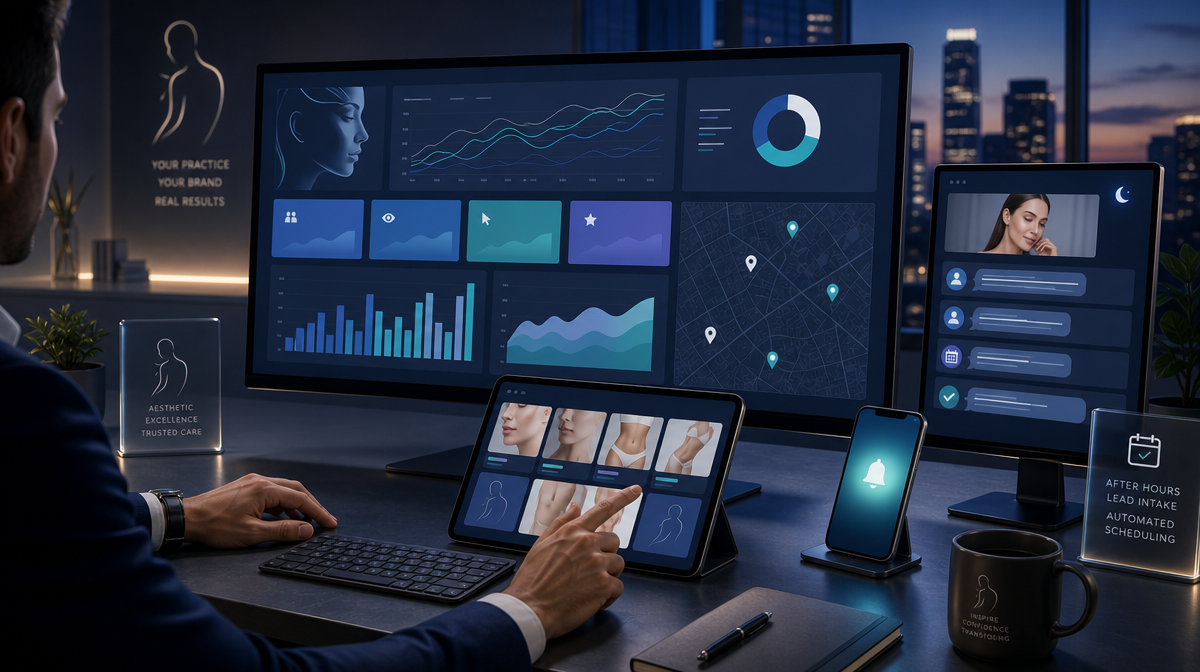
- Hyper-local targeting by neighborhood and ZIP code: A practice on the Upper East Side and one in Tribeca are marketing to fundamentally different patient profiles, even though they’re three miles apart. High-performing practices build borough-specific landing pages and run geo-targeted campaigns tuned to the income demographics and aesthetic preferences of each neighborhood — not a single citywide campaign that speaks to nobody specifically.
- Premium brand positioning over price competition: The moment your website, photography, or messaging signals “affordable,” you’ve disqualified yourself from the patient segment worth winning. Top NYC practices lead with exclusivity, surgical outcomes, and institutional credentials — never discounts.
- White-glove communication at every touchpoint: Same-day response to consultation inquiries, personalized follow-up sequences, and frictionless booking experiences are table stakes at this level. AI-powered intake tools can handle after-hours engagement without sacrificing the premium feel patients expect.
- Real-time budget reallocation across channels: Winning practices don’t set an annual channel split and forget it. They use live ROI dashboards — and systems like A.L.I. 360 — to shift spend between SEO, paid search, and paid social based on what’s actually converting each month.
In plastic surgery marketing New York, these aren’t competitive advantages — they’re the minimum entry requirements for practices that want to compete at the highest tier.
Your website is doing one of two things right now: actively booking consultations or quietly sending patients to a competitor. In the NYC cosmetic market, there is no neutral ground. A prospective patient who lands on a slow-loading, visually inconsistent, or confusing site doesn’t call to ask follow-up questions — they close the tab and move to the next surgeon in their research stack.
The technical and design standards for plastic surgery marketing in New York are meaningfully higher than in other markets, because the patients evaluating your site are also evaluating sites built by surgeons with Vogue features and NYU Langone affiliations. Your medical website design has to signal the same tier of practice the moment the page loads.
- Mobile-first design with sub-two-second load times: The majority of NYC patients browse on their phones between meetings, during commutes, and late at night. A site that renders poorly on mobile or takes four seconds to load loses affluent patients before they’ve read a single word about your credentials.
- Before-and-after galleries organized by procedure: Galleries are often the deciding factor when patients compare surgeons. They need to be searchable by procedure type, professionally lit, and easy to navigate — not buried three clicks deep.
- HIPAA-compliant consultation forms with call tracking: Every form submission and inbound call should be tied to a specific marketing source so you know exactly which campaigns are producing booked consultations versus wasted spend.
- Surgeon bio pages built for credential-focused patients: Board certifications, fellowship training, named hospital affiliations, and media appearances belong on a dedicated page that answers the exact questions a skeptical, high-income patient is asking before they’ll trust anyone with their face.
Most consultations in NYC originate from searches that combine a procedure name with a specific neighborhood — not just “plastic surgeon New York.” A patient in Park Slope isn’t searching generically; she’s typing “rhinoplasty surgeon Brooklyn” or “mommy makeover Park Slope.” If your practice isn’t showing up for those granular searches, you’re invisible to the patients closest to your door.
Local SEO for plastic surgery marketing in New York operates across four distinct execution points:
- Google Business Profile optimization by location: Each practice location needs a fully built-out GBP with accurate NAP data, procedure-specific service categories, and a steady stream of managed reviews. Incomplete or inconsistent profiles suppress your visibility in the local map pack — which is often the first result a patient actually clicks.
- Borough and neighborhood landing pages: Dedicated pages targeting searches like “facelift surgeon Upper East Side” or “breast augmentation Queens” capture hyper-local intent that a generic homepage never will. These pages need original content, not boilerplate copy swapped across locations.
- Citation consistency across medical directories: Healthgrades, Zocdoc, Vitals, and RateMDs all factor into local authority signals. A single address discrepancy across platforms quietly erodes your rankings without any obvious warning sign.
- Procedure-specific keyword targeting: High-value searches like “rhinoplasty Manhattan” or “facelift Tribeca” carry strong commercial intent and deserve standalone optimized pages — not a mention buried inside a general services overview.
The practices winning neighborhood-level searches in NYC treat each borough as its own market, because that’s exactly what it is.
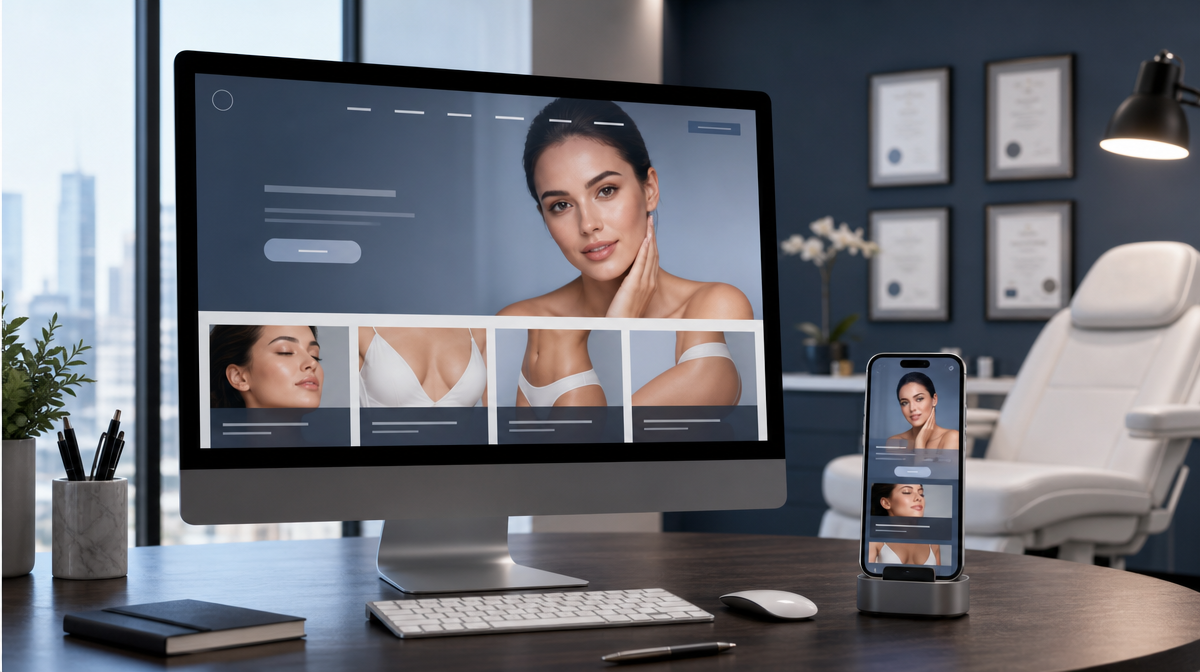
Paid advertising in New York’s cosmetic surgery market is a precision game, not a volume game. The practices hemorrhaging budget here are almost always running campaigns that are too broad — bidding on general procedure terms, sending traffic to a homepage, and wondering why their cost-per-consultation looks like a mortgage payment. The practices actually winning are running surgical (pun intended) digital marketing strategies with distinct logic for each platform.
- Google Ads for high-intent procedure searches: Structure campaigns around specific procedure-and-location pairings rather than umbrella terms. Tight ad groups, aggressive negative keyword lists, and procedure-specific landing pages are what separate a $180 cost-per-lead from a $900 one in this market. Broad match in Manhattan is essentially a donation to Google.
- Meta and Instagram for visual procedure awareness: Instagram is where a prospective facelift or rhinoplasty patient first starts forming opinions about surgeons — long before they type anything into Google. Compliant before-and-after creative, short educational videos, and surgeon introduction content build the familiarity that makes your Google ad convert later.
- ZIP code and income-layered audience targeting: Meta’s demographic tools let you stack household income tiers directly on top of specific NYC ZIP codes. Targeting affluent households in 10021 or 10013 with procedure-specific creative delivers a fundamentally different result than running a general New York City geographic radius.
- Retargeting consultation page visitors: Elective procedures have consideration cycles measured in weeks or months. Patients who visited your rhinoplasty or mommy makeover page but didn’t convert need sequential re-engagement across both Google Display and Meta before most will act.
NYC patients don’t trust a practice based on a polished website alone — they verify it. A rater8 survey found that 84% of patients check online reviews before choosing a provider — and NYC cosmetic patients take it further, cross-referencing Google, Healthgrades, RealSelf, and Facebook before booking a single consultation.
A structured reputation system does three things that manual management simply cannot:
- Automated post-appointment review requests: Timed email and SMS sequences sent at the optimal window after a procedure — when patient satisfaction peaks and the experience is still vivid — dramatically increase review volume without anyone on your staff making an awkward ask.
- Video testimonials that create emotional credibility: Written reviews tell a patient what others thought. A 60-second video of a real patient describing her rhinoplasty experience in her own words shows it. For elective procedures where fear and skepticism run high, that emotional specificity moves people off the fence in ways star ratings never will — as long as consent documentation is HIPAA-compliant before anything goes live.
- Real-time monitoring with prompt professional responses: A negative review that sits unanswered for two weeks signals indifference to every prospective patient who reads it afterward. A RepuGen survey found that 59% prefer providers who respond to both positive and negative reviews — response speed and tone are visible to your entire future patient base, not just the person who left the comment.
In plastic surgery marketing New York, the practices with 300-plus reviews averaging 4.8 stars aren’t getting lucky — they’re running a system.
Plastic surgery has one of the longest consideration cycles in elective medicine. A patient who downloads your rhinoplasty guide in January may not book a consultation until April — and without a structured nurture sequence keeping your practice visible during that window, she books with whoever stayed in front of her.
Email is the channel that bridges that gap, and it works precisely because it doesn’t require a patient to be actively searching. You’re showing up in her inbox while she’s still deciding — which is a fundamentally different competitive position than waiting for her to Google you again.
The practices winning at this in the NYC market are running segmented sequences, not broadcast blasts. That distinction matters enormously:
- Educational sequences: Procedure-specific content addressing recovery timelines, candidacy questions, and realistic outcome expectations — sent to leads who expressed interest in a specific treatment rather than your entire list
- Re-engagement campaigns: Automated follow-up targeting consultation no-shows and unconverted leads at 30, 60, and 90-day intervals, when patients who went quiet often resurface ready to act
- Loyalty campaigns: Promotions for complementary procedures sent exclusively to existing patients, where the trust relationship already exists and conversion costs drop dramatically
List building feeds the whole system. Consultation request forms, procedure interest quizzes, and downloadable recovery guides all capture contact information from prospects who aren’t ready to book today but will be — provided your plastic surgery marketing in New York keeps them engaged until they are.
Manual campaign management has a ceiling — and in a market moving as fast as New York’s cosmetic surgery space, that ceiling is lower than most practice owners realize. While your team is reviewing last month’s numbers, AI systems are processing real-time conversion signals across thousands of data points and reallocating spend before the morning is over.
That speed differential is where AI-driven patient acquisition earns its value in plastic surgery marketing New York. Tools like A.L.I. 360 don’t just automate routine tasks — they identify which procedure-specific keywords are converting at profitable cost-per-lead thresholds right now, then shift budget toward those terms without waiting for a quarterly review meeting. Practices using A.L.I. 360 have documented patient acquisition increases of up to 377%, with 90% seeing measurable results within the first day of launch.
Beyond paid media optimization, AI reshapes how practices handle the patient communication window that most lose entirely — the hours between 7 p.m. and 8 a.m. when a high-income patient is researching rhinoplasty surgeons on her phone and your front desk isn’t answering. AI-powered intake tools capture that inquiry, qualify the lead, and initiate a personalized response sequence before a competitor’s team even knows the search happened.
- Predictive content optimization: AI identifies which procedure pages and keyword clusters are gaining search momentum in specific NYC ZIP codes before competitors act on the same opportunity
- Automated lead scoring: Incoming inquiries are ranked by conversion likelihood, so your team prioritizes follow-up on the prospects most likely to book rather than working through a flat list
- After-hours appointment scheduling: Patients can book consultations at 11 p.m. without waiting — removing the 24-hour friction that causes high-intent leads to reconsider
Budgeting for plastic surgery marketing in New York requires a different reference point than national benchmarks — and practices that walk in with national-market expectations consistently underfund the channels that actually move patients here. The competitive density in Manhattan alone drives costs to levels that catch even experienced practice owners off guard.
A few concrete figures help frame realistic expectations. Google Ads cost-per-click for procedure-specific terms in NYC regularly lands between $18 and $45 per click depending on the procedure, compared to $10–$22 for equivalent searches in mid-sized U.S. markets. That gap compounds quickly: a rhinoplasty campaign generating 200 clicks per month in Nashville might cost $2,400, while the same volume in Manhattan runs $5,500 or more.
Channel costs also vary significantly by platform and objective:
| Channel | Relative Cost in NYC | Best For |
|---|---|---|
| Google Ads | Highest | High-intent procedure searches |
| Meta/Instagram Ads | Moderate | Visual procedures, brand awareness |
| SEO | Long-term investment | Sustainable lead flow |
| Email Marketing | Lowest | Nurturing existing leads |
Practices serious about plastic surgery marketing New York typically allocate $4,000–$8,000 monthly across channels at minimum to compete meaningfully. Spreading that budget too thin across every platform simultaneously produces mediocre results everywhere — concentrated investment in two or three well-optimized channels consistently outperforms a scattered approach at the same total spend.
Choosing the wrong agency for plastic surgery marketing New York is a decision that costs you more than money — it costs you months of lost momentum while a competitor three blocks away is actively gaining ground. The criteria that separate a genuine growth partner from an expensive vendor come down to four non-negotiable attributes.
- Healthcare-only specialization: Generalist agencies that dabble in medical marketing treat your practice like a restaurant account — applying the same campaign templates regardless of HIPAA constraints, elective procedure psychology, or the compliance guardrails that govern what you can legally say about patient outcomes. Ask any prospective agency to show you their active plastic surgery client roster before signing anything.
- Reporting built around revenue, not vanity metrics: Monthly dashboards should show you cost per booked consultation, lead source attribution by procedure, and conversion rates from inquiry to appointment — not impressions and follower counts. If an agency leads with reach numbers, they’re optimizing for their own renewal, not your patient volume.
- A documented performance guarantee: Agencies confident enough in their systems will put new patient minimums in writing. Target Patients MD backs its work with a straightforward commitment: new patients or you don’t pay. That structure aligns incentives in a way that retainer-only agreements never do.
- In-house execution without overseas handoffs: White-labeling creative, SEO, or paid media to offshore contractors introduces quality gaps and response delays that compound over time. Ask directly who builds your campaigns and where they sit.
In a market this competitive, the agency you choose either accelerates your practice or holds it in place while your competitors sprint.
Plastic surgery marketing in New York generates a consistent set of questions from practice owners who are weighing investment decisions and trying to set realistic expectations. The answers below address the practical concerns that come up most frequently.
- How much should a NYC plastic surgery practice spend on marketing each month? Budget requirements vary by procedure mix, target neighborhoods, and growth goals, but NYC practices consistently invest above national averages — the competitive density and elevated ad costs make underfunding a strategy more expensive than the spend itself.
- How long does a new plastic surgery marketing strategy take to deliver consultations? Paid advertising can produce inbound consultation requests within days of going live, while organic SEO typically requires several months of consistent execution before generating reliable ranking-driven traffic.
- Can a national marketing agency effectively handle the NYC plastic surgery market? Agencies without direct experience in NYC’s neighborhood-level search behavior and premium patient expectations routinely underperform — the borough-specific nuances and elevated compliance demands require healthcare-specialized teams who already understand this market.
- Which plastic surgery procedures are easiest to market in New York? Rhinoplasty, breast augmentation, and non-surgical injectable treatments generate strong, consistent search demand across NYC boroughs, though competitive pressure varies considerably by procedure and ZIP code.
- Is paid social or SEO more important for NYC plastic surgeons? Neither channel operates effectively in isolation — paid social builds brand familiarity and re-engages undecided patients, while SEO captures the high-intent searches that happen after a patient has already decided to act. The strongest plastic surgery marketing New York strategies run both simultaneously with channel-specific objectives.


