

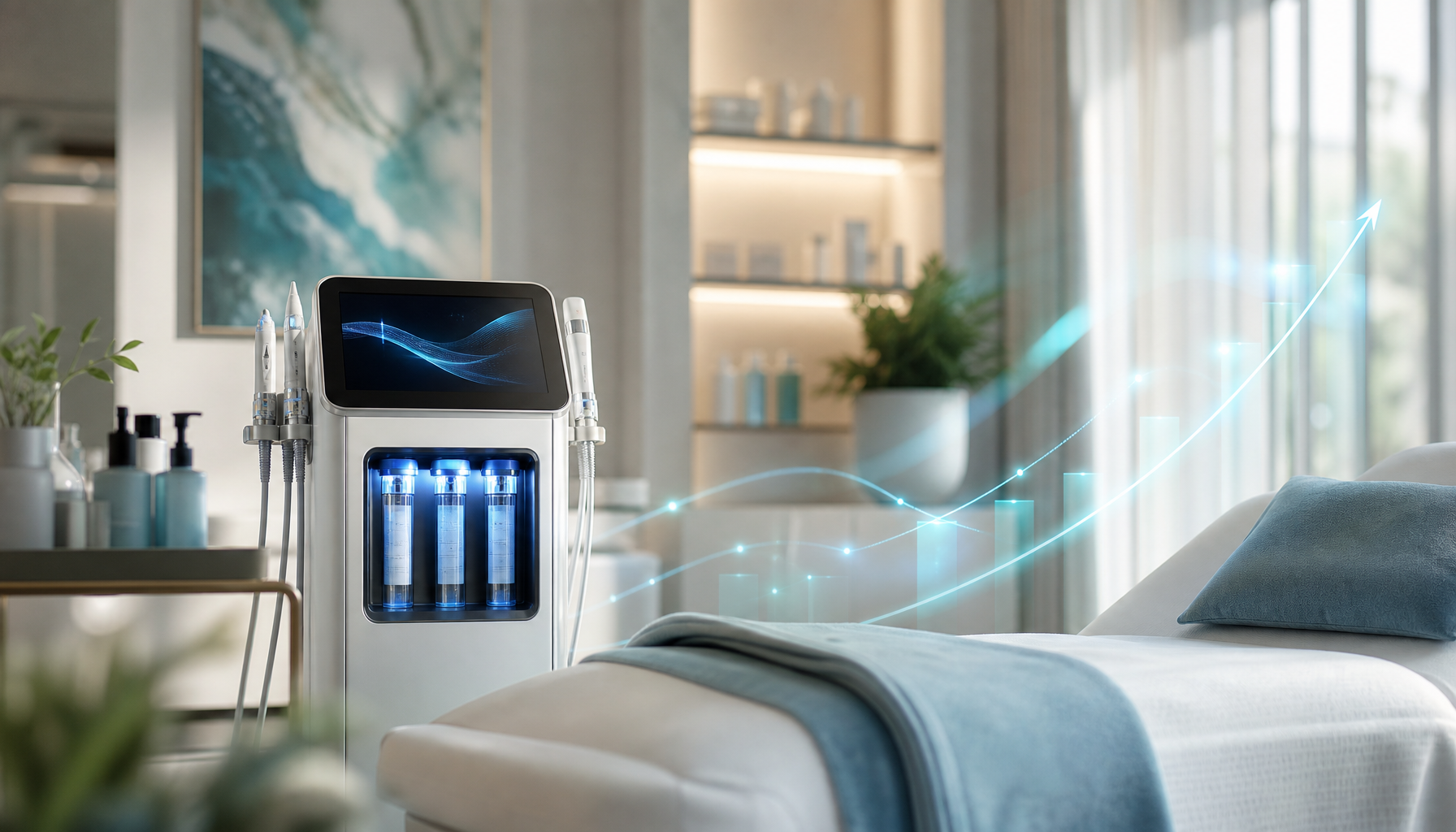
If you’ve invested in a HydraFacial device, you already know the treatment sells itself in the treatment room. The challenge is filling that room consistently — and that’s exactly where intentional hydrafacial marketing separates thriving med spas from ones that struggle to cover their equipment costs.
What makes HydraFacial a uniquely powerful marketing asset isn’t just the treatment itself — it’s the business model it enables. Consider three compounding advantages:
- Low barrier to entry: No needles, no downtime, no scary recovery photos. That makes HydraFacial the easiest aesthetic treatment to pitch to someone who has never set foot in a med spa. You’re not asking for a leap of faith — you’re offering a lunch-break glow.
- High rebooking potential: Results peak at about four weeks, which means every satisfied patient has a built-in reason to return monthly. That predictable cadence is the kind of recurring revenue a strong med spa marketing program is built to capture — and most med spas are still leaving it on the table.
- Gateway to higher-ticket services: Patients who start with HydraFacial develop trust in your team and comfort with aesthetic treatments. That trust converts — often within 60 days — into consultations for injectables, lasers, and skin-tightening procedures that carry significantly higher margins.
The math compounds quickly. A single new HydraFacial patient who joins a monthly membership and eventually adds Botox to their routine is worth thousands of dollars annually. Multiply that by consistent patient acquisition, and HydraFacial stops being a standalone service and becomes the engine driving your entire practice’s growth.
Think of HydraFacial as your practice’s handshake — the first impression that determines whether a hesitant prospect becomes a loyal patient or walks out the door and books with the competitor down the street. The “gateway treatment” concept is straightforward: you deliberately position one accessible, low-stakes service as the recommended starting point for anyone who hasn’t committed to your med spa yet.
Executing this well requires alignment across three touchpoints that most practices handle inconsistently:
- Website hero section: Your homepage and HydraFacial service page should explicitly frame the treatment as the recommended first visit — not buried in a menu alongside 20 other services, but featured prominently with copy like “Not sure where to start? This is it.”
- Front-desk and consultation scripts: When an undecided lead calls or walks in asking vague questions about “improving their skin,” your staff needs a rehearsed, natural path to HydraFacial. Train your team to suggest it confidently, not tentatively.
- First-timer testimonials: Social proof from patients who were nervous about aesthetics — and started with HydraFacial — does the persuasion work your marketing can’t. A 30-second video of a first-time patient describing their experience converts better than any headline you’ll write.
The positioning shift here is subtle but financially significant. You’re not discounting HydraFacial to attract bargain-hunters — you’re framing it as the intelligent entry point for anyone serious about their skin. That framing attracts the right patients and sets up every upsell conversation that follows.
When a potential patient opens Google and types “HydraFacial near me,” they’re not browsing — they’re deciding. Local SEO is the discipline of making sure your med spa appears in that moment instead of your competitor’s. It’s not about gaming algorithms; it’s about building enough digital credibility that Google trusts your practice to answer that searcher’s question.
The local map pack — those three business listings that appear above organic results — captures the overwhelming majority of clicks for location-based searches. Everything below it is fighting for what’s left. Winning a spot there requires consistent attention across four specific levers:
- Optimize your Google Business Profile: Add HydraFacial explicitly as a listed service, upload fresh treatment photos weekly, and publish regular posts about your HydraFacial offerings. Google rewards active, complete profiles with higher map pack placement.
- Build dedicated location pages: A generic services page won’t rank for “Houston HydraFacial” or “HydraFacial in Scottsdale.” You need standalone pages targeting city-specific keywords with unique content — not copy-pasted across locations if you operate multiple sites.
- Establish consistent directory citations: Your practice name, address, and phone number must match exactly across Yelp, Healthgrades, RealSelf, and every other directory where you’re listed. Inconsistencies signal distrust to Google’s local ranking system.
- Time your review requests strategically: Ask patients for a Google review at the moment they’re most delighted — right after the glow reveal, while they’re still in the chair admiring their skin. Reviews are a direct local ranking factor, and with 84% of patients checking online reviews before choosing a provider, HydraFacial’s immediate visible results create a natural window to ask.
Unlike paid ads, strong local SEO compounds over time. Every optimized page, earned review, and corrected citation builds ranking authority that keeps working for you without additional spend.
Google Ads is paid search advertising — you bid on specific keywords, and your practice appears at the top of results when someone searches that exact phrase. For HydraFacial, this matters because two keyword categories signal a patient who is minutes away from booking: “HydraFacial cost” and “HydraFacial near me.” People typing those phrases have already decided they want the treatment. They’re comparing options, not researching concepts.
HydraFacial also carries fewer platform advertising restrictions than injectables like Botox or Dysport, where brand-name and claims rules constrain what you can say. You can bid on “HydraFacial” directly — a competitive advantage most practice owners don’t fully exploit.
Four execution details determine whether your ad spend produces booked appointments or wasted clicks:
- Target high-intent search terms specifically: Prioritize “HydraFacial price,” “HydraFacial deals near me,” and “best HydraFacial [your city]” using phrase and exact match types to avoid burning budget on irrelevant traffic.
- Lead with price or offer in your headlines: Searchers clicking “HydraFacial cost” want a number. An ad that says “HydraFacials Starting at $149 — Book Today” outperforms vague outcome language every time.
- Send clicks to a dedicated landing page: Routing paid traffic to your homepage costs you conversions you already paid for. A single-focus HydraFacial page with one clear booking CTA is non-negotiable.
- Track booked appointments — not form fills: Form submissions look good in dashboards but don’t pay your equipment lease. Configure conversion tracking to measure actual scheduled appointments so you’re optimizing toward real revenue.
HydraFacial has a structural advantage that almost no other aesthetic treatment can claim: the treatment itself is the content. That vortex extraction process — the one that pulls debris and congestion visibly through the tip — is genuinely captivating to watch, and platforms like Instagram Reels and TikTok were built for exactly this kind of satisfying, visual proof.
Here’s how to build a content engine that consistently turns scrollers into booked patients:
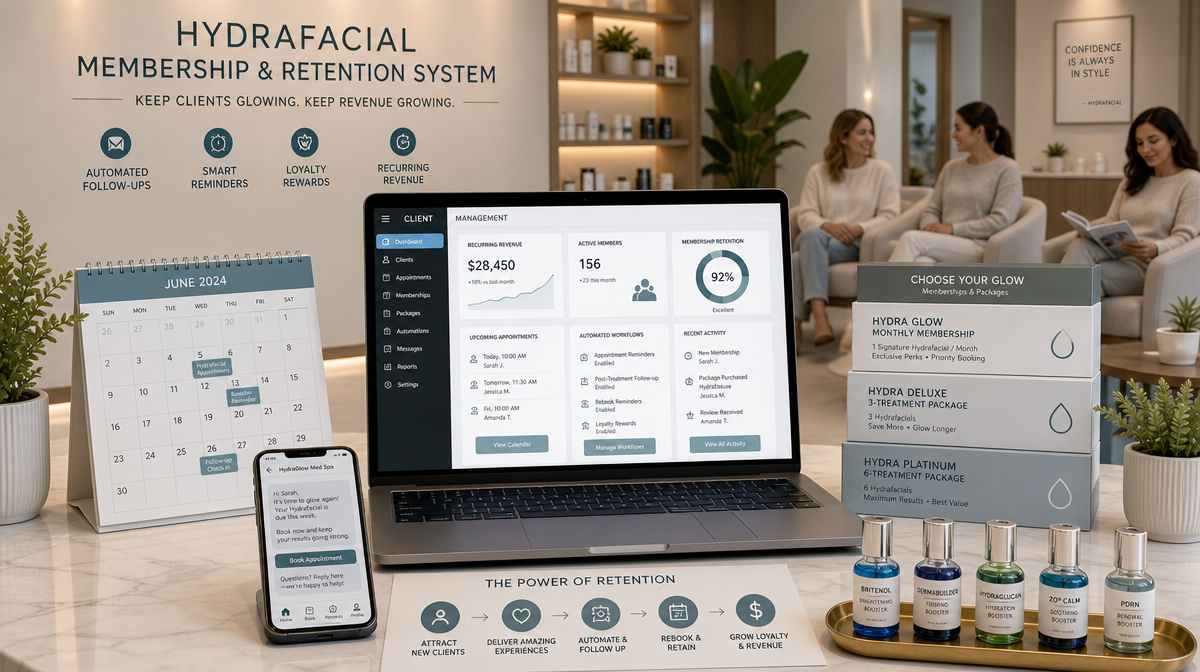
- Film the extraction up close: The “gunk in the tube” reveal is the single highest-performing content format in med spa social media right now. Capture it with good lighting and a steady angle — and always secure written patient consent before filming.
- Pair before-and-after Reels with a real story: Skin texture, chronic dullness, congested pores — patients connect with a specific complaint being solved, not a generic glow. Show the same lighting and angle in both frames so the improvement reads clearly on a small screen.
- Layer educational voiceovers onto trending audio: Trending sounds extend your algorithmic reach; the educational commentary — explaining what the extraction step actually does, or why monthly treatments outperform one-offs — builds the credibility that converts viewers into callers.
- Run paid Meta and TikTok ads to local audiences: Organic content builds awareness; paid social closes the loop. Target by zip code, age range, and skincare interest categories, then layer in retargeting for anyone who visited your HydraFacial page without booking. That combination keeps your practice in front of warm prospects until they’re ready to act.
One-time bookings are a treadmill — you’re always running just to stay in place. The real leverage in HydraFacial marketing comes from converting single appointments into structured revenue models that pay you month after month without requiring you to re-acquire the same patient repeatedly. That shift happens through smart packaging and membership design.
Your average order value (AOV) — the revenue generated per patient visit — is the number that determines whether your HydraFacial program is genuinely profitable or merely busy. Memberships and bundles move that number upward while simultaneously locking in patient retention. Here’s how the core models break down:
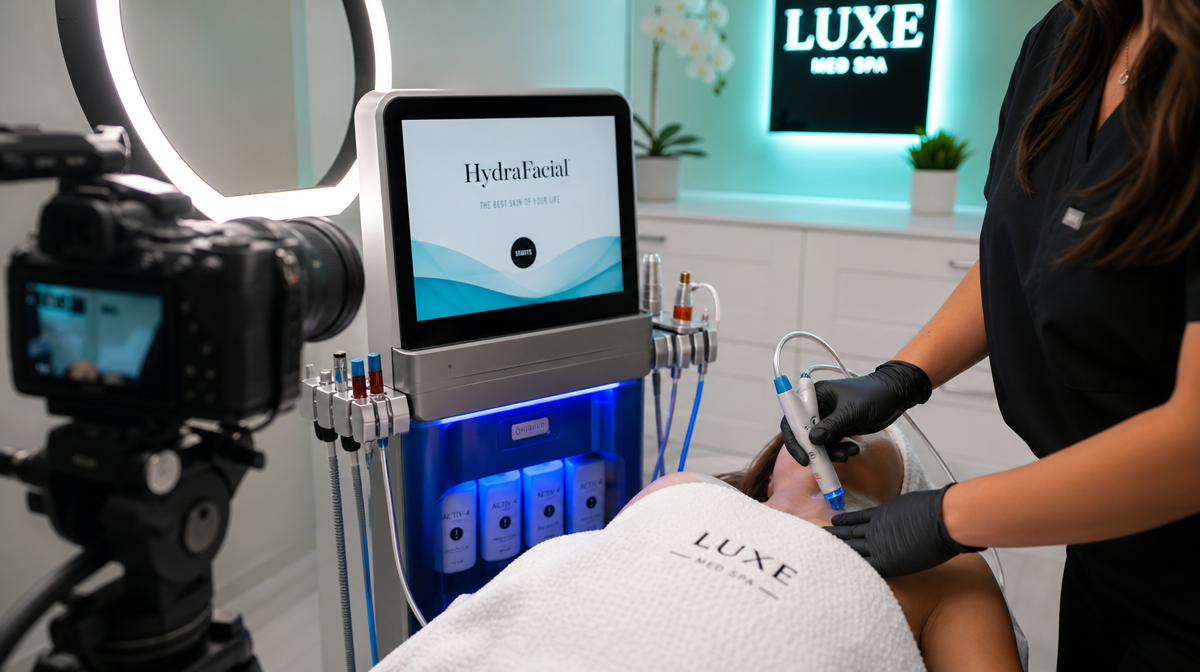
- Monthly membership with one included treatment: Charge a flat monthly fee — typically $149–$199 — that covers one HydraFacial per month. The psychology here is powerful: members feel they’re losing money if they skip a month, which drives rebooking rates without any staff follow-up. Layer in perks like priority scheduling and 10–15% off add-on boosters to make membership feel like belonging, not just billing.
- Prepaid packages of three, six, or twelve treatments: Some patients resist monthly billing but will happily pay upfront for a block of sessions at a modest discount. Set clear expiration windows — typically 12 months — to protect your schedule from indefinite liability.
- Booster bundles for higher AOV: Targeted serums like Britenol for brightening or Growth Factor for anti-aging transform a standard HydraFacial into a premium experience. Bundle a booster with the base treatment at a package price that’s lower than buying separately but higher than the base treatment alone.
- Intro offer that feeds the membership funnel: Discount the first HydraFacial specifically to trigger membership enrollment at checkout — not to attract deal-seekers, but to remove the hesitation barrier for patients who would have joined anyway.
Brides represent one of the most conversion-ready patient segments in aesthetics — they have a fixed deadline, an emotional investment in looking their best, and a built-in social network of bridesmaids and family members who are equally motivated. Structuring your HydraFacial marketing around these high-intent windows captures revenue that most med spas are simply not organized to pursue.
The core bridal offer is a staggered treatment series — typically four to six sessions scheduled monthly in the lead-up to the wedding date, with the final appointment two to three days before the ceremony. This structure does two things simultaneously: it commits the bride to recurring visits and positions your practice as her skin-health partner through one of the most photographed periods of her life.
Beyond the bride herself, three campaign extensions multiply the revenue from each bridal lead:
- Bachelorette group appointments: Market a same-day booking experience for the full bridal party. A group of five to eight people arriving together dramatically increases per-campaign revenue and introduces multiple first-time patients to your practice in a single afternoon.
- Pre-event single treatments: Prom season, corporate galas, class reunions, and professional photoshoots all create the same deadline-driven motivation as weddings. Run targeted Meta campaigns in April and November specifically around these moments.
- Wedding vendor partnerships: Connect with local bridal boutiques, photographers, and event planners who interact with engaged clients months before the wedding. A mutual referral arrangement costs nothing and consistently delivers warm, pre-qualified leads.
Most HydraFacial patients don’t stop coming back because they’re unhappy — they stop because life got busy and nobody followed up. That’s a retention problem with a straightforward fix: automated email and SMS sequences that run in the background while your team focuses on delivering treatments.
HydraFacial’s four-week results cycle is practically designed for automation. The timing is predictable, the messaging writes itself, and the revenue impact compounds with every patient who stays on cadence versus drifting away. Here’s the sequence that works:
- Step 1 — Post-treatment aftercare sequence: Within 24 hours of the appointment, send an automated email covering what to expect over the next few days, which products to avoid, and how to protect the results. This positions your practice as attentive and knowledgeable — before a competitor even enters the picture.
- Step 2 — Four-week rebook trigger: At the 28-day mark, send an SMS with a direct booking link. Keep it short: results are beginning to fade, and a single tap should get them back on your schedule. No coupon required — just convenience and timing. Email and SMS sequences like this work best when they run through the systems your practice already owns.
- Step 3 — Lapsed patient reactivation: Any patient without a visit in 60–90 days gets a win-back sequence. Lead with a skin-health angle rather than a discount — something like a new booster option or seasonal skin concern — to re-engage without training patients to wait for deals.
- Step 4 — Seasonal campaign blasts: Holiday glow promotions, summer hydration campaigns, and New Year skin reset offers keep your HydraFacial program top of mind between standard rebook windows.
Paid ads and SEO attract strangers. A well-structured referral program turns your existing HydraFacial patients into a recruitment channel — one that costs a fraction of paid acquisition and delivers leads who already trust your practice before they walk in the door.
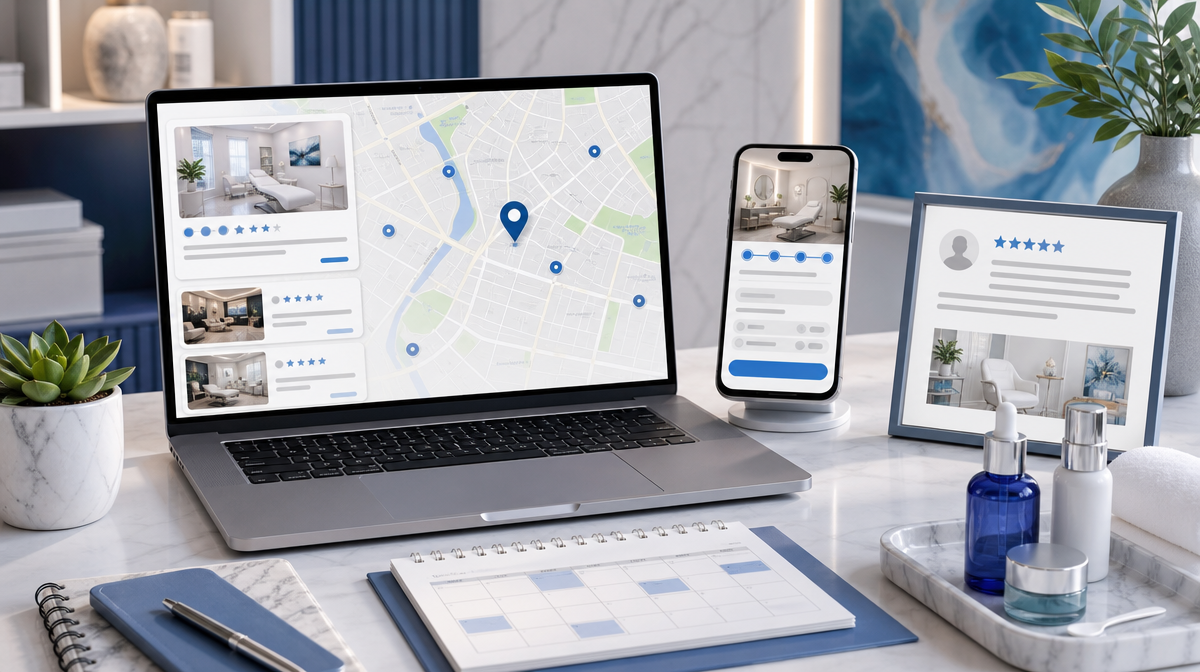
The mechanics matter here. Vague “tell a friend” messaging produces vague results. Build specificity into every component:
- Credit toward the next visit: Offer referring patients a dollar-value credit — not a percentage, not a vague “reward” — applied automatically when their referred contact books and completes a HydraFacial. A concrete $40 credit toward their next session is tangible enough to motivate action without requiring explanation.
- Booster upgrades for Google reviews: Rather than asking patients to leave a review and hoping they follow through, tie a free booster add-on at their next appointment to a verified review submission. The incentive is low-cost to you, high-perceived-value to them, and the resulting reviews directly strengthen your local search visibility. Note that any incentive-for-review arrangement should be disclosed transparently and comply with FTC guidelines.
- Cross-referral agreements with complementary local businesses: Wedding boutiques, hair salons, and fitness studios serve the same demographic you’re targeting — without competing for them. A mutual referral arrangement, where their clients receive a first-visit offer from you and yours receive reciprocal perks, creates a steady inbound channel that requires no ongoing ad spend to maintain.
Track each source separately inside your CRM so you know which partnerships and incentive structures are actually driving booked appointments versus generating goodwill that never converts.
Aesthetic patients make booking decisions with their eyes. When someone is weighing whether to spend $175 at your practice versus the med spa three miles away, a compelling before-and-after photo does more persuasive work than any headline or promotion you can craft. The problem most practices run into isn’t a shortage of good results — it’s that those results walk out the door undocumented.
Building a reliable photo capture workflow is the foundational fix. Standardize every variable: the same ring light or softbox, the same camera-to-face distance, the same neutral background, and the same three angles (full face, left profile, right profile) for every willing patient, every time. Inconsistent lighting is the fastest way to make a genuine improvement invisible — or worse, make the after shot look worse than the before.
Once you have the assets, where you deploy them determines their conversion value:
- Website gallery organized by skin concern: Visitors searching for acne or texture solutions want to see results for their specific issue, not a random assortment of glowing faces.
- RealSelf profile: Patients actively comparing providers on RealSelf are high-intent — a populated gallery there captures decision-stage traffic your own website may never reach.
- In-office waiting area screens: Patients sitting in your lobby before their appointment are already bought in — showing them progressive transformation results from monthly treatments primes the membership conversation before your staff even raises it.
- Paid ad creative: Real patient results consistently outperform stock imagery in click-through rates for aesthetic treatment campaigns.
Secure written consent specifically for marketing use — not just clinical photography — before any camera appears. A one-page release that patients sign during intake protects you and removes friction from the capture process.
Search behavior is shifting in ways that make traditional SEO alone insufficient. A growing share of patients now get their treatment recommendations directly from AI tools — typing “what’s the best facial treatment for congested pores” into ChatGPT or Perplexity and acting on whatever those platforms surface. Generative Engine Optimization (GEO) is the discipline of structuring your online presence so AI systems cite your practice when generating those answers.
For med spa owners, three practical applications are worth prioritizing right now:
- Structure your web content for AI citation: AI tools favor pages that answer specific questions directly, use clear Q&A formatting, and include schema markup that signals authoritative sourcing. A HydraFacial FAQ page with precise, clinically grounded answers is more likely to be quoted by ChatGPT or Google AI Overviews than a generic service description.
- Let AI optimize your ad spend automatically: Modern platforms use machine learning to test creative variations and redistribute budget toward whichever combinations are producing the lowest cost per booked appointment. Practices running A.L.I. 360 through Target Patients MD benefit from this automated reallocation without manually monitoring dozens of ad variants.
- Deploy a chatbot that captures bookings after hours: Most HydraFacial inquiries happen outside business hours — evenings, weekends, the 10-minute scroll before bed. An AI chatbot on your website answers treatment questions, addresses pricing objections, and pushes prospects directly into your booking system before they wake up the next morning and forget they were ever interested.
The practices winning at hydrafacial marketing in the current environment aren’t choosing between traditional channels and AI — they’re building systems where both work simultaneously.
Running a full HydraFacial marketing program — local SEO, paid search, social content, membership funnels, automated follow-up sequences, referral tracking — is genuinely a second job. Most practice owners who try to manage it internally end up with one or two channels running inconsistently while the rest of their med spa marketing opportunities sit idle. That’s not a discipline problem; it’s a capacity problem.
Target Patients MD was built specifically for this scenario. We work exclusively with medical practices and med spas, which means every system we deploy is calibrated for healthcare patient acquisition — not retrofitted from a generic e-commerce playbook. Our A.L.I. 360 technology integrates your organic search presence, paid campaigns, reputation monitoring across the platforms aesthetic patients actually use, and conversion infrastructure into one connected engine rather than a collection of disconnected vendors — which is the first thing worth checking when evaluating a med spa marketing agency.
For med spas specifically, that integration matters because HydraFacial patients rarely convert through a single touchpoint. They might find you through a local map pack listing, read your reviews, watch a Reel, and only then click a paid ad before booking. When each channel operates in isolation, you can’t measure that path — or optimize it. When they’re unified under one system, you can.
- Healthcare-specific expertise: Our team understands HIPAA-conscious ad structures, aesthetic patient psychology, and med spa competitive landscapes
- Connected measurement: Every channel reports into one system, so you can see which path actually produced the booking
- Fully managed execution: Strategy, implementation, and ongoing optimization handled without adding headcount to your practice
Learn more about Target Patients MD and see how we build HydraFacial booking systems for practices ready to scale.
Answers to the questions med spa owners ask most often before committing to a HydraFacial marketing strategy:
- How much should a med spa spend on HydraFacial marketing per month?
Most competitive markets call for a budget that spans multiple channels — typically a percentage of your target monthly HydraFacial revenue allocated across SEO, paid search, and social — rather than a single flat number that ignores your local competition level. - What is a good cost per booked HydraFacial appointment?
Measure cost per actual scheduled appointment rather than cost per click or lead form, since only completed bookings generate revenue — a strong benchmark shifts depending on your market and treatment price point. - How long does HydraFacial SEO take to show results?
Local SEO for HydraFacial keywords typically builds traction over several months, while a properly structured Google Ads campaign can generate booked appointments within the first week of going live. - Can HydraFacial advertising on Google and Meta stay HIPAA-conscious?
Yes — the key is keeping protected health information out of your targeting parameters and ad creative entirely, while adhering to each platform’s specific healthcare advertising policies. Compliance ultimately depends on how a practice configures and operates its own systems. - Is running a HydraFacial treatment business profitable?
The combination of relatively low consumable costs per session and a natural monthly maintenance cadence makes HydraFacial one of the stronger margin-per-chair services a med spa can anchor its menu around.