




Peptides are short chains of amino acids that act as biological messengers, signaling the body to produce hormones, repair tissue, regulate metabolism, and optimize cellular function. Clinicians have used them for decades, but patient demand has only recently exploded — driven by mainstream interest in longevity medicine, biohacking, and medically supervised weight loss.
The numbers back it up. The global peptide therapeutics market is projected to grow from $131.9 billion in 2025 to $334.9 billion by 2034, a compound annual growth rate of nearly 11%. Consumer search interest tells the same story: searches for “peptides” have surged 399% as patients actively seek out providers who offer these therapies.
For practice owners, that demand translates directly into appointment volume — if your peptide therapy marketing is built to capture it. Patients are arriving with specific goals, not vague curiosity. The most common use cases driving inquiries right now include:
- Anti-aging and longevity: Growth hormone secretagogues like sermorelin to support energy, sleep quality, and healthy aging
- Weight loss: GLP-1 receptor agonists for appetite regulation and metabolic health
- Recovery and healing: Tissue repair peptides such as BPC-157 for injury recovery and inflammation
- Performance optimization: Muscle preservation and sustained energy for active, health-focused patients
What makes this moment particularly valuable for clinics is that the market is still early enough to establish authority. Practices that invest in the right digital infrastructure now will own the local search rankings and patient trust that latecomers will struggle to compete against.
Before you spend a dollar on peptide therapy marketing, you need to understand the regulatory environment — because one non-compliant ad or an unsubstantiated claim can get your account suspended, your landing page flagged, or your practice facing board scrutiny. Compliance is not a legal checkbox; it is the foundation your entire campaign runs on.
The FDA’s 503A compounding framework defines which peptides licensed pharmacies can legally prepare on a patient-specific basis. That designation shapes what you can say publicly about a treatment — if a peptide sits outside that framework, promoting it exposes your practice to significant risk regardless of how effective it may be clinically.
State medical boards add another layer. Telehealth prescribing rules, supervision requirements for nurse practitioners, and pharmacy licensing restrictions vary significantly across state lines — meaning a campaign that works in Florida may be non-compliant in California. If you operate or plan to expand virtually, multi-state compliance must be built into your marketing strategy from day one.
| Compliance Area | What It Means for Marketing |
|---|---|
| FDA Category 1 status | Determines which peptides you can legally promote and advertise |
| State medical board rules | Governs telehealth prescribing and cross-state advertising restrictions |
| Ad platform policies | Google and Meta prohibit outcome-based health claims and before/after imagery |
| HIPAA | Restricts how patient testimonials are collected, displayed, and tracked |
Working with a marketing partner who understands healthcare-specific ad policies — not just general digital marketing — is the fastest way to avoid costly mistakes before your first campaign ever goes live.
These seven tactics represent the highest-leverage moves in peptide therapy marketing — the ones that turn website visitors into booked consultations and booked consultations into long-term patients.
- Lead with patient education on benefits and safety. Peptide-curious patients need clarity before they commit. Build FAQ pages that address common concerns, short video explainers featuring your providers, and downloadable guides specific to each peptide type. Informed patients convert faster and cancel less.
- Position peptides inside a personalized care plan. Patients do not respond to “buy peptides.” They respond to a complete wellness strategy. Bundle peptide protocols with baseline labs, follow-up appointments, and lifestyle coaching to raise perceived value and close rate simultaneously.
- Use free consultations as your primary conversion offer. For high-consideration medical services, a “book a consult” CTA consistently outperforms any transactional prompt. Place it prominently on every page — above the fold, not buried in the footer.
- Build authority with founder and provider content. LinkedIn posts, podcast appearances, and short physician-perspective videos establish your team as credible experts — not just another clinic adding a trending service.
- Capture local demand through your Google Business Profile. Optimized profiles with active review management drive significant traffic from “near me” searches that paid ads often cannot reach cost-effectively.
- Retarget researchers across email, SMS, and social. Most peptide patients research for weeks before booking. Automated drip sequences keep your practice visible throughout that entire decision window.
- Tie marketing to operations so your front desk closes leads. Staff who cannot answer basic peptide questions lose inquiries that marketing worked hard to generate. Fast response times and trained intake teams are non-negotiable.
Your website is doing one of two things right now: quietly booking consultations while you sleep, or silently leaking patients to competitors whose sites load faster and answer questions more clearly. For peptide therapy specifically, where patients arrive already skeptical and mid-research, a generic medical website template will not cut it.
Mobile-first design is the starting point, not a bonus feature. Over 70% of healthcare searches happen on a phone, and a site that loads slowly or renders awkwardly on mobile will lose that visitor before your headline even registers. Speed and clean navigation are table stakes.
Beyond performance, the architecture of your site matters enormously. Patients searching for sermorelin have different questions than those exploring GLP-1 programs — a single catch-all peptide page serves neither well. Structure your site around distinct service pages that speak directly to each patient goal and peptide type.
Every high-converting peptide therapy website shares the same core elements:
- Hero section: A single benefit-focused headline paired with one clear consultation CTA — no competing offers, no clutter
- Dedicated service pages: One page per peptide or clinical use case, structured around patient questions rather than clinical terminology
- Provider bios: Professional photos, credentials, and a brief personal statement that humanizes the practice
- Video testimonials: Patient stories in their own words carry more trust weight than written reviews
- HIPAA-compliant intake forms: Secure scheduling and intake tools signal professionalism and protect your practice simultaneously
Paid ads for peptide therapy are restricted, which means organic search is not a backup plan — it is your primary patient acquisition channel. Clinics that build a disciplined SEO foundation consistently out-acquire competitors who rely entirely on ad spend that can disappear overnight with a platform policy update.
Start with treatment-specific keyword targeting. Patients searching for peptide therapy are rarely typing broad terms — they search by name, by condition, and by location. Pages optimized for long-tail queries like “sermorelin therapy [city],” “BPC-157 for recovery near me,” and “GLP-1 weight loss clinic [state]” capture patients who are already past the awareness stage and actively comparing providers.
Citation consistency is the unglamorous backbone of local SEO. A citation is any online mention of your practice name, address, and phone number. When that data is inconsistent across directories like Healthgrades, Vitals, and Yelp, Google’s local ranking algorithm penalizes your visibility. Auditing and standardizing your NAP data across 70+ directories is foundational work that compounds over time.
Content structure drives featured snippet capture. FAQ-style posts that answer specific patient questions — “How long does sermorelin take to work?” or “What is BPC-157 used for?” — formatted with clear headers and concise direct answers are the format Google’s AI overviews pull from most frequently.
- Treatment-specific pages: Dedicated content for each peptide and use case signals topical authority to search engines
- Local landing pages: City or region-specific pages expand your geographic footprint without additional ad spend
- Backlinks from health and longevity publishers: Guest contributions and PR placements on reputable wellness sites transfer domain authority that accelerates ranking timelines
Google and Meta have both flagged peptide-related advertising as a high-risk category, and their enforcement is aggressive. Accounts promoting specific peptide names alongside outcome language — think “lose weight fast” or “boost HGH naturally” — get suspended, sometimes permanently. The good news is that compliant campaigns are absolutely achievable; they just require a fundamentally different creative strategy than most clinics expect.
The core shift is this: advertise the consultation, not the compound. Your ad copy should center on the patient’s goal and the clinical experience your practice offers, not on the name or mechanism of any specific peptide. “Personalized wellness programs for men over 40” clears platform review. “Buy sermorelin online” does not.
A few additional tactics that keep campaigns running without interruption:
- Pursue LegitScript certification: This third-party credential signals to Google and Meta that your practice meets healthcare advertising standards, unlocking ad inventory that uncertified accounts cannot access at all
- Strip before/after imagery entirely: Both platforms treat transformation imagery as a policy violation in health categories — even when the results are real and documented
- Expand to YouTube and programmatic display: These channels operate under less restrictive review criteria and reach patients during research sessions when intent is high
- Use condition-aware landing pages: Pages that speak to patient goals rather than product names reduce the chance of post-click policy flags that can trigger retroactive ad disapproval
Working with a healthcare-specialized agency that has navigated peptide ad compliance across multiple platforms dramatically reduces the trial-and-error period most practices waste before their campaigns stabilize.
The average peptide therapy patient does not book on their first visit. Research from healthcare marketing analysts consistently shows that high-consideration medical services require seven or more touchpoints before a prospect converts — and peptide therapy, with its unfamiliar terminology and premium price points, sits firmly at the longer end of that spectrum. A lead who downloads your sermorelin guide on Monday may not book a consultation until six weeks later.

That gap is not lost revenue — it is a nurture opportunity. The practices filling their schedules fastest are the ones treating every non-converter as an active prospect rather than a dead lead. A well-structured CRM tracks exactly where each contact sits in the decision process and triggers the right message at the right moment automatically.
Effective peptide nurture sequences combine three channels working in parallel:
- Email drip campaigns: A five-to-seven message sequence that progressively deepens education — starting with “what to expect from a peptide consultation” and moving toward social proof and urgency-based offers like limited appointment availability
- SMS follow-ups: Short, conversational texts sent 48 to 72 hours after initial inquiry that achieve open rates exceeding 90%, far outperforming email alone for re-engagement
- Paid retargeting: Display and social ads served exclusively to website visitors and email subscribers — a warm audience that costs significantly less per click than cold prospecting campaigns
The critical operational detail most clinics overlook is CRM tagging by interest type. A prospect who viewed your GLP-1 page three times should receive different follow-up content than someone who spent time on your recovery protocol pages. Segmented sequences consistently outperform generic broadcasts by 30 to 50% on conversion rate.
Most peptide clinics track the wrong number. They watch website traffic climb, celebrate a busy month of inquiries, and then wonder why revenue feels flat. The metrics that actually predict practice growth are further down the funnel — and they require deliberate tracking infrastructure to surface.
Four KPIs form the measurement backbone of any serious peptide therapy marketing program:
- Cost per lead vs. cost per acquired patient: These are distinct numbers that reveal different problems. A low cost per lead paired with a high cost per acquired patient signals a conversion breakdown — usually at the consultation or front-desk stage — not a marketing failure. Track both separately inside your CRM.
- Consultation show rate and treatment conversion rate: What percentage of booked consultations actually attend? Of those who attend, how many leave with an active treatment plan? Industry benchmarks for elective wellness services typically target a 70%+ show rate and a 50%+ close rate. Numbers below those thresholds point to scheduling friction or a consultation process that needs restructuring.
- Patient lifetime value: Peptide therapy’s recurring protocol model — monthly refills, quarterly labs, follow-up visits — makes LTV the most strategically important number in your practice. A patient worth $4,800 annually justifies a very different acquisition budget than a one-visit patient worth $300.
- Return on ad spend by channel: Aggregate ROAS hides underperforming channels. Break it out by SEO, paid search, social, and email so budget shifts toward what is actually generating treated patients — not just clicks.
Without channel-level attribution, practices routinely over-invest in channels that generate volume and under-invest in the ones quietly driving their highest-value bookings.
Manual campaign management made sense when a clinic ran one or two marketing channels. Peptide practices today are juggling SEO, paid ads, email sequences, reputation monitoring, and social retargeting simultaneously — and the coordination overhead alone eats hours that most providers simply do not have. AI-powered marketing infrastructure exists precisely to close that gap.
Platforms like Target Patients MD’s A.L.I. 360 apply machine learning across every stage of the patient acquisition funnel, producing results that human-managed campaigns rarely match at scale. Clinics using AI-driven systems have reported patient acquisition lifts of up to 377% — not because the underlying channels changed, but because AI optimizes decisions faster and more precisely than any manual process can.
The specific capabilities that move the needle for peptide clinics include:
- Generative Engine Optimization (GEO): As AI-powered search tools like Google’s AI Overviews and ChatGPT increasingly answer patient queries directly, GEO structures your content to appear inside those generated responses — a visibility layer that traditional SEO alone does not address
- Predictive ad budget allocation: Rather than waiting for monthly reports, AI systems analyze real-time conversion signals and automatically shift spend toward the audiences and creatives generating actual booked appointments
- 24/7 AI chatbots: Automated assistants handle after-hours inquiries, answer peptide FAQs, and push interested visitors directly into your scheduling system without any staff involvement
- Automated reputation management: Review request sequences deploy post-visit across Google, Healthgrades, and RateMDs, building the social proof that peptide patients specifically seek before choosing a provider
Most marketing agencies that call themselves “healthcare specialists” have built campaigns for dentists and chiropractors. Peptide therapy is a different animal — one that requires fluency in FDA compounding frameworks, ad platform health policies, and the specific psychology of a patient who has been researching longevity protocols for three months before ever picking up the phone.
Target Patients MD works exclusively with medical practices, with deep experience in regenerative and longevity medicine marketing specifically. That specialization is not a tagline — it is the difference between campaigns that survive platform review and ones that get pulled on day two.
The A.L.I. 360 platform powers everything under one roof, so your peptide therapy marketing does not require you to manage five separate vendors for SEO, ads, email, reputation, and analytics. It runs as a unified system with a single performance dashboard and a team that already knows the compliance guardrails your clinic operates within.
What sets Target Patients MD apart from generalist agencies comes down to three commitments:
- Specialization in regenerative and longevity medicine: The team understands sermorelin, GLP-1 programs, and BPC-157 marketing without needing a two-hour onboarding session
- Done-for-you execution: Strategy, creative, compliance review, and campaign management are handled without pulling your clinical staff away from patients
- A performance guarantee: New patients are delivered or you do not pay — a commitment that generalist agencies almost never offer
Learn more about Target Patients MD and find out what a fully managed peptide therapy marketing program looks like for your practice.
- How much should a peptide therapy clinic budget for digital marketing? Budget varies by market size and competitive density, but most clinics investing across SEO, paid advertising, and reputation management together should plan for a minimum monthly commitment that reflects the high lifetime value of a peptide patient — underfunding any single channel typically produces results too thin to measure accurately.
- Can peptide therapy clinics run Google or Facebook ads legally? Yes — compliant campaigns are achievable when ad copy centers on consultation offers and patient wellness goals rather than specific compound names or clinical outcome promises, and LegitScript certification may be required to access certain healthcare ad placements on both platforms.
- How long does peptide therapy marketing take to generate new patients? Paid search and social campaigns can produce qualified inquiries within the first few weeks of launch, while organic SEO typically requires three to six months of consistent content and citation work before delivering a reliable volume of inbound leads.
- What makes peptide therapy marketing different from other medical marketing? The combination of FDA compounding regulations, ad platform sensitivity to health claims, and a patient audience that conducts unusually deep pre-purchase research creates a compliance and education burden that most standard medical marketing frameworks are not designed to handle.
- What is the best landing page format for peptide therapy consultations? A single benefit-focused headline, a concise summary of the clinical approach, visible provider credentials, authentic patient testimonials, and one unambiguous call to action to schedule a consultation consistently outperforms pages that try to educate and sell simultaneously.
Peptide therapy has moved from specialty compounding pharmacies into the mainstream wellness conversation faster than almost any other clinical service category. Functional medicine conferences, longevity podcasts, and concierge medicine networks are all treating peptides as a standard-of-care topic — which means your prospective patients are arriving pre-educated and already comparing providers before they ever contact your office.
What is accelerating this shift is not a single trend but a convergence of three patient priorities that peptide protocols address simultaneously:
- Proactive health management: Younger patient demographics — particularly men and women in their 40s and 50s — are seeking preventive interventions rather than waiting for chronic disease diagnoses
- Dissatisfaction with conventional options: Patients who have plateaued on standard weight management or hormone protocols are actively researching alternatives, and peptides consistently surface in those searches
- Subscription-friendly care models: Ongoing peptide protocols align naturally with membership and recurring revenue structures that both patients and practices increasingly prefer
For practice owners evaluating where to focus growth energy, the competitive window matters. Telehealth platforms and direct-to-consumer brands are aggressively entering this space with substantial marketing budgets. Independent clinics that build strong local authority and patient trust now will be significantly harder to displace than those who wait until the market feels crowded. Effective peptide therapy marketing is what separates the practices capturing that demand from the ones watching it pass to better-positioned competitors.
Peptide-curious patients behave more like medical researchers than typical healthcare consumers. Before they ever contact your office, many have already watched YouTube explainers, read Reddit threads, and cross-referenced clinical abstracts. The problem is not lack of interest — it is that the information they find is fragmented, inconsistent, and sometimes outright misleading. Your practice can own that gap.
Education-led content does something that promotional copy cannot: it positions your providers as the most trustworthy voice in a noisy conversation. When a patient has already read your guide on how sermorelin interacts with the pituitary gland, they arrive at consultation with baseline knowledge and genuine confidence in your expertise — two factors that dramatically shorten the path from inquiry to signed treatment plan.
The content formats that perform best for this audience are ones that mirror how they already research:
- Condition-specific FAQ pages: Address the exact questions patients type into search engines — “Is BPC-157 safe?” or “How do I know if I need a GLP-1 protocol?” — using plain, jargon-free language
- Short provider video explainers: Two-to-three minute clips where your physician or NP walks through a single peptide topic build personal familiarity before the first appointment
- Downloadable protocol guides: PDF resources covering what to expect during treatment, how monitoring works, and what outcomes are realistic give prospects something concrete to evaluate at their own pace
Clinics that publish this kind of structured educational content consistently see higher consultation show rates because patients arrive already sold on the concept — they just need confirmation that your practice is the right fit.
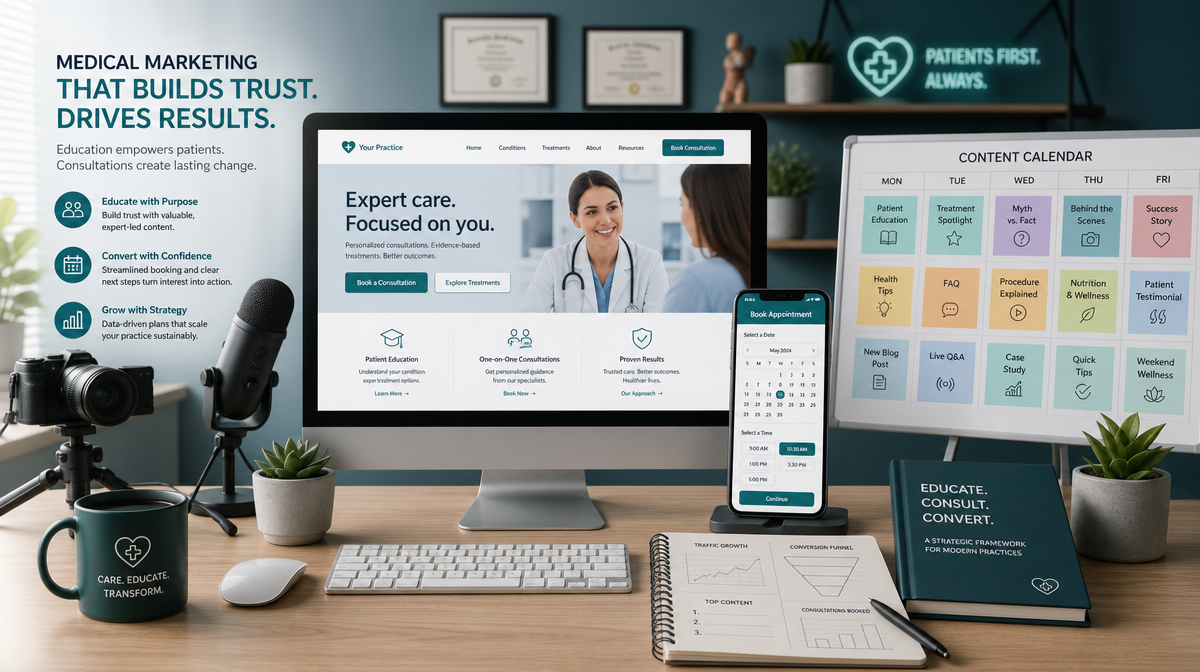
A standalone peptide offer is a harder sell than most clinic owners expect. Patients evaluating a $300-per-month protocol want to understand what surrounds it — who is monitoring their progress, what happens if results plateau, and how this fits into their broader health picture. Positioning peptides as a discrete product answers none of those questions. Positioning them as one component of a structured, physician-guided program answers all of them.
The practices converting at the highest rates are framing peptide therapy the way concierge medicine frames everything: as a starting point for an ongoing clinical relationship, not a transaction. That framing changes the marketing conversation entirely — from “here is what this peptide does” to “here is what your health looks like six months from now with the right protocol supporting it.”
Practically, this means every marketing touchpoint should reference the full program architecture around the peptide, not just the compound itself. Elements that strengthen this positioning include:
- Baseline lab panels: Presenting bloodwork as the foundation of every peptide recommendation signals clinical rigor and differentiates your practice from direct-to-consumer brands shipping product without oversight
- Scheduled follow-up visits: Built-in check-ins communicate that outcomes are actively managed, not left to chance after the first prescription
- Lifestyle integration: Pairing peptide protocols with nutrition coaching, sleep optimization, or hormone panel monitoring expands perceived value without proportionally increasing cost
This bundled framing also supports stronger patient retention — patients enrolled in a comprehensive program are far less likely to discontinue than those who purchased a single peptide cycle with no surrounding structure.
Free consultations convert peptide therapy leads at a higher rate than any other call to action — and the reason is straightforward. Patients considering a $250-to-$500 monthly protocol are not making an impulse decision. They are evaluating clinical credibility, personal fit, and risk. A “learn more” button does not close that gap. A direct conversation with a qualified provider does.
The mechanics matter as much as the offer itself. Placing a consultation CTA only in your site footer or contact page treats it as an afterthought. It belongs in your hero section, at the end of every service page, and inside any downloadable content you distribute. Every path a patient takes through your site should terminate at the same destination: a scheduled appointment.
Virtual consultation options expand your accessible patient pool significantly. Many peptide therapy candidates live outside a convenient driving radius but will engage via telehealth if the friction is low enough. Offering both in-person and virtual booking removes geography as a barrier without requiring any additional clinical infrastructure.
Three structural details separate high-converting consultation offers from ones that generate clicks but not appointments:
- Specificity over vagueness: “Book a free 20-minute peptide therapy consultation” outperforms “contact us” because it sets clear expectations about time commitment and topic
- Same-day or next-day availability: Prospects who cannot book within 48 hours frequently move on to a competitor whose calendar has open slots
- Confirmation sequences: Automated reminder emails and SMS messages sent 24 hours and one hour before the appointment measurably reduce no-show rates
Provider-generated content does something paid advertising fundamentally cannot: it builds category authority over time. Every blog post, LinkedIn article, or podcast appearance your team publishes compounds in value — search engines index it, patients share it, and referring practitioners cite it. For peptide therapy specifically, where mainstream credibility is still being established, consistent thought leadership accelerates trust faster than any promotional channel.
The most effective content strategy for peptide clinics operates on two levels simultaneously. Surface-level content captures search traffic from patients still in the awareness phase. Deeper, more technical content — treatment comparisons, protocol rationale, clinical decision frameworks — attracts the highly motivated researcher who is already committed to starting therapy and simply choosing between providers.
Content formats worth prioritizing in your peptide therapy marketing mix include:
- Long-form treatment comparison articles: Posts like “Sermorelin vs. GLP-1 protocols — which fits your goals?” attract high-intent readers already narrowing their options
- Physician-authored case narratives: Anonymized patient journey stories that walk through clinical reasoning humanize your practice while demonstrating diagnostic depth
- Guest contributions to longevity and wellness publications: Third-party bylines signal independent credibility that self-published content alone cannot replicate
- Email newsletters with protocol updates: Regular clinical insights sent to your subscriber list keep your practice top-of-mind during the extended research window between first interest and first appointment
Consistency matters more than volume. One well-researched piece published monthly outperforms a burst of thin content that trails off — search algorithms and prospective patients both reward sustained commitment over sporadic effort.
Peptide therapy sits in an unusual conversion category: patients are genuinely interested, often well-researched, and still hesitant to commit without a direct clinical conversation. That hesitation is not a marketing problem — it is a structural feature of the service. The consultation is the mechanism that resolves it.
What makes this offer so effective is the asymmetry of perceived risk. Asking a patient to pay for a protocol before speaking with a provider creates friction. Inviting them to a no-cost conversation removes it entirely. The consultation absorbs the uncertainty that would otherwise stall the decision indefinitely.
Execution separates practices that fill their calendars from ones that generate inquiry volume without revenue. A few structural details make a measurable difference:
- Name the consultation specifically: “Free peptide therapy assessment” signals a focused, purposeful appointment — not a generic sales call dressed up in clinical language
- Minimize form fields on the booking page: Every additional required field reduces completion rates; name, contact, and preferred time slot are sufficient to start
- Offer asynchronous pre-consultation intake: Sending a brief health questionnaire before the appointment lets your provider arrive prepared and makes the patient feel their time is respected
- Train whoever answers the phone: For patients who call rather than book online, the first 90 seconds of that conversation either advances or kills the appointment — staff fluency with common peptide questions is not optional
The consultation is where peptide therapy marketing hands off to clinical trust. Build the offer to make that handoff as smooth as possible.
Most peptide clinic websites attract the same visitor three or four times before that person books — or disappears entirely. Retargeting is the infrastructure that decides which outcome happens. Without it, every dollar spent driving traffic produces a one-shot opportunity. With it, that same traffic investment works across an entire decision window that can stretch weeks.
The mechanics of an effective retargeting system for peptide therapy depend on behavioral segmentation, not blanket re-exposure. Serving the same generic ad to every past visitor wastes budget and ignores the signal each visit already provided. A prospect who spent four minutes on your weight management page is in a fundamentally different mindset than someone who bounced from your homepage after twelve seconds — and your follow-up should reflect that difference.
- Pixel-based social retargeting: Ads served to website visitors on Meta and YouTube can feature provider Q&A clips or patient education content — formats that continue the conversation rather than restart it with a cold pitch
- Interest-matched email sequences: Tagging contacts by the specific service page they visited allows your CRM to trigger follow-up content that speaks directly to their stated goal, whether that is metabolic health, recovery, or aging support
- Time-gated SMS re-engagement: A single well-timed text sent five to seven days after an unconverted inquiry — not immediately — reactivates prospects at a moment when their initial research has settled and a decision feels more approachable
The single biggest mistake practices make is treating retargeting as a one-week effort. Peptide patients frequently need thirty to sixty days of consistent, low-pressure exposure before they feel ready to schedule.
Marketing generates interest. Operations determines whether that interest becomes revenue. A peptide therapy practice can run flawless campaigns and still bleed patients at the front desk if the team receiving those inquiries is unprepared for what arrives.
The friction points are predictable and fixable. When a prospective patient calls after reading your sermorelin content and the person who answers cannot explain what the consultation involves, that lead evaporates — not because the marketing failed, but because the handoff did. Speed compounds the problem: studies across healthcare verticals consistently show that response time within five minutes of an inquiry produces dramatically higher contact rates than waiting even an hour.
Closing this gap requires deliberate internal alignment, not just better marketing tactics:
- Script common peptide questions for front desk staff: Equip your intake team with confident, accurate answers to the ten questions that appear most often — what does a first appointment involve, how are protocols monitored, what does pricing look like
- Establish a lead response protocol: Define who contacts new inquiries, through which channel, and within what timeframe — ambiguity here is where qualified leads go quiet
- Synchronize your CRM with your scheduling system: Leads captured through marketing forms should flow directly into your booking workflow without manual re-entry that creates delay or data loss
- Track inquiry-to-appointment conversion by staff member: Individual performance data surfaces training gaps that aggregate metrics hide entirely

Peptide therapy marketing produces its best results when the clinical team and administrative team treat patient acquisition as a shared responsibility rather than separate functions.
Tracking the right metrics separates practices that grow intentionally from those that guess their way through budget cycles. The challenge with peptide therapy marketing specifically is that the funnel has more stages than most clinic owners initially account for — and a breakdown at any one of them looks identical from the outside until you start measuring each layer independently.
Attribution is where most practices fall short first. Knowing that a patient booked is useful; knowing which content piece, which ad, and which follow-up sequence drove that booking is what allows you to replicate the result. Without source-level tracking baked into your CRM from the start, you are making allocation decisions based on instinct rather than evidence.
The metrics worth building a formal reporting cadence around include:
- Cost per lead vs. cost per acquired patient: A gap between these two numbers flags a conversion problem at the consultation or intake stage — not a traffic problem
- Consultation show rate and close rate: Industry benchmarks for elective wellness services target 70%+ attendance and 50%+ treatment plan conversion; numbers below those ranges point to specific, addressable friction
- Patient lifetime value: Recurring peptide protocols make LTV the most strategically important figure in your practice — it determines how aggressively you can afford to acquire each new patient
- Channel-level ROAS: Blended return on ad spend conceals which channels are carrying the results and which are quietly draining budget without producing treated patients
Review these numbers monthly, not quarterly. Peptide marketing conditions shift quickly enough that a 90-day review cycle leaves too much runway for underperforming spend to compound.
The operational complexity of running a peptide therapy practice — managing compounding pharmacy relationships, navigating state-by-state prescribing rules, monitoring protocol compliance, and coordinating patient follow-ups — means that marketing technology cannot exist in a silo. The tools you use to attract patients must integrate directly with the systems that deliver their care.
Where peptide clinics consistently lose efficiency is at the handoff between marketing data and clinical operations. A lead captured through a GLP-1 landing page carries valuable intent signals — which condition, which protocol, which concern drove the click. When that information lives in a disconnected ad platform rather than flowing into your intake workflow, your clinical team starts every consultation cold.
The technology stack that actually supports practice growth in this category typically includes:
- CRM platforms with healthcare-specific compliance features: Systems that handle PHI securely while enabling the behavioral segmentation that makes follow-up sequences relevant rather than generic
- EHR and marketing integration: Connecting patient records to campaign performance data allows you to trace which marketing inputs produced which clinical outcomes — a feedback loop that improves both sides simultaneously
- Automated patient communication tools: Appointment reminders, protocol check-ins, and reorder prompts reduce administrative burden while improving the retention rates that make peptide programs financially sustainable
- HIPAA-compliant analytics dashboards: Standard web analytics tools like Google Analytics are not built for healthcare data — specialized platforms track conversion performance without exposing patient information to ad networks
Technology selection should follow your clinical model, not precede it. The right stack amplifies a well-designed program; the wrong one adds friction to every patient interaction.
- How much should a peptide therapy clinic budget for digital marketing? Most competitive markets require a meaningful monthly investment across at least three channels — SEO, paid advertising, and reputation management — working together, because isolating spend to a single channel typically produces insufficient data volume to optimize and inconsistent patient flow month to month.
- Can peptide therapy clinics run Google or Facebook ads legally? Compliant campaigns are achievable by focusing ad messaging on wellness consultations and patient goals rather than compound names or clinical outcome promises, and obtaining LegitScript certification is often necessary to access healthcare-category ad placements on either platform.
- How long does peptide therapy marketing take to generate new patients? Paid search and social campaigns can deliver qualified inquiries within the first few weeks after launch, while organic SEO typically requires three to six months of consistent content and citation work before producing reliable inbound volume.
- What makes peptide therapy marketing different from other medical marketing? The intersection of FDA compounding regulations, ad platform sensitivity to health-related claims, and a patient base that conducts unusually thorough pre-appointment research creates a compliance and education burden that standard medical marketing frameworks are not built to handle.
- What is the best landing page format for peptide therapy consultations? A benefit-focused headline, concise clinical approach summary, visible provider credentials, authentic patient testimonials, and a single unambiguous booking call to action consistently outperforms pages that attempt to educate and convert simultaneously.
A compliant peptide therapy program is not built in a single afternoon, but the practices that structure it correctly from the start avoid the operational headaches that derail clinics who treat compliance as an afterthought. The sequence matters: clinical infrastructure before marketing spend, not the reverse.
Three foundational decisions shape everything downstream:
- Define your service lines by patient outcome, not compound name: Organizing your program around goals — metabolic health, healthy aging, recovery — makes it easier for patients to self-identify as candidates and simplifies how your marketing communicates the offer without triggering ad platform flags
- Select your care delivery model before building your funnel: Whether you operate in-person, virtually, or through a hybrid model determines which patient geographies you can serve, which state licensing requirements apply, and what your scheduling and intake infrastructure needs to support
- Partner with a 503A-compliant compounding pharmacy before your first campaign launches: Fulfillment delays and sourcing gaps damage patient trust faster than almost any other operational failure — your pharmacy relationship is a marketing asset, not just a supply chain decision
The recurring revenue potential of peptide programs — monthly protocols, quarterly labs, ongoing follow-up visits — means that a well-structured program generates compounding returns on every patient acquired. That financial dynamic is what justifies meaningful investment in peptide therapy marketing and makes the upfront structural work worth the effort.
Peptides are naturally occurring biological compounds — short sequences of amino acids that the human body synthesizes constantly to regulate everything from cellular repair to hormonal signaling. What distinguishes therapeutic peptides from the broader category is specificity: each compound targets a discrete biological pathway, making them fundamentally different from broad-spectrum supplements or conventional pharmaceuticals that affect multiple systems simultaneously.
Clinically, peptide therapy encompasses a wide range of protocols depending on patient goals. The category includes compounds that interact with pituitary signaling pathways, others that modulate gut hormone activity, and still others that influence inflammatory cascades at the tissue level. That diversity is precisely what makes the service category so commercially compelling — a single practice can serve meaningfully different patient populations under one clinical umbrella.
Understanding this range matters for peptide therapy marketing because your messaging strategy cannot be monolithic. The patient researching metabolic support is reading different content, asking different questions, and responding to different trust signals than the patient exploring age-related hormone decline. The four primary patient categories that define current clinical demand are:
- Anti-aging and longevity: Growth hormone secretagogues targeting pituitary function and healthy aging pathways
- Weight management: GLP-1 receptor agonists addressing appetite regulation and metabolic dysfunction
- Recovery and tissue repair: Peptides that modulate inflammatory response and accelerate healing
- Performance and body composition: Protocols supporting muscle preservation and sustained energy output
Each of these patient segments requires its own marketing language, content strategy, and conversion pathway — a distinction that separates effective peptide clinic marketing from generic wellness promotion.
What is accelerating peptide therapy from clinical curiosity to mainstream demand is a shift in who is searching — not just how many. The patient base has expanded well beyond early adopters and biohackers. Primary care physicians are fielding questions about sermorelin from patients in their 40s. Gym-going professionals are asking about BPC-157 by name. Endocrinologists are seeing patients who arrive having already self-researched GLP-1 protocols through social media and long-form podcasts.
That behavioral shift carries direct implications for peptide therapy marketing strategy. When patients arrive knowledgeable rather than naive, the competitive differentiator moves from awareness to credibility. Practices that have published authoritative content, accumulated verified reviews, and established a visible local presence are the ones getting called — not the ones with the flashiest logo or the broadest service menu.
Three structural forces are accelerating this demand curve in ways that show no sign of reversing:
- Mainstream longevity coverage: Feature-length coverage in outlets like the Wall Street Journal and major health podcasts has normalized the concept of peptide protocols for a demographic that previously would have dismissed them as fringe
- GLP-1 spillover interest: Widespread awareness of GLP-1 medications has created a patient cohort already comfortable with compounded, prescription-based wellness interventions and actively curious about adjacent therapies
- Concierge and membership model growth: The rise of subscription-based primary care has conditioned patients to expect ongoing, personalized clinical relationships — exactly the model peptide programs are built around
The regulatory picture for peptides is genuinely in motion right now, and that uncertainty has direct consequences for how you structure a marketing campaign. In April 2026, the FDA announced that an outside panel of pharmacy advisors would review seven peptides in July 2026 — a signal that the compounding landscape could shift before the year is out. Clinics that build campaigns around compounds currently under review are taking on avoidable risk.
At the federal level, the 503A compounding framework governs which peptides a licensed pharmacy can prepare on a patient-specific basis. That designation is not static — compounds can move between categories based on FDA review outcomes, and what is promotable today may require a complete campaign overhaul tomorrow if reclassification occurs.
State-level rules introduce a second layer of complexity that federal guidance does not resolve. A few practical examples of where conflicts emerge:

- California pharmacy board requirements impose additional testing and licensing standards beyond federal minimums for certain compounded substances
- Supervision thresholds vary by state: prescribing authority granted to nurse practitioners in one jurisdiction may require physician co-signature in another
- 503A pharmacy shipping restrictions mean a pharmacy licensed to fulfill patient-specific orders in Texas may be prohibited from shipping to patients in neighboring states
For peptide therapy marketing purposes, this regulatory volatility means your campaign messaging should be built around clinical outcomes and patient goals rather than compound-specific language — a structure that remains compliant regardless of how individual peptides are ultimately classified.
Yes — but the answer comes with meaningful conditions that directly shape how you structure a peptide therapy marketing program. FDA Category 1 designation means a bulk substance is eligible for patient-specific compounding by a licensed 503A pharmacy. It does not mean the compound is FDA-approved, and that distinction carries real weight when you are writing ad copy or building landing pages.
From a practical standpoint, Category 1 status establishes the legal foundation for offering and promoting a peptide service. Without it, you are advertising something a licensed pharmacy cannot legally prepare — which creates liability exposure regardless of how carefully your messaging is worded.
Several conditions must be satisfied before a compliant program can operate, and each one has a corresponding marketing implication:
- A valid patient-specific prescription is required: This rules out any marketing language that implies patients can self-select a protocol without clinical evaluation
- Compounding must occur at a licensed 503A or 503B facility: Your marketing cannot reference sourcing from unverified suppliers — patients increasingly ask, and vague answers damage trust
- Medical necessity must be documented: Promotional claims suggesting peptides are appropriate for everyone undermine the individualized clinical framing that actually converts high-value patients
- Informed consent is standard practice: Content that glosses over monitoring requirements or protocol expectations sets inaccurate patient expectations that hurt retention
The clinics that run into compliance trouble are rarely the ones ignoring these rules entirely — they are the ones who understood the clinical framework but never translated it into their marketing materials.
The FDA Category 1 designation covers a defined set of peptides that meet at least one of three criteria: they are a component of an already-approved drug, they carry a recognized USP/NF monograph, or they have been formally nominated with sufficient supporting data for FDA review. That framework is narrower than most clinic owners initially assume — and knowing exactly which compounds qualify is the first filter your peptide therapy marketing strategy should run through.
The peptides that currently form the foundation of compliant clinical programs include:
- Sermorelin: A growth hormone-releasing hormone analog that stimulates pituitary function, commonly used in healthy aging and hormone optimization programs
- Gonadorelin: A GnRH analog that supports endogenous testosterone production, frequently incorporated into men’s hormone protocols alongside TRT
- GLP-1 receptor agonists: Compounds addressing appetite signaling and glucose metabolism, though they operate under a related but distinct regulatory pathway that requires separate verification with your pharmacy partner
BPC-157 occupies a more complicated position — its regulatory status has been subject to ongoing FDA scrutiny, and clinics marketing it without current legal guidance from a compliance-aware attorney are taking on measurable risk.
The practical takeaway for marketing purposes is that your campaign architecture should be built around the compounds with the clearest Category 1 standing. Centering promotions on peptides whose status is actively under review invites both ad platform flags and potential regulatory exposure — neither of which is recoverable quickly once triggered.
Beyond sermorelin, gonadorelin, and GLP-1 receptor agonists, a handful of additional compounds appear in compliant programs depending on the clinical focus of the practice. Each carries its own marketing considerations that practitioners should understand before building service pages or running campaigns around them.
- Ipamorelin: A selective growth hormone secretagogue often combined with CJC-1295 in hormone optimization protocols; its Category 1 standing makes it one of the more straightforward peptides to incorporate into compliant longevity-focused marketing
- PT-141 (Bremelanotide): An FDA-approved compound for hypoactive sexual desire disorder in women, which gives it a uniquely defensible marketing position — campaigns can reference the approved indication directly rather than relying on off-label framing
- Thymosin Alpha-1: Used in immune support and recovery protocols, though its compounding status warrants current verification with your pharmacy partner before any promotional content goes live
- Oxytocin: Occasionally incorporated into integrative wellness programs; its compounding eligibility is well-established, but marketing claims around mental health or relationship outcomes require careful legal review before publication
The practical implication for any peptide therapy marketing program is that compound-level eligibility should be confirmed with a 503A pharmacy partner and a healthcare compliance attorney before a single service page is published. Regulatory status for several peptides remains under active FDA review, meaning a campaign built today could require a full content overhaul within months if classification changes.
Launching a peptide therapy program is a sequenced process, not a simultaneous one. Practices that try to run marketing campaigns while still sorting out their clinical model, pharmacy partnerships, and state licensing end up with one of two outcomes: ad accounts flagged for promoting services they cannot yet legally deliver, or patient inquiries arriving faster than the operation can handle them.
The sequence that protects both your compliance posture and your marketing investment follows a clear internal logic:
- Organize service lines around patient goals first: Structuring your program by outcome category — metabolic health, healthy aging, recovery — rather than by compound name gives your marketing team language that converts without triggering platform review flags
- Lock in your care delivery model before building intake workflows: Whether you see patients in person, virtually, or through a hybrid arrangement determines which states you can serve, which licensing you need, and what your scheduling infrastructure must support before the first ad goes live
- Confirm pharmacy fulfillment capacity before driving traffic: A 503A partner that cannot reliably ship into your target markets creates a patient experience problem that no amount of marketing skill can fix after the fact
- Standardize your clinical intake and follow-up protocols: Repeatable care pathways make it possible to scale without rebuilding workflows every time patient volume increases
- Then build the marketing layer on top: SEO, paid campaigns, and lead nurture sequences perform dramatically better when the operational foundation underneath them is already stable
The recurring revenue structure of peptide programs — monthly protocols, quarterly labs, ongoing provider check-ins — means every patient acquired through a well-launched program generates returns that compound well beyond the initial acquisition cost.
Most marketing agencies treating peptide therapy as a niche add-on are applying frameworks built for dermatology or orthopedics — categories where ad platforms are permissive, patient education needs are minimal, and compliance complexity is manageable. Peptide clinics operate in a fundamentally different environment, and the gap between a generalist agency and a healthcare-specialized one shows up directly in campaign survival rates and patient acquisition costs.
Target Patients MD focuses exclusively on medical practice growth, with particular depth in regenerative and longevity medicine — the clinical categories where peptide therapy marketing is most complex and most competitive. That focus means campaigns arrive pre-structured around the compliance guardrails that govern peptide advertising, rather than being revised after the first round of ad disapprovals.
The A.L.I. 360 platform consolidates what most practices currently manage across five or six disconnected vendors:
- AI-powered SEO and GEO: Organic visibility built for both traditional search rankings and AI-generated answer panels
- Compliant paid campaign management: Ad creative and targeting structured around consultation offers rather than compound-specific language
- Automated lead nurture: Email and SMS sequences calibrated to the extended research cycles peptide patients follow before booking
- Reputation monitoring: Review generation and response management across the directories peptide patients consult most
If the ideas in this article sparked questions about your own practice’s marketing gaps, these related resources go deeper on the clinical and operational dimensions that sit alongside peptide therapy marketing strategy.
- How to Start a Longevity Clinic: A practical breakdown of the service architecture, staffing models, and patient positioning that make longevity-focused practices financially sustainable from day one
- Medical Weight Loss Marketing That Fills Your Calendar: GLP-1 programs share significant patient overlap with broader peptide offerings — this guide covers the channel mix and compliance considerations specific to weight management promotion
- TRT Clinic Marketing Strategies for Patient Acquisition: Testosterone replacement and peptide protocols frequently coexist in the same patient relationship; understanding how to market both services without cannibalizing inquiry volume is a challenge this piece addresses directly
- Local SEO for Medical Practices: The citation-building and Google Business Profile fundamentals that apply across every specialty, with specific attention to the healthcare categories where local pack visibility drives the highest appointment conversion rates
- How AI Marketing Tools Are Changing Patient Acquisition: A closer look at how predictive analytics, generative search optimization, and automated engagement tools are reshaping acquisition economics across functional and regenerative medicine practices
Each piece is written specifically for practice owners navigating the intersection of clinical compliance and growth marketing — the same audience this guide was built for.


