




Manhattan alone has more board-certified plastic surgeons per square mile than virtually any other city in the world. Walk a few blocks in Midtown or the Upper East Side and you’ll pass the offices of surgeons who trained at Weill Cornell, NYU Langone, and Mount Sinai — all competing for the same pool of high-value patients. That density creates a marketing environment where visibility is genuinely scarce and the cost of invisibility is measured in empty consultation slots.
The patients driving demand in this market make the challenge even steeper. New York City patients typically spend weeks — sometimes months — comparing surgeons before booking a single consultation. They cross-reference credentials, read through review threads, watch procedure videos, and evaluate before-and-after galleries with the kind of scrutiny you’d expect from someone making a $15,000 decision. Generic marketing that works fine in a mid-sized market simply doesn’t move a sophisticated NYC patient off the fence.
Then there’s the paid media reality. Google Ads cost-per-click for plastic surgery keywords in New York routinely runs 40–60% above national averages for the same procedure terms. Bidding on “rhinoplasty surgeon NYC” or “breast augmentation Manhattan” means competing against practices with mature campaigns, deep budgets, and years of conversion data already baked into their quality scores.
- Surgeon density: Hundreds of board-certified plastic surgeons operate within a few ZIP codes in Manhattan alone
- Patient sophistication: NYC patients conduct extensive pre-consultation research across multiple platforms before reaching out
- Ad costs: Plastic surgery CPCs in New York significantly exceed national benchmarks, compressing margins for under-optimized campaigns
Size of agency doesn’t predict results. A plastic surgery marketing agency with 200 employees and Fortune 500 clients on its roster can still underperform a lean, specialized team that has spent years inside the elective healthcare space. What actually separates top-tier plastic surgery marketing agencies from the rest comes down to four concrete attributes.
- Healthcare-only specialization: Agencies that exclusively serve medical practices understand HIPAA advertising constraints, the psychology of elective procedure decision-making, and the compliance requirements that trip up generalists. They don’t need a learning curve at your expense.
- Quantified ROI and transparent reporting: Any credible plastic surgery marketing company should hand you a monthly dashboard showing cost-per-lead, consultation attribution by channel, and keyword movement — not just impressions and clicks. If an agency can’t tell you which campaign booked which consultation, that’s a red flag worth acting on.
- In-house execution without outsourcing: Top plastic surgery marketing agencies keep SEO strategy, paid media, and creative work inside their own teams. White-labeling to overseas contractors introduces quality gaps and communication delays that compound over time and show up in your results.
- Performance-based guarantees: The strongest plastic surgeon marketing agency partnerships are built on accountability. Look for agencies willing to commit to new patient minimums or offer money-back structures — these guarantees signal that the agency is confident enough in its systems to put its own revenue on the line alongside yours.
When evaluating options for plastic surgery marketing in New York, these criteria matter more than award badges or client counts. They’re the difference between a vendor and a growth partner.
A full-service plastic surgery marketing agency in New York should deliver a coordinated stack of services — not a single tactic dressed up as a strategy. The table below maps each core service to its function and why NYC practices specifically can’t afford to skip it.
| Service | What It Does | Why NYC Practices Need It |
|---|---|---|
| SEO | Organic rankings | Compete in saturated local search |
| Paid Ads | Immediate visibility | Capture high-intent patients now |
| Website Design | Convert visitors | First impressions matter in a luxury market |
| Email Marketing | Nurture leads | Long decision cycles for elective procedures |
| Reputation Management | Build trust | NYC patients check reviews obsessively |
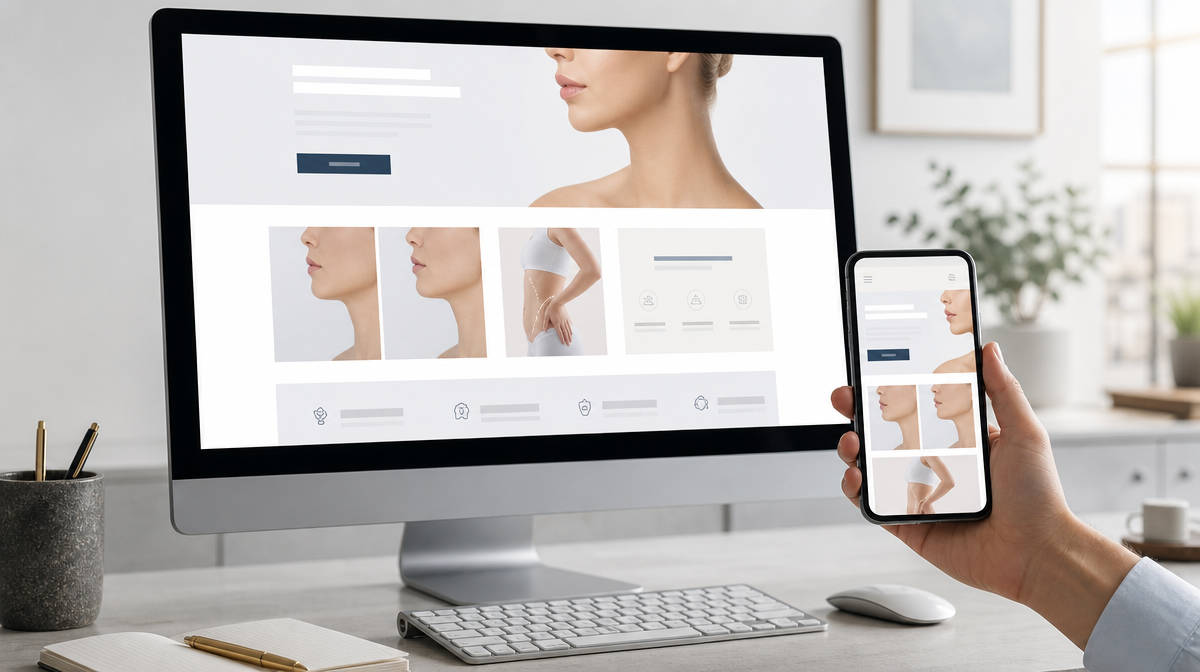
Each of these services plays a distinct role in the patient acquisition funnel. SEO builds durable organic authority over time. Paid ads fill the pipeline immediately while SEO matures. A conversion-optimized website ensures that traffic — paid or organic — actually turns into booked consultations rather than bounced sessions.
Email marketing and reputation management address the parts of the funnel that most practices ignore: the prospects who are interested but not yet ready to commit, and the skeptical researchers who need social proof before they’ll pick up the phone. In a market as demanding as New York, gaps in any one of these channels hand opportunity directly to a competitor down the street.
Search engine optimization compounds in a way that paid advertising never can. Every piece of well-structured content, every authoritative backlink, and every optimized procedure page you build today continues generating consultation requests months and years from now — without an ongoing spend attached to it. That compounding effect is why partnering with a dedicated plastic surgery SEO agency is one of the highest-leverage investments available in plastic surgery marketing New York.
But SEO in New York requires a level of granularity that most agencies aren’t built for. Ranking for “facelift surgeon” nationally is a completely different challenge than dominating neighborhood-level searches in Tribeca, the Upper West Side, or Park Slope — each of which has its own patient demographic and search behavior patterns.
A well-executed SEO program for a New York plastic surgery practice typically works across four interconnected layers:
- Technical SEO: Site architecture, page speed benchmarks, mobile rendering, and schema markup that signals procedure-specific expertise to search engines
- Local SEO: Google Business Profile optimization, citation consistency across directories, and borough- or neighborhood-level landing pages that capture hyper-local intent
- Content SEO: Procedure pages and editorial content that answers the specific questions NYC patients type into Google during their research phase
- Link building: Earning placements and citations from health publications, medical associations, and authoritative local sources that transfer credibility to your domain
Practices that invest in this kind of structured SEO program reduce their long-term dependence on paid media — and that’s a meaningful financial advantage in a market where ad costs show no signs of retreating.
Organic search builds authority over months. Paid advertising fills your waiting room this week. The two channels aren’t competing priorities — they’re complementary, and the strongest plastic surgery marketing New York practices run both simultaneously with a clear channel strategy behind each.
Top plastic surgery marketing agencies typically deploy three distinct paid channels, each serving a different moment in the patient journey:

- Google Ads for high-intent procedure searches: When someone types “rhinoplasty NYC” or “tummy tuck Manhattan,” they’ve already moved past awareness and are actively evaluating surgeons. Google Search campaigns intercept that intent at exactly the right moment — putting your practice in front of patients who are ready to book a consultation, not just browsing.
- Meta and Instagram ads for aesthetic procedures: Cosmetic surgery is inherently visual, which makes Instagram one of the most effective paid channels available. Before-and-after imagery, short-form video testimonials, and lookalike audiences built from your existing patient base let you reach prospective patients who match your ideal profile before they’ve even started searching Google.
- Retargeting and programmatic display: Most website visitors don’t convert on their first visit — especially for elective procedures with high price points and long consideration periods. Retargeting campaigns re-engage those visitors with targeted ads across the web after they leave your site, keeping your practice visible throughout the weeks-long decision process that NYC patients typically go through.
Each channel requires different creative, different bidding logic, and different compliance considerations. Agencies that treat paid media as a single undifferentiated budget line consistently underperform those that manage each channel as its own discipline.
Your website isn’t just a digital brochure — in New York’s plastic surgery market, it functions as a silent salesperson working around the clock. A prospective patient who lands on a slow, cluttered, or visually underwhelming site will close the tab and open the next result before your practice manager even knows they were there.
Conversion-focused design means every element on the page is engineered to move a visitor toward one specific action: booking a consultation. That requires more than attractive visuals. It demands deliberate architecture.
- Mobile-first design: The majority of NYC patients browse on their phones during commutes, lunch breaks, and late-night research sessions — a site that isn’t built for mobile first is losing consultations every single day
- Before/after galleries: Consistently lit, properly framed, and easy to navigate by procedure — galleries are often the deciding factor for patients comparing multiple surgeons
- Trust signals: Board certifications, named hospital affiliations, and media features displayed prominently give skeptical NYC patients the credibility confirmation they’re actively looking for
- Clear CTAs above the fold: Phone number, online consultation booking, and financing options should be visible without scrolling — removing friction at the exact moment a patient decides to act
Any credible cosmetic surgery marketing agency operating in this market treats website design as a revenue function, not a creative exercise. Load speed, navigation logic, and form design each have measurable impact on how many visitors actually convert into patients.
In New York, a single negative review on the wrong platform can cost a practice dozens of consultations before anyone on staff even notices it exists — 40% of patients have changed care plans based on negative online feedback alone. NYC patients don’t just glance at star ratings — with 84% of patients checking online reviews before choosing a provider, they read through comment threads on Google, dig into RealSelf procedure-specific forums, check Healthgrades for credential verification, and then cross-reference Vitals and Facebook before they’ll even consider picking up the phone. Managing that reputation landscape manually is operationally impossible for most practices.
The three components a serious reputation management program covers in this market:

- Multi-site review aggregation: Monitoring Google, Yelp, RealSelf, Healthgrades, Vitals, and Facebook from a single dashboard rather than logging into six separate platforms — because reviews that go unanswered for days signal indifference to the exact patients you’re trying to attract
- Automated review request campaigns: Timed email and SMS sequences sent to satisfied patients at the optimal post-procedure window — typically when satisfaction is highest and the experience is still fresh — dramatically increase review volume without requiring staff to make awkward manual asks
- HIPAA-compliant review display widgets: Curated reviews embedded directly on your website must be handled in a way that protects patient privacy; displaying testimonials without proper compliance protocols creates legal exposure that no amount of five-star ratings is worth
The volume-to-rating ratio matters as much as the rating itself. A practice with 400 reviews averaging 4.8 stars commands far more patient confidence in this market than one with 40 reviews at the same score.
Google’s search results page looks fundamentally different today than it did two years ago. AI Overviews — Google’s AI-generated answer summaries — now appear above traditional blue links for a growing share of procedure-related queries. When a prospective patient asks “what’s the recovery time for a rhinoplasty,” Google increasingly answers that question directly on the results page, pulling from sources it deems authoritative. If your practice isn’t one of those sources, you don’t just rank lower — organic CTR drops 61% on queries with AI Overviews, making your practice effectively invisible before the search even concludes.
For plastic surgery marketing New York practices, this shift creates both urgency and opportunity. Plastic surgery marketing companies that understand Generative Engine Optimization (GEO) — the discipline of structuring content so AI systems can parse, cite, and surface it — are positioning their clients ahead of competitors still optimizing exclusively for traditional rankings.
- AI Overviews: Google synthesizes answers from credentialed, well-structured sources — practices with authoritative procedure content and strong E-E-A-T signals are far more likely to be cited
- Generative Engine Optimization (GEO): Formatting content with clear headers, concise answers, and clinically accurate language makes it machine-readable in ways that traditional keyword stuffing never could
- Chatbots and virtual assistants: AI-powered intake tools handle patient questions at 2 a.m. without adding headcount — capturing leads that would otherwise disappear before your front desk opens
Agencies still treating AI as a future concern are already behind. The practices gaining ground in this environment are those whose marketing partners built for this shift before it became unavoidable.
Choosing the wrong plastic surgery marketing company in New York is an expensive mistake — and not just in dollars. A misaligned agency partnership costs you months of momentum in a market where your competitors are actively gaining ground. Vetting agencies against specific, practical criteria protects both your budget and your timeline.
- NYC neighborhood and ZIP code targeting experience: A patient in Williamsburg has a different income profile, aesthetic preference, and social media behavior than one in Sutton Place or Cobble Hill. Agencies without borough-level targeting experience flatten those distinctions into generic campaigns that speak to no one specifically — ask any prospective partner to demonstrate how they’ve segmented campaigns by Manhattan neighborhood or outer borough ZIP code.
- Healthcare-specific track record: Request examples from plastic surgery or medical aesthetics clients specifically, not general small business marketing wins. The compliance environment, patient psychology, and content standards in elective surgery are distinct enough that generalist experience doesn’t transfer cleanly.
- Transparent monthly reporting and strategy calls: Strong reporting goes beyond a PDF of metrics. Expect a breakdown of lead sources, cost per booked consultation, keyword ranking movement, and a dedicated strategy discussion — not a one-way data dump.
- HIPAA compliance and patient data security: Any agency touching your contact forms, CRM, or ad retargeting audiences is handling protected health information. HIPAA compliance in this context is a legal baseline, not a differentiator — walk away from any agency that treats it as optional or secondary.
Getting started with a plastic surgeon marketing agency in New York doesn’t have to feel like signing a lease on a building you’ve never walked through. The right onboarding process is structured, transparent, and moves quickly — because in this market, every week without a functioning strategy is a week your competitors are pulling ahead.
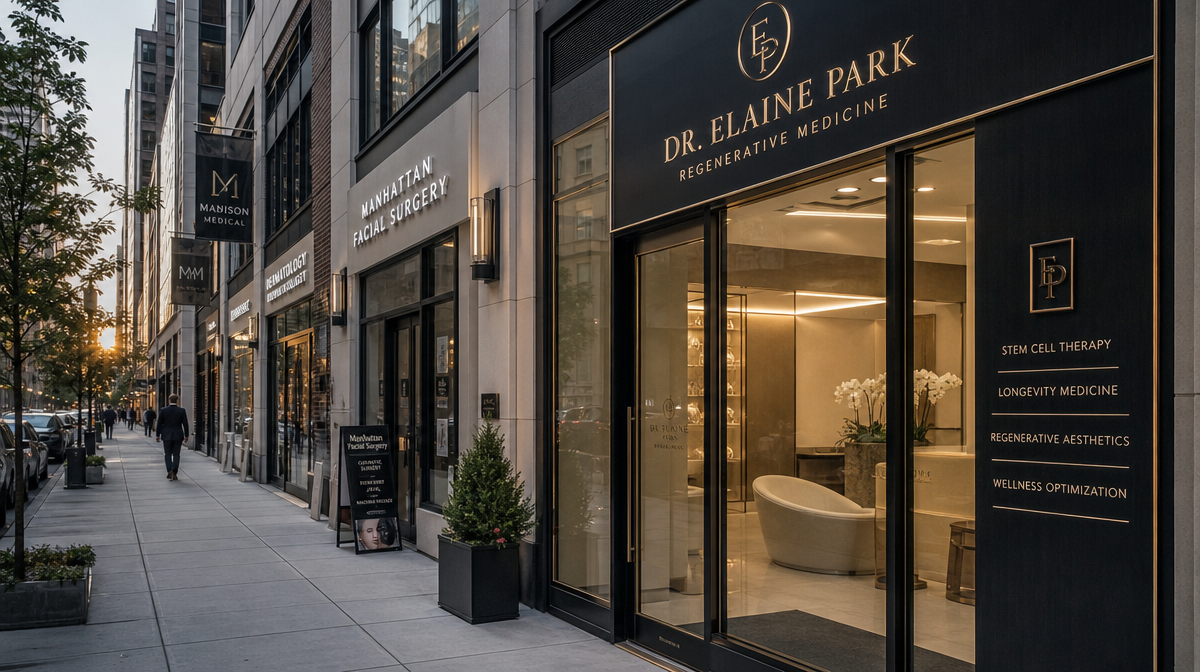
- Book a free consultation: The initial call is a working session, not a sales pitch. Expect the agency to ask about your highest-priority procedures, your current patient acquisition channels, and which competitors you’re watching most closely — then use that input to run a live audit of your digital footprint against the NYC market.
- Receive a custom NYC growth strategy: A credible agency delivers a written plan specific to your practice — your procedure mix, your target neighborhoods, your patient demographics — not a recycled template with your logo dropped in. That plan should include projected timelines, channel priorities, and the metrics you’ll use to define success from month one.
- Launch campaigns and track new patient flow: Day one of campaign launch should also be day one of attribution tracking. Lead source data, consultation booking rates, and cost per acquired patient should be visible from the start — not introduced three months in after you’ve already spent the budget.
The onboarding timeline matters as much as the process itself. Practices pursuing plastic surgery marketing in New York should expect a competent agency to move from signed agreement to active campaigns within two to three weeks, not two to three months.
Target Patients MD is built exclusively for medical practices — no restaurant chains, no e-commerce brands, no side projects in B2B software. Every system, every campaign template, and every optimization protocol in the agency’s playbook was developed specifically for the patient acquisition challenges that doctors face. That focus translates directly into faster execution and fewer costly missteps for NYC plastic surgeons.
The agency’s proprietary A.L.I. 360 platform integrates AI-driven targeting, automated lead nurturing, and real-time performance data into a single system designed to compound patient acquisition results over time. Practices using A.L.I. 360 have seen patient acquisition increases of up to 377% — and 90% of new clients see measurable results within the first day of launch.
- Healthcare-exclusive focus: Serving 735+ medical practitioners across the U.S. and Canada with zero generalist clients in the mix
- A.L.I. 360 technology: AI-powered system purpose-built for medical practice growth, not adapted from a generic marketing tool
Learn more about Target Patients MD and find out what a custom New York growth strategy looks like for your practice.
- How much does plastic surgery marketing in New York typically cost?
- Monthly investment for a full-service program in NYC generally ranges from $2,000 to $5,000 or more depending on the channel mix and competitive intensity of your target procedures — expect to budget meaningfully above national averages given the market saturation.
- How quickly can a plastic surgery marketing agency deliver new patient inquiries?
- Paid search and social campaigns can generate inbound consultation requests within the first few days of going live; organic SEO typically requires three to six months before producing consistent ranking-driven traffic.
- What is the difference between a cosmetic surgery marketing agency and a plastic surgery marketing agency?
- The terms are largely interchangeable in practice — most agencies use both to describe their services — though some firms focus specifically on surgical procedures while others skew toward non-invasive or injectable treatments.
- Can plastic surgery marketing companies help a new Manhattan practice compete with established surgeons?
- Yes — a combination of procedure-specific paid ads, hyper-local SEO targeting underserved ZIP codes, and a proactive review generation strategy can establish meaningful visibility for newer practices within the first several months.
- Do plastic surgery marketing agencies offer guarantees on new patient results?
- Select agencies offer performance-based commitments tied to consultation volume or lead delivery, though the specific terms — minimums, timeframes, and refund structures — vary considerably from one firm to the next.
- Should a plastic surgeon hire in-house marketing staff or partner with a plastic surgeon marketing agency?
- Agencies bring pre-built systems, cross-practice data, and multi-channel expertise that a single in-house hire rarely replicates; many NYC practices find a hybrid model — an agency handling strategy and execution with an internal coordinator managing day-to-day communication — delivers the best of both.


