


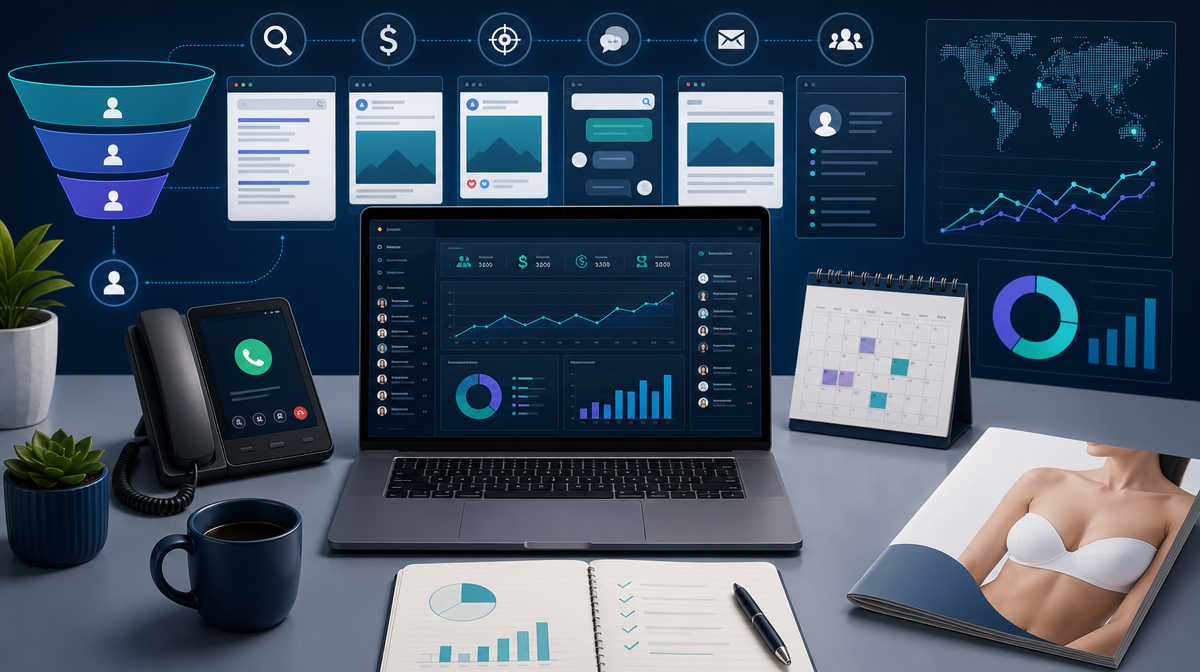
Before a prospective breast augmentation patient ever calls your front desk, she has already spent weeks — sometimes months — doing her homework. She’s compared surgeon credentials, studied before-and-after galleries, read dozens of reviews on RealSelf and Google, and watched procedure explainer videos on YouTube. By the time she fills out a contact form, she’s not a cold lead. She’s an informed buyer who has already shortlisted two or three practices and is deciding which one earns her trust. Understanding how that decision unfolds is the foundation of effective breast augmentation marketing. The journey typically moves through three distinct phases:
- Research phase: Patients use Google searches, Instagram, TikTok, and review platforms to vet surgeons. They’re looking for board certifications, procedural expertise, and visual evidence of consistent, natural-looking results.
- Decision triggers: What converts a browser into a consult booking is usually a combination of social proof, educational content that answers her specific questions, and a clear sense of the surgeon’s personality and communication style.
- Trust signals: Credentials matter, but so does how your practice presents itself online. Patients weigh the quality of your gallery, the recency and volume of your reviews, and whether your website feels current and professional — or like it was built in 2014.
The practices winning consults right now are the ones that show up at every stage of this research process, not just at the bottom of the funnel. If your digital presence has gaps — thin content, sparse reviews, outdated visuals — a competitor with a stronger online footprint will capture that patient instead. Breast augmentation has always been a competitive procedure, but the landscape your practice is operating in right now is categorically different from even five years ago. More plastic surgeons are allocating serious budget to digital advertising, which has driven up costs across every paid channel. At the same time, patients are doing more comparison shopping than ever — your practice isn’t competing with the surgeon across town anymore. You’re competing with every board-certified plastic surgeon within a 50-mile radius who has a polished digital presence and an active ad account. The structural challenges making breast augmentation marketing harder right now break down like this:
- More surgeons advertising online: Increased advertiser competition pushes cost per click and cost per lead upward — with plastic surgery keywords now commanding $15–$50+ per click — squeezing practices with smaller budgets out of premium placements.
- Patients comparing multiple practices: The average prospect contacts more than one practice before committing, which extends decision cycles and increases the risk of losing a lead to a faster-responding competitor.
- Social media algorithm changes: Organic reach on Instagram and Facebook has declined substantially, meaning content that once spread for free now requires paid amplification to reach the same audience.
- Platform ad policy restrictions: Meta and Google impose specific limitations on cosmetic procedure advertising, narrowing the creative strategies available to your team and requiring workarounds that generic marketing agencies often get wrong.
Generic, undifferentiated marketing — a few stock-photo ads and a basic Google campaign — no longer moves the needle. Practices that win new breast augmentation patients consistently are the ones investing in a cohesive, multi-channel strategy built specifically around how cosmetic surgery patients research and decide. Not all breast augmentation patients are scrolling the same apps — and a platform strategy that ignores age demographics is leaving consults on the table. A systematic review published in Aesthetic Surgery Journal Open Forum found that platform preferences differ significantly by generation, which means your breast augmentation marketing mix should be built around where each patient cohort actually spends time, not where it’s easiest to post.
- Instagram and TikTok for patients aged 17 to 35: This group gravitates toward short-form video, Reels, and authentic content over polished production. Research specifically identifies breast augmentation as the most common procedure sought by this demographic, making visual-first platforms essential. Younger patients respond to relatability — a surgeon speaking candidly on camera outperforms a studio-produced ad every time.
- Facebook and YouTube for patients 36 and older: This cohort is more likely to watch longer educational content, surgeon Q&A videos, and live streams before committing to a consultation. Facebook Groups focused on cosmetic surgery experiences are also active spaces where this age group seeks peer validation. Credibility signals — board certifications, years in practice, detailed procedure explanations — carry more weight here.
- Pinterest for aspirational research: Patients across age groups use Pinterest during the early visualization stage, creating mood boards of aesthetic outcomes they want to discuss at a consult. Practices that publish high-quality before-and-after imagery and procedure content on Pinterest can surface during this discovery phase and build recognition before a patient ever runs a Google search.
 Most practices have content on their website. What separates the ones filling their consult calendars from the ones watching leads go quiet is whether that content is designed to convert — not just inform. Conversion content has a specific job: move a prospective patient from passive interest to picking up the phone or submitting a form.
- Before-and-after galleries with context: Raw photos aren’t enough. Patients want to see cases that match their starting point — similar body type, comparable goals. Organize your gallery by implant profile, incision placement, or cup size range so prospects can self-identify. Always obtain proper written consent and avoid presenting results in ways that imply guaranteed outcomes, which creates both HIPAA exposure and platform compliance risk.
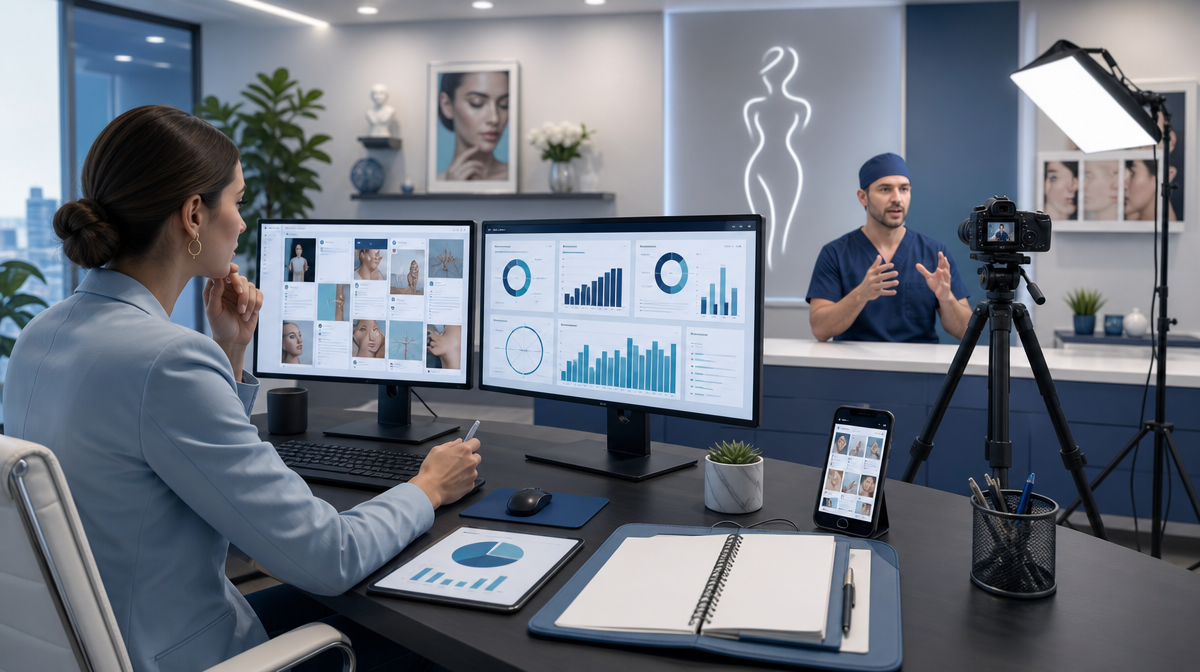
- Surgeon-led educational video: Stock imagery doesn’t build trust. A short video of your surgeon walking through implant options, candidacy considerations, and what recovery actually looks like does. Authenticity on camera converts better than any professionally produced ad — patients are trying to get a sense of who will be operating on them.
- Patient story content: Written testimonials are table stakes. Video testimonials — particularly ones where a real patient describes her decision-making process and outcome — create emotional resonance that no copy can replicate. These drive the final push from consideration to booked consult.
- Comparison and decision-support content: Prospects actively searching “silicone vs. saline” or “Motiva vs. Mentor implants” are deep in the decision cycle. Pages that answer these questions directly capture high-intent traffic and position your practice as the knowledgeable authority before a competitor does.
SEO — search engine optimization — is the process of making your practice website appear prominently in Google results when prospective patients search for breast augmentation services in your area. Unlike paid ads, which stop generating leads the moment you pause your budget, organic search visibility compounds over time and delivers patient inquiries at a significantly lower long-term cost per acquisition. For breast augmentation specifically, keyword intent is everything. A search like “breast augmentation surgeon in Dallas” signals someone actively evaluating providers — that’s a high-intent query worth targeting aggressively. A search like “how do breast implants feel” is educational intent — still worth capturing, but requires different content. Build your keyword strategy around these categories:
- Procedure keywords: “breast augmentation,” “breast implants,” “silicone breast implants”
- Location keywords: “[your city] breast augmentation surgeon,” “[nearby city] breast implants”
- Comparison keywords: “silicone vs. saline implants,” “round vs. anatomical implants”
- Cost and access keywords: “breast augmentation financing,” “breast augmentation cost [city]”
Your Google Business Profile is one of the highest-leverage local SEO assets most practices underutilize. A fully optimized profile — current photos, active Q&A responses, regular posts, and a steady stream of patient reviews — directly influences whether your practice appears in the local map pack when someone searches nearby. That map pack placement is often the first thing a prospective patient clicks. Your medical website design also plays a measurable role. Pages that load slowly, lack mobile optimization, or bury consultation CTAs below the fold hemorrhage leads regardless of how much traffic your breast augmentation marketing efforts drive to them. Paid advertising fills the gap that SEO cannot — it generates consult requests now, while your organic rankings are still climbing. But breast augmentation advertising operates under constraints that catch unprepared practices off guard, particularly on Meta platforms where ad policies around cosmetic procedures are enforced aggressively and inconsistently. On Google, your campaign structure determines whether you capture patients who are ready to book or waste budget on browsers who won’t convert for months. Search campaigns targeting procedure-specific and location-modified queries deliver the highest-intent traffic, while Performance Max campaigns extend your reach across Google’s full network. Every click should land on a dedicated page — not your homepage — with a single call to action, social proof above the fold, and a load time under three seconds. Meta ads require a different playbook entirely. Facebook and Instagram prohibit before-and-after imagery in ad creative for cosmetic procedures, which eliminates the most intuitive approach most practices try first. What actually works: 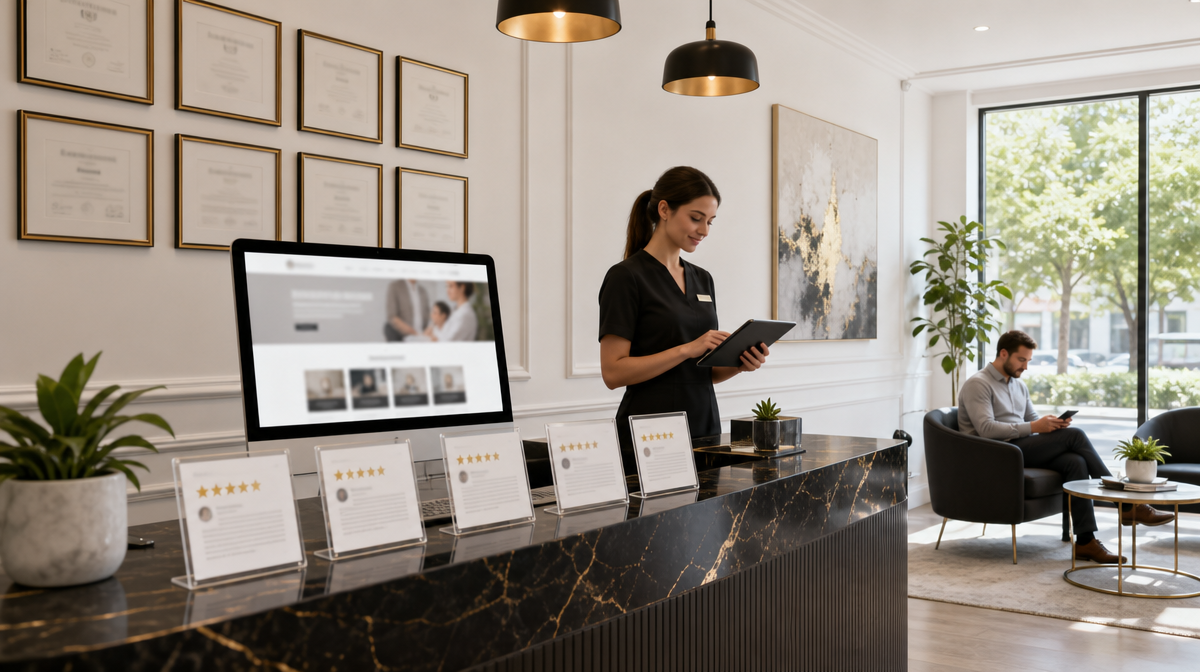
- Educational content formats: Surgeon-narrated videos explaining candidacy criteria or recovery timelines perform well and stay compliant
- Patient journey creative: Story-driven content framed around a patient’s decision process rather than physical transformation
- Consultation-offer ads: Direct response creative focused on booking a no-obligation consultation rather than showcasing outcomes
The other piece most practices underinvest in is retargeting. Breast augmentation decisions routinely take three to twelve months from first search to booked surgery. Retargeting campaigns keep your practice visible to warm prospects throughout that window — without those touchpoints, you’re handing the conversion to whoever stays in front of them longest. Word-of-mouth has always driven cosmetic surgery referrals — influencer and ambassador marketing is simply what word-of-mouth looks like today. For breast augmentation practices specifically, partnering with real patients who share their experiences publicly can extend your reach into audiences that paid ads and organic content rarely penetrate on their own. The most effective programs distinguish between two distinct partnership types:
- Micro-influencers with local followings: An account with 8,000 to 40,000 engaged local followers often delivers better consult attribution than a national influencer with ten times the audience. Geographic relevance matters — a follower in your city who sees a relatable person share her experience with your practice is far more likely to book than someone watching from another state.
- Patient ambassador programs: Former patients who agree to document their journey — recovery milestones, reveal moments, long-term satisfaction — provide an ongoing stream of authentic content tied directly to your practice. The Motiva Influencer Program is one branded example of how implant manufacturers have formalized this model, offering approved patients free implants and compensation in exchange for tagged social content.
Before launching any ambassador arrangement, compliance has to be built into the structure from the start. The FTC requires clear disclosure on all compensated posts, and Meta’s platform policies apply to influencer content just as they do to paid ads. Every partnership agreement should specify disclosure language, content approval rights, and tagging requirements. Done correctly, an ambassador program becomes a repeatable, low-cost channel for your breast augmentation marketing — one that builds genuine social proof rather than manufactured attention. For breast augmentation patients, the decision often comes down to one final gut-check: what are other people saying about this surgeon? Industry research bears this out — 84% of patients check online reviews before selecting a new provider. Your online reputation isn’t a supporting character in your breast augmentation marketing — it’s frequently the deciding factor between a prospect booking with you and quietly disappearing to a competitor with more visible social proof. The platforms that carry the most weight with this patient demographic aren’t interchangeable. Each serves a distinct purpose in the decision process:
- Google reviews: The highest-trust source for most patients — volume, recency, and your response pattern all factor into how credible your practice appears at a glance
- RealSelf: Procedure-specific credibility; a strong RealSelf presence signals that you’re engaged with patients beyond the consult room
- Healthgrades and Yelp: Secondary validation layers that reinforce what patients find on Google — gaps here create doubt even when your primary profile looks strong
 Generating reviews consistently requires a system, not a hope. Post-procedure text sequences sent at the right recovery milestone — when patient satisfaction typically peaks — outperform any verbal ask at checkout. QR codes placed in your waiting room or discharge packet remove friction for patients who intend to leave feedback but never do. Negative reviews deserve a response within 24 hours, written professionally and without disclosing any patient information. How you handle criticism publicly tells prospective patients more about your practice culture than a dozen five-star ratings ever could. Displaying curated reviews directly on your website — particularly on your breast augmentation procedure page — keeps that social proof visible at the exact moment a prospect is deciding whether to request a consult. If you spend any time watching how patients actually find surgeons today, you’ll notice something the old playbook never accounted for: a growing share of searches never produce a traditional results page at all. Tools like Google’s AI Overviews and ChatGPT are synthesizing answers directly from published web content, delivering a named recommendation or a ranked summary before a patient ever clicks a link. According to SparkToro, clicked searches fell 22.9% between 2024 and 2026. That’s a fundamental shift in how breast augmentation marketing reaches new patients — and most practices haven’t adapted yet. Three developments in this space deserve your attention:
- Generative Engine Optimization (GEO): AI assistants pull answers from sources that are structured clearly, written authoritatively, and cited by other credible sites. Practices that publish well-organized educational content — procedure FAQs, implant comparisons, candidacy criteria — are more likely to get cited in AI-generated responses than those with thin or promotional-only pages.
- AI-powered chat for lead capture: Intelligent chatbots deployed on your website can qualify visitors, answer common pre-consultation questions, and capture contact information around the clock — including the 11 p.m. researcher who will never call your front desk during business hours.
- Predictive lead scoring: AI-driven analytics can identify which website visitors and incoming leads show behavioral signals consistent with booking — allowing your team to prioritize follow-up where conversion probability is highest rather than treating every inquiry identically.
Practices still optimizing exclusively for traditional keyword rankings are competing for a shrinking slice of patient attention. The ones building AI-visible content and deploying intelligent engagement tools are positioning themselves for how cosmetic surgery patients will search and decide going forward. Generating leads feels productive. But lead volume without a measurement framework is just expensive noise. The practices that scale breast augmentation marketing successfully are the ones tracking the full funnel — from first click to completed surgery — rather than celebrating form fills that never convert. Two metrics anchor everything else:
- Cost per lead (CPL): What you spend in advertising to generate a single inquiry. CPL varies significantly by market density, competitive pressure, and channel mix — a practice in a mid-size market will see very different numbers than one operating in a major metro. The number itself matters less than whether it’s trending in the right direction relative to your conversion rate downstream.
- Cost per booked consult: The more actionable figure. Not every lead becomes a consultation, and not every consultation becomes a surgery. Tracking how many inquiries your team actually converts to seated appointments reveals whether you have a marketing problem or a follow-up problem — two very different fixes.
 Patient lifetime value (LTV) is the metric most practices ignore entirely, and it’s the one that changes how you think about acceptable acquisition costs. A breast augmentation patient who returns for a revision, refers two friends, and adds ancillary treatments over three years is worth multiples of the original procedure fee. When you calculate ROI against LTV rather than a single surgery revenue figure, the math on aggressive marketing investment often looks completely different. Without attribution tracking in place — call tracking numbers, form source tagging, CRM integration — you’re making budget decisions based on incomplete information. Running breast augmentation marketing across SEO, paid search, social media, reputation management, and AI-optimized content simultaneously is a full-time operation — one that most practice owners don’t have the bandwidth to manage while also seeing patients. That’s the gap Target Patients MD was built to close. Target Patients MD specializes exclusively in medical practice growth, with deep operational experience in plastic and cosmetic surgery marketing. That procedure-level focus spans the full cosmetic range — from rhinoplasty and mommy makeover to tummy tuck marketing campaigns. The proprietary A.L.I. 360 technology drives the entire system — an AI-powered platform that integrates lead generation, patient engagement, and performance optimization across every channel your prospective breast augmentation patients use to find and evaluate surgeons. What separates this model from a standard agency relationship:
- Plastic surgery specialization: The team understands Meta’s cosmetic procedure ad restrictions, RealSelf optimization, and the specific content formats that move breast augmentation patients from interest to booked consult
- Done-for-you execution: Strategy, creative, campaign management, and reporting handled entirely by the Target Patients MD team — no internal marketing hire required
- A results guarantee: built around patient growth and measurable campaign performance
- Proven scale: The system has been deployed across 735+ medical practitioners, generating measurable patient volume from day one of campaign launch
If your consult calendar has empty slots and your current breast augmentation marketing isn’t producing consistent, qualified leads, Target Patients MD is worth a direct conversation. Breast augmentation marketing questions tend to cluster around the same practical concerns — budget, timelines, compliance, and channel prioritization. Here are the answers practice owners ask most often.
- How much should a plastic surgeon budget for breast augmentation marketing each month? There is no fixed number, but the most dependable plans treat marketing as a portfolio rather than a single spend line. A practice in Miami or Los Angeles will usually need a larger monthly commitment than one in a smaller regional market because competition, rent, and click prices all rise together.
- What is a good cost per lead for breast augmentation advertising? The lead cost itself is less meaningful than what happens after the lead arrives. A higher CPL that converts at 40% is more profitable than a bargain CPL that converts at 8%. Evaluate your breast augmentation marketing performance against cost per booked surgery, not cost per form submission.
- How long does breast augmentation SEO take to generate new patients? Organic rankings build over several months, with most practices noticing measurable improvements in local visibility before reaching full momentum. Paid advertising fills the interim gap while SEO compounds.
- Can plastic surgeons use before and after photos in Facebook and Instagram ads? Meta’s policies prohibit before-and-after imagery in cosmetic procedure ad creative. Compliant alternatives include educational video, consultation-focused offers, and patient journey storytelling.
- Should a new breast augmentation practice invest in SEO or