


Walk two blocks in any direction from a Park Avenue practice and you’ll pass the offices of three more board-certified plastic surgeons — each with fellowship training, a curated Instagram presence, and a Google review count that would make most practices in secondary markets envious. That density isn’t an exaggeration; it’s the daily competitive reality that makes plastic surgery marketing NYC categorically different from anywhere else in the country.
The patients navigating this landscape aren’t making impulsive decisions. A typical NYC cosmetic surgery patient cross-references surgeon credentials against hospital affiliations, watches procedure walkthrough videos, dissects before-and-after galleries by lighting consistency, and reads review threads on at least three separate platforms — all before submitting a single contact form. You’re not competing for attention; you’re competing for trust across a research process that can stretch across months.
Three factors combine to make this market uniquely unforgiving:
- Surgeon concentration: Hundreds of board-certified plastic surgeons operate within a handful of Manhattan ZIP codes, creating competition at a density that simply doesn’t exist in any other U.S. market
- Patient sophistication: Affluent NYC patients treat surgeon selection like a high-stakes investment decision — they research accordingly, and generic positioning doesn’t survive their scrutiny
- Ad cost pressure: Paid search costs for procedure-specific terms in NYC run significantly above national averages, compressing returns for practices without a precision-built campaign strategy behind every dollar spent
Generic marketing approaches that generate solid results in mid-sized markets consistently underperform here. The margin for a poorly differentiated strategy is essentially zero, which is why plastic surgery marketing built specifically for this market matters so much.
Before you can allocate a single dollar well, you have to understand who actually books these consultations — because the NYC cosmetic patient looks nothing like a patient walking into a practice in Phoenix or Charlotte. The typical high-value patient in Manhattan, Brooklyn, or the outer boroughs tends to be a professional in their late 30s to mid-50s with a household income well above $250,000. They aren’t price-shopping. They’re credential-shopping, outcome-shopping, and experience-shopping — in that order.
- Research-driven: These patients compare multiple surgeons across weeks or months — reading review threads, watching surgeon interview videos, and scrutinizing before-and-after galleries with the rigor you’d expect from someone making a $20,000 decision, because they are.
- Credentials over convenience: Board certifications, named hospital affiliations, fellowship training, and media recognition outweigh proximity. A surgeon two neighborhoods farther away with stronger credentials will win the consultation.
- Concierge-level expectations: Response speed, the quality of your intake process, and how personalized the pre-consultation experience feels all influence whether a patient shows up — or quietly books elsewhere.
- Discretion: Many of these patients are recognizable in professional or social circles and won’t engage with a practice whose marketing feels overly public-facing or promotional. Privacy isn’t a nicety to them; it’s a screening criterion — and it shapes everything from how you retarget to how you request reviews.
If you’re marketing like a dermatologist, you’re already losing. Cosmetic surgery occupies a completely different psychological category than other medical specialties — one where the buying decision involves personal identity, social perception, and five-figure financial commitment simultaneously. That combination demands a marketing infrastructure built around four specific realities that generalist approaches simply aren’t designed to address.
- High-consideration patients require high-trust marketing: Elective surgery patients need layered credibility signals — credentials, outcomes, surgeon personality, and peer validation — before they’ll commit to a single consultation. A single channel or a thin website doesn’t move them.
- Borough-level competition from hundreds of board-certified surgeons: The Upper East Side, Tribeca, and Brooklyn Heights each carry distinct patient demographics and separate competitor sets. A strategy that doesn’t account for neighborhood-level differentiation treats Manhattan as a monolith — and loses accordingly.
- ASPS advertising ethics and HIPAA compliance constraints: The American Society of Plastic Surgeons holds member practices to strict advertising standards that most agencies don’t know exist. Before/after photos require written patient consent and cannot be digitally altered. Testimonial claims cannot promise results or use misleading language. Pricing ads must include disclaimers about consultation requirements. Violating these standards creates legal exposure that no amount of new patient volume is worth.
- Visual results demand a visual-first marketing engine: Patients aren’t reading their way to a booking — they’re watching, comparing, and evaluating outcomes. Instagram-quality galleries, procedural video content, and before/after documentation aren’t optional upgrades; they’re the baseline expectation for plastic surgery marketing NYC patients respond to.
Not every channel earns its place in a plastic surgery marketing budget — especially in NYC, where ad costs are punishing and patient attention is genuinely scarce. The channels worth investing in are the ones that map to specific moments in the patient journey, from first discovery through to a booked consultation slot.
- SEO for plastic surgeons: Organic search captures patients who are already mid-research — someone typing “rhinoplasty NYC” or “breast augmentation Manhattan” has moved well past idle curiosity. Procedure-specific pages that answer the exact questions those patients are asking pull high-intent traffic without a per-click cost attached to every visit.
- Google Ads and paid search: NYC carries the highest plastic surgery CPCs in the country, which means strategy matters more than raw budget. Precision keyword targeting, tightly structured ad groups, and dedicated procedure landing pages separate campaigns that convert from ones that simply burn spend.
- Meta and Instagram paid social: Instagram is where aesthetic patients discover practices before they start searching. Meta’s demographic tools let you stack household-income tiers directly on top of specific NYC ZIP codes — targeting affluent households in 10021 or 10013 with procedure-specific before/after creative delivers a fundamentally different result than a broad city-wide radius, and it feeds your search campaigns downstream.
- Retargeting and remarketing: Most visitors won’t request a consultation on their first session. Retargeting keeps your practice visible across the web during the weeks-long evaluation window that surgical patients typically need.
- Email nurture and patient reactivation: Leads who aren’t ready to book immediately don’t disappear — they wait. Automated sequences move hesitant prospects toward a decision while reactivation campaigns surface past patients who may be considering a second procedure.
- Reputation management and patient reviews: NYC patients research across Google, RealSelf, Healthgrades, and Yelp simultaneously. A multi-platform review presence with active response protocols isn’t a nice-to-have in plastic surgery marketing NYC — with 94% of patients using online reviews to evaluate providers, it’s a prerequisite for earning the consultation call.
| Channel | Best For | NYC-Specific Consideration |
|---|---|---|
| SEO | High-intent procedure searches | Hyper-local neighborhood targeting |
| Google Ads | Immediate visibility | Highest CPCs nationally—requires optimization |
| Visual discovery and brand building | Affluent demographic targeting | |
| Lead nurturing and retention | Long consideration cycles | |
| Reviews | Trust and social proof | Multi-platform presence required |
Two years ago, a patient researching rhinoplasty in NYC started on Google. Today, that same patient opens ChatGPT and types a question. They get a synthesized answer — with surgeon characteristics, recovery expectations, and even neighborhood recommendations — before they’ve visited a single practice website. If your practice isn’t embedded in the data those AI systems draw from, you’re not ranking lower. You’re simply absent from the conversation entirely.
This isn’t a future concern for NYC plastic surgery practices — it’s the current state of patient discovery. Google’s AI Overviews, Perplexity, and ChatGPT are increasingly the first stop in a patient’s research journey — 1 in 4 U.S. adults have used AI for healthcare information — not a secondary reference. The implications for patient acquisition are significant.
- Generative Engine Optimization (GEO): Structured content with clear headers, schema markup, and authoritative clinical sourcing signals to AI systems that your practice is a credible reference worth citing — not just a website worth crawling
- Predictive analytics for ad spend: AI tools now analyze behavioral signals across boroughs and demographics to identify which patient segments are actively moving toward a booking decision — letting you concentrate budget where conversion probability is highest
- AI-powered consultation booking: Patients researching procedures at 11pm aren’t waiting until your front desk opens — 7 in 10 healthcare AI conversations happen outside clinic hours. AI chat tools that answer procedure questions and schedule virtual consults around the clock capture leads that would otherwise dissolve by morning
Practices that treat AI optimization as a technical afterthought are ceding ground to competitors who recognized this shift early. The search landscape your patients navigate has fundamentally changed — your visibility strategy needs to reflect that.
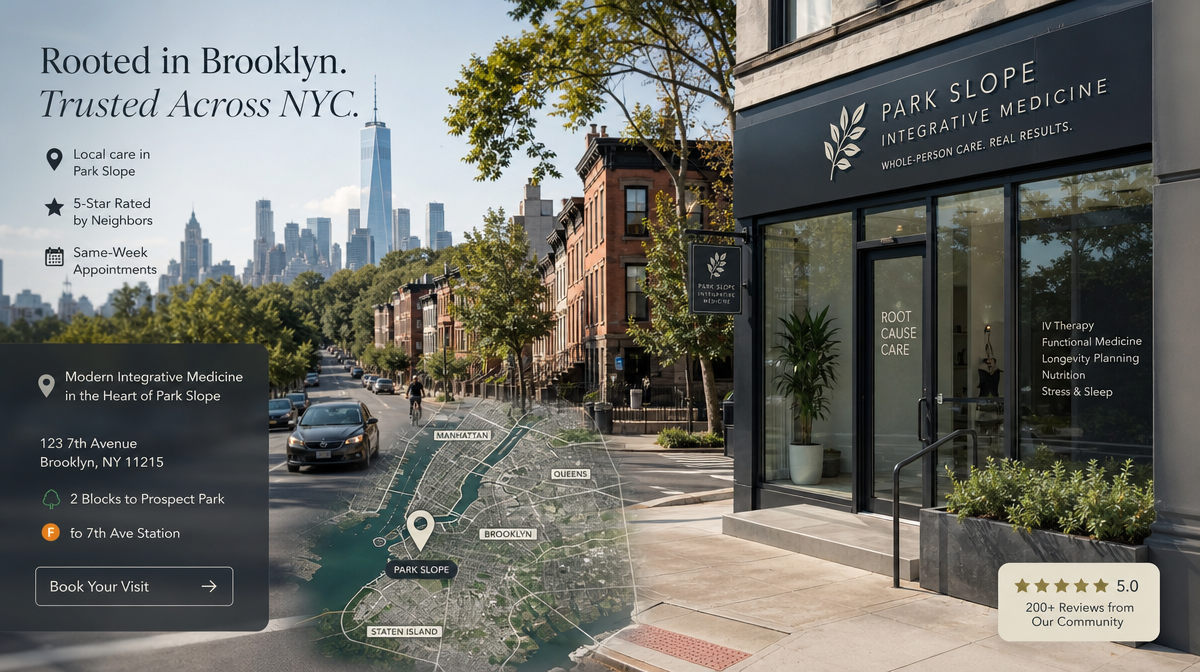
NYC patients don’t search for “plastic surgeon New York” — they search for “rhinoplasty surgeon Upper East Side” or “mommy makeover Williamsburg.” That neighborhood-level specificity isn’t a quirk of local search behavior; it reflects how residents of a five-borough city actually think about geography. Your plastic surgery marketing NYC strategy only works if your digital footprint mirrors those same mental maps.
- ZIP code and neighborhood keyword targeting: Procedure pages optimized for neighborhood modifiers — “facelift Park Slope,” “breast augmentation Astoria,” “blepharoplasty Tribeca” — capture search intent that broad city-level targeting misses entirely. The competition for these granular terms is also meaningfully lower than Manhattan-wide keywords.
- Google Business Profile optimization across boroughs: Each practice location needs a fully built-out GBP with procedure-specific photo categories, regularly updated posts, and active Q&A management. For multi-location practices, GBP signals are often what determines which location surfaces for a given neighborhood search.
- Local citations across 70+ directories: Consistent Name, Address, and Phone data across Healthgrades, RealSelf, Vitals, Zocdoc, and Yelp isn’t glamorous work — but citation inconsistencies actively suppress local rankings. Dirty NAP data is a silent revenue leak most practices never trace back to its source.
- Dedicated neighborhood landing pages: A page built specifically for “plastic surgeon Brooklyn Heights” — with localized content, nearby landmarks for directions, and neighborhood-relevant testimonials — converts far better than sending borough-level traffic to a generic location page.

The practices dominating local search in Queens or Brooklyn aren’t necessarily the most decorated surgeons. They’re the ones whose digital infrastructure treats each neighborhood as its own distinct market.
Traffic without conversion is just an expensive hobby. The practices filling their surgical schedules in NYC aren’t necessarily the ones generating the most website visits — they’re the ones that have engineered a clear path from first click to confirmed consultation appointment.
- Conversion-focused website design: Your site needs to do one job above everything else: make it effortless for a motivated patient to take the next step. That means a prominent phone number visible without scrolling, a consultation request form that doesn’t demand a medical history essay, and mobile load times that don’t test a New Yorker’s patience. Busy Manhattan professionals make decisions on their phones between meetings — friction at that moment is permanent patient loss.
- Virtual consultation funnels: Offering a no-commitment virtual consult dramatically lowers the barrier for patients still weighing their options. The funnel is straightforward: paid ad or organic click → procedure-specific landing page → embedded scheduling tool → confirmed virtual appointment. Each step removes a reason to delay.
- Lead magnets and procedure guides: A downloadable rhinoplasty recovery timeline or breast augmentation candidacy guide exchanges genuine value for contact information — capturing patients months before they’re ready to book. Those contacts feed directly into email nurture sequences.
- Patient referral programs: Satisfied patients talking to their social circles is the most credible form of marketing NYC plastic surgery practices can leverage. Structured referral incentives formalize that word-of-mouth engine, though any program must be designed with healthcare referral compliance requirements in mind.
In a market where every competitor lists the same credentials and claims the same expertise, the practices commanding premium fees aren’t necessarily the most decorated — they’re the ones who’ve built a brand perception that justifies a higher price before a patient ever walks through the door. Brand positioning isn’t a logo refresh or a new color palette. It’s the cumulative signal your practice sends across every digital touchpoint that tells a high-value patient: this surgeon operates at a different level.
- Procedure-specific content that signals genuine expertise: A single deep-dive page on rhinoplasty revision — covering candidacy, surgical approach, healing nuances, and realistic expectations — communicates more clinical authority than a dozen generic “we offer many procedures” summaries. Search engines reward depth, and so do patients making five-figure decisions.
- Surgeon credentialing and third-party press features: Board certifications belong on your website, but media appearances, named publications, and features in outlets like New York Magazine or Vogue carry a different weight entirely. External validation from sources patients already trust accelerates credibility in a way that self-promotion cannot replicate.
- Curated before-and-after galleries built for premium positioning: Galleries organized by procedure, shot with consistent professional lighting, and representing diverse patient outcomes signal operational excellence. A poorly assembled gallery — inconsistent angles, dim photography — tells a prospective patient everything they need to know about what to expect from the experience itself.
Premium positioning in plastic surgery marketing NYC is ultimately about controlling the narrative around your practice’s value — consistently and deliberately — so that price becomes a secondary conversation rather than the first objection.
Every practice owner eventually asks the same question: “What should I actually be spending?” In the NYC market, the honest answer is that budget without context is meaningless — what matters is the relationship between your investment, your procedure mix, and the revenue each booked case generates.
A few concrete numbers help frame realistic expectations. Google Ads cost-per-click for procedure-specific terms in NYC regularly lands between $18 and $45 per click, compared with $10–$22 for equivalent searches in mid-sized U.S. markets. That gap compounds quickly: a rhinoplasty campaign generating 200 clicks a month might cost roughly $2,400 in a market like Nashville and $5,500 or more in Manhattan — before a single consultation is booked.

A few factors that genuinely move the numbers in NYC:
- Budget allocation across channels: Effective spend isn’t a single line item — it’s a deliberate split between paid media for immediate lead flow, SEO investment for compounding organic returns, and reputation infrastructure that protects the revenue you’re already generating. Practices that concentrate everything in one channel consistently leave money on the table.
- Cost per lead variables: A rhinoplasty inquiry in the Upper East Side costs more to acquire than a non-surgical consultation in an outer borough. Procedure type, target neighborhood, and seasonal demand patterns all shift your CPL — sometimes dramatically. Treating every lead source as interchangeable produces misleading performance data.
- ROI measurement that actually reflects practice economics: Impression counts and click volumes don’t pay your surgical staff. The only metric that matters is the revenue trail from ad click through consultation to scheduled procedure. Practices that track this full sequence make smarter reinvestment decisions than those measuring marketing performance at the lead stage alone.
In a market as expensive as NYC, the practices generating the strongest returns aren’t necessarily spending the most — they’re spending with the clearest picture of what each dollar produces downstream.
You’re likely making at least one of these mistakes right now — and in the NYC market, the cost of each one is measured in surgical cases that went to a competitor down the street.
- Treating marketing as overhead instead of a growth engine: Practices that budget marketing the way they budget office supplies — looking for the lowest defensible number — consistently lose ground to surgeons who track what each dollar returns in booked procedures. The question isn’t what marketing costs; it’s what an empty operating schedule costs.
- Hiring generalist agencies with no healthcare experience: An agency that excels at e-commerce or restaurant marketing doesn’t understand HIPAA ad constraints, elective procedure psychology, or why a consultation funnel for a $20,000 facelift behaves nothing like a retail checkout flow. You pay the learning curve, and your competitors collect the patients.
- Underinvesting in visual content and before-and-after galleries: Outdated photography and sparse galleries don’t just look unprofessional — they actively signal to a research-savvy NYC patient that your outcomes aren’t worth showcasing. Subpar visuals end the evaluation before your phone ever rings.
- Ignoring front desk conversion and consult close rates: NYC plastic surgery practices invest heavily in lead generation, then lose those leads at the phone call. If your staff isn’t trained on consultation booking, objection handling, and response time, you’re funding a competitor’s patient list every time a lead goes cold at the first point of human contact.
Picking the wrong agency in NYC doesn’t just waste budget — it hands your competitors a head start that can take years to close. The evaluation criteria that matter most aren’t the ones agencies volunteer upfront.
- Healthcare-only specialization: An agency that markets restaurants on Tuesday and plastic surgery practices on Wednesday hasn’t internalized the compliance architecture, elective patient psychology, or consultation funnel mechanics your practice depends on. Ask directly what percentage of their client base is medical — and walk away from anything under 100%.
- Transparent reporting with revenue attribution: Dashboards showing impressions and click-through rates are not performance reporting. Demand visibility into cost per booked consultation and revenue traced back to each channel. If an agency can’t connect their work to your surgical schedule, they’re measuring the wrong things.
- In-house execution versus outsourced delivery: Many agencies winning new clients in the NYC plastic surgery space immediately hand the actual work to white-label vendors overseas. Ask explicitly who builds your campaigns, writes your content, and manages your ad accounts — and whether those people are employees of the agency or contractors at arm’s length.
- Accountability tied to booked consultations: Agencies confident in their systems report against the outcomes that matter — cost per booked consultation and revenue by channel — rather than burying performance in impression counts. Reporting that connects spend to your surgical schedule is what separates a growth partner from a vendor collecting a retainer.
The right agency functions as a growth partner with skin in the game — not a vendor collecting a retainer while you wonder what’s actually happening.
Target Patients MD was built for one purpose: filling medical practices with patients who actually show up and book procedures. Every system in the agency’s infrastructure — from the intake funnel to the attribution dashboard — was designed around the specific mechanics of healthcare patient acquisition, not adapted from a retail or B2B playbook after the fact.
For NYC plastic surgeons specifically, that specialization translates into a competitive advantage that generalist agencies structurally can’t replicate. The team understands how a Park Avenue patient evaluates a rhinoplasty candidate differently than someone in Astoria — and the campaigns reflect that granularity from day one.
What separates this from every other option you’re evaluating:
- Healthcare-exclusive client base: 735+ medical practitioners served across the U.S. and Canada — zero restaurant chains, no e-commerce side projects, no B2B clients diluting the team’s focus
- A.L.I. 360 AI platform: Proprietary technology purpose-built for medical practice growth, not licensed from a generic marketing tool
- Fast, measurable execution: Campaigns and attribution tracking go live together, so you can see patient flow from launch — not after a three-month “ramp-up” period that conveniently delays accountability
If what your practice needs is a growth partner with genuine skin in the game, learn more about Target Patients MD and find out what a custom plastic surgery marketing NYC strategy looks like for your practice.
Straightforward answers to the questions NYC plastic surgeons ask most before committing to a marketing strategy — and a few they probably should be asking but aren’t.
- How much should a NYC plastic surgery practice spend on marketing each month? There’s no universal figure, but the right framework is procedure economics rather than arbitrary percentages. A practice where the average booked surgery generates $15,000 in revenue can justify a meaningfully higher monthly investment than one where the average case is $3,000. Start with your growth target in booked procedures, work backward to the consultation volume required to hit it, and budget from there.
- How fast can a Manhattan plastic surgeon expect new patient results from digital marketing? Paid campaigns can generate inbound consultation requests within the first week of going live. Organic search rankings typically take several months to build meaningful momentum. A well-structured program runs both simultaneously — paid media fills the short-term pipeline while SEO compounds over time.
- What is a realistic cost per lead for plastic surgery marketing NYC? CPL varies considerably by procedure type, target borough, and seasonal demand. Rhinoplasty and facelift inquiries command higher acquisition costs than non-surgical treatments. The more important metric is cost per booked procedure — not cost per form submission.
- How do NYC plastic surgeons market to international and medical tourism patients? Multilingual content, international SEO signals, and virtual consultation infrastructure are the foundation. Practices should also prominently feature concierge recovery accommodations and surgeon credentials that translate to international patient expectations.
- Should ads run across all five boroughs or focus on Manhattan only? Most practices start where their ideal patient concentration is highest, then expand geographic targeting based on actual consultation booking data — not assumptions about where patients come from.
- How do plastic surgeons stay compliant with ASPS advertising guidelines and HIPAA? Working with a healthcare-specialized agency eliminates most compliance risk. Generalist agencies routinely run afoul of ASPS standards simply because they don’t know they exist.